
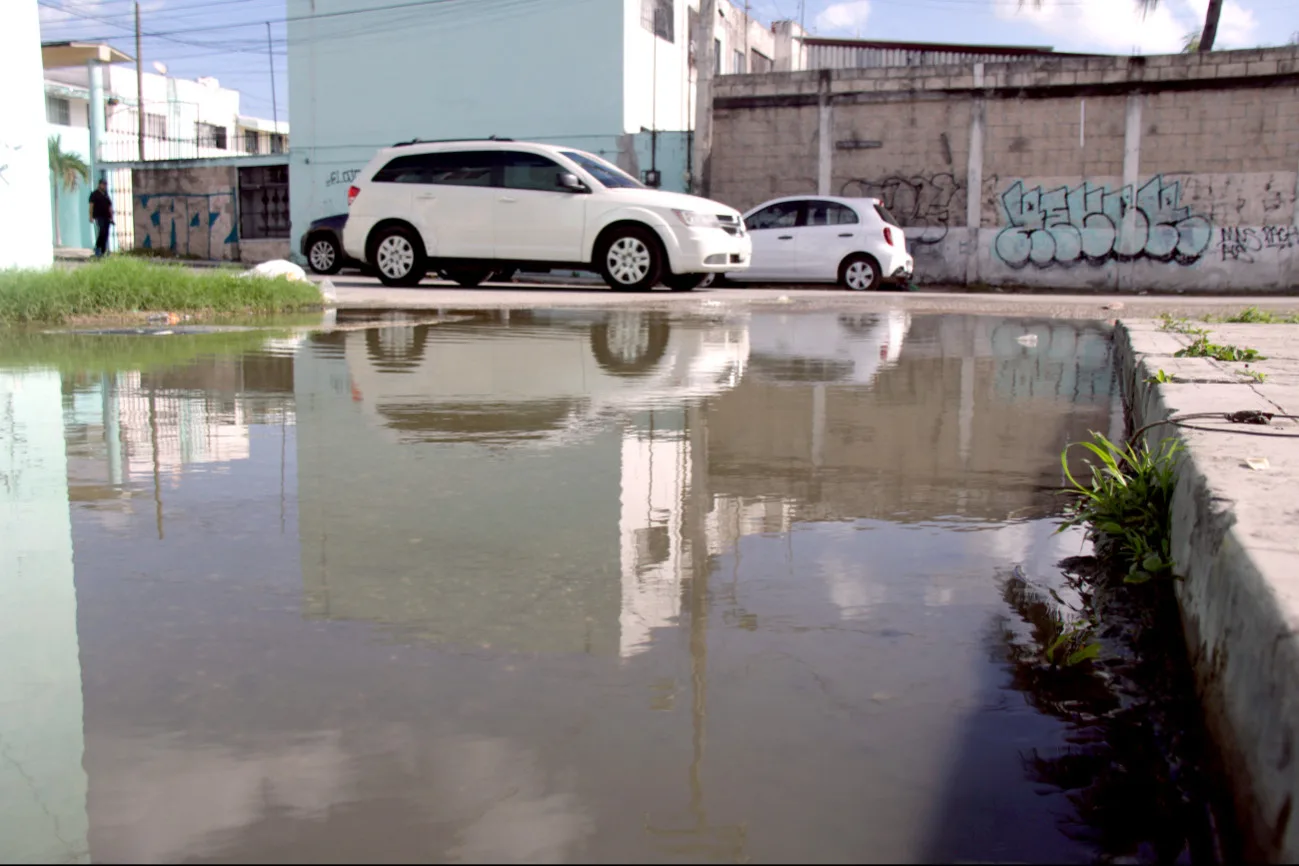
Benito Juárez, Mexico — The omission of developers who abandoned subdivisions without completing their handover to the municipality has left approximately 8,000 lots in 15 subdivisions in Benito Juárez in a state of neglect, where thousands of families live without full access to public services. In response to this situation, the municipal government is analyzing the expropriation of roads as a means to regain control of the affected areas and allow for public investment.
Councilman Samuel Mollinedo, from the Commission of Urban Development and Mobility, stated that at least 15 subdivisions were left abandoned by companies that disappeared, declared bankruptcy, or simply failed to fulfill their legal obligations of formal handover. As a result, the roads remain in a legal limbo that prevents the municipality from carrying out lighting, paving, and urban maintenance works.
“We have clear cases like Paseos del Sol, Urbi, or Quetzales. The Institute of Regulation and Welfare is working with technical tables alongside the Legal Counsel to explore ways to expropriate these roads and transfer them to municipal ownership,” he explained.
Mollinedo highlighted that several of the developers ceased to exist, making it practically impossible for them to claim any payment for the expropriation.
He added that the reform to the state Expropriation Law, carried out two years ago, now provides municipalities with a clearer legal pathway to intervene in areas that have been stalled for decades due to corporate negligence.
Currently, between 60 and 70 developments are in the process of municipalization, of which 28 have already completed the procedure. One of the most representative cases is the Quetzales subdivision, handed over 20 years ago through a delivery-reception act but without deeds for the streets, as the regulations at the time did not require this requirement.
The councilman recalled that even emblematic avenues such as Kabah, Bonampak, Cobá, Xcaret, and 20 de Noviembre lack deeds, despite having received public investment for years. This demonstrates that the lack of documentation is not a new obstacle but rather a backlog resulting from historical poor practices in urban development.
“For years, it was easy to say that intervention was not possible because they were not municipalized, but that initial omission was on the part of the developers, and it is the citizens who pay the consequences,” he affirmed.
He said that before the end of the year, there will be a meeting between the commissions of Municipal Planning, Public Works and Services, Urban Development, Mobility, and Finance to establish a definitive criterion regarding the regularization and possible expropriation of roads.
The municipal government seeks to close this chapter of neglect and correct the damages resulting from real estate projects that never fulfilled their handover and municipalization obligations. To prevent the issue from recurring, the Secretariat of Ecology and Urban Development now conditions the approval of new permits for developers who have not complied with the handover of their subdivisions.
More Business
- Quintana Roo to Add 10,000 Hotel Rooms by 2028
- Cancún’s Teatro de la Ciudad Nears 75% Capacity Ahead of Second Anniversary
- BBVA México and IMEF Warn Capping ISR Deductions Would Discourage Private Investment
- Mexico’s Customs Fines Jump 131% in First Half of 2026
- Former AMPI Playa del Carmen President Faces Fraud Case Over Undelivered Land
More Cancun
- Cancún Hoteliers Plan Rate Hikes of Up to 35% for Winter Season
- Cancún Taxi Driver Shot, Drives Himself to IMSS Hospital
- Cancún Travel Mart 2026 Sets Sights on More Mexican Caribbean Business
- Quintana Roo Marks 216th Anniversary of Mexico’s Independence With Statewide Celebrations
- Cancún Motorcycle Taxi Drivers Protest After Two Vehicles Torched
