
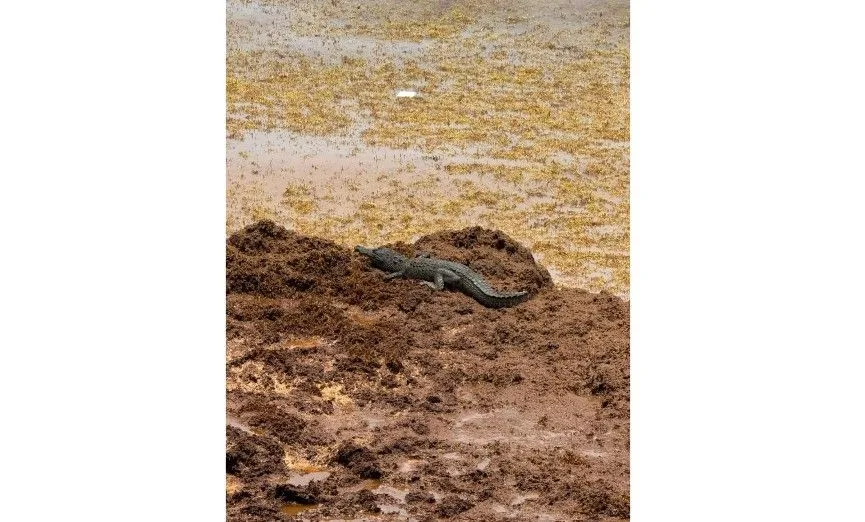
Tulum, Quintana Roo — A crocodile measuring approximately two meters in length was discovered among piles of sargasso on a beach in the Caleta Tankah area, alarming hotel workers who were cleaning the shoreline.
According to hotel employees, the reptile suddenly emerged while they were collecting the accumulated seaweed at the water’s edge. The crocodile remained on the sargasso for several minutes before retreating on its own.
Workers said the animal went unnoticed at first because of the large amount of seaweed piled up on the beach, raising concerns about the risks they face during cleanup operations.
After the sighting, workers called authorities, but by the time officials arrived, the crocodile had already moved to another area, so no capture or relocation was necessary.
Although cleanup activities continued as normal, employees expressed unease about the possibility that other wildlife could be hidden in the sargasso accumulations currently affecting several stretches of Tulum’s coastline.
Crocodile sightings in coastal areas of the municipality are not considered unusual due to the proximity of beaches, mangroves, lagoons, and cenotes — ecosystems that form part of the species’ natural habitat.
One of the most notable incidents occurred at Cenote Manatí, where a visitor was injured in an encounter with a crocodile. Following that event, environmental authorities reinforced protection measures and restricted tourism activities involving direct interaction with these reptiles.
Specialists recommend keeping a safe distance from any sighting, avoiding feeding or approaching the animals, and immediately reporting their presence to authorities to ensure both public safety and wildlife conservation.
The incident comes during an intense sargasso season on Tulum’s beaches, where cleanup crews are working continuously to remove the seaweed and maintain beach conditions.
More Environment
- Mexican Army Nears Completion of 16-Kilometer Jungle Road Over Tulum’s Sac Actún Cave System
- Akumal Halts Turtle Swim Tours Through September
- Mexico Assigns $110 Million Navy Budget to Fight Sargassum in Quintana Roo
- Mérida Opens First Green Corridor to Fight Climate Change
- El Niño Keeps Atlantic Hurricane-Free, Setting Record for Latest First Storm in Decades
More Tulum
- Five to Face Trial in Tulum Funeral Home Equipment Theft
- Advocates Urge Quintana Roo Governor to Expand Xcacel-Xcacelito Turtle Sanctuary
- Three Arrested in Tulum After Taxi Driver Beaten and Robbed for Refusing Extra Passengers
- Tren Maya Archaeological Finds Won’t Be Displayed in Chetumal, INAH Says
- Tulum Hotels Stay Open Through Renovations Ahead of High Season, Union Says