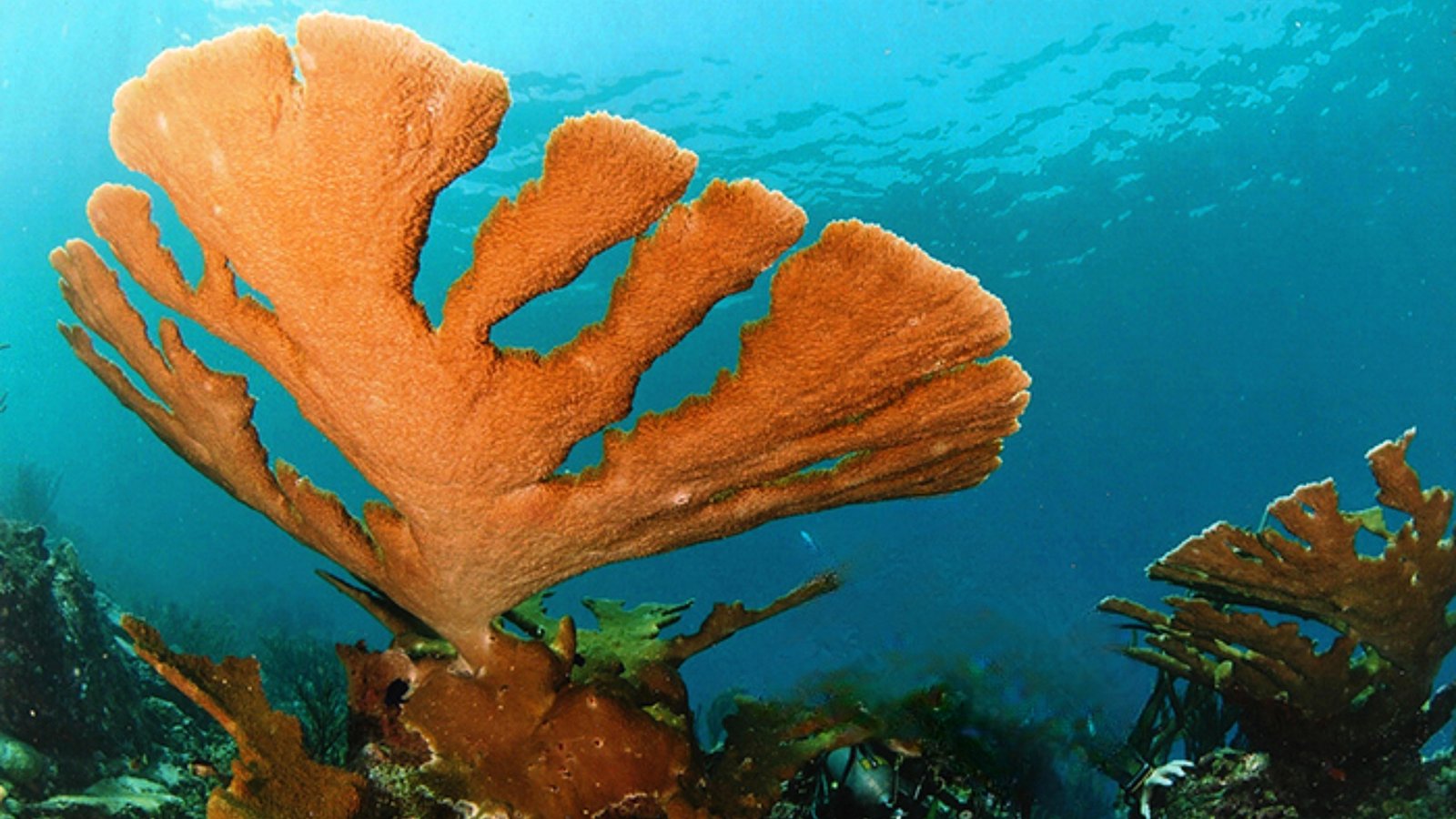
Cozumel, Quintana Roo — The Mexican Caribbean holds an uncomfortable secret: elkhorn coral in Cozumel has stopped reproducing effectively. While still alive, something in its natural cycle has broken, putting the entire ecosystem at risk. This phenomenon speaks not only to biodiversity loss but also to climate change, mass tourism, and marine pollution.
A Giant That No Longer Reproduces
For eight years, scientists monitored Acropora palmata colonies in Cozumel and found something disturbing: synchronized spawning has practically disappeared. This annual event, which occurs once a year after the full moon, is essential for eggs and sperm to meet in the water and produce new larvae.
The problem isn’t that the coral has stopped producing gametes—it still does. But colonies no longer release these packets simultaneously. Without synchronization, there’s no fertilization, and without fertilization, no new generations. It’s as if the entire system were ready to function, but nobody shows up for the appointment.
Surviving First, Reproducing Later (If Possible)
Researchers found that corals are prioritizing survival over reproduction. This occurs when the environment becomes hostile: elevated temperatures, pollution, and constant stress force organisms to focus on repairing damage.
The data are clear. Decades ago, water temperatures hovered around 26-29°C. In 2023, temperatures reached up to 33°C in Cozumel, a critical level. This is compounded by diseases like SCTLD, which in 2018 eliminated up to 60% of corals on the island. The result is a fragmented ecosystem where colonies are too far apart to reproduce efficiently, a phenomenon known as the Allee effect.
Lights, Cruise Ships, and Stress: What the Coral Can’t Withstand
Cozumel isn’t just a natural paradise—it’s also a tourism epicenter. In 2025, it received over 4.7 million cruise passengers, creating enormous pressure on the environment. These ships produce millions of liters of wastewater and use highly polluting fuels. One of the most unexpected factors is artificial light from hotels and piers.
Coral uses moonlight as a signal to reproduce, and light pollution completely disrupts this process. It’s like trying to sleep with all the lights on: the natural rhythm breaks. Additionally, direct physical contact—people stepping on corals or recreational activities—and poor water quality complete the cycle. The result: a reef that still stands but slowly loses life.
The Coral That Builds Cities Under the Sea
It’s no exaggeration to call it the “architect of the reef.” This coral creates structures that serve as shelter for fish, protect coastlines, and reduce hurricane impacts. Without it, the ecosystem loses stability and biodiversity.
Its reproduction was already complex: it occurs within a very short time window, and of millions of gametes, only one might reach adulthood. Now, without synchronization, those probabilities plummet further. It’s a fragile system that depends on nearly perfect conditions.
There’s Still Time: How to Prevent Reef Collapse
The good news is that not all is lost. In places closer to the mainland, like Punta Venado, coral still maintains synchronized reproduction. This shows the problem isn’t irreversible. Experts propose concrete solutions: reduce light pollution, improve water quality, control tourism, and increase coral density through restoration.
It’s not just about protecting what remains, but recovering conditions that allow life. The case of Jamaica even showed something surprising: after a devastating hurricane, reefs began regenerating in areas where sea floors were naturally cleaned. Sometimes, the ecosystem just needs an opportunity.
Elkhorn coral in Cozumel hasn’t died, but it has stopped reproducing, which could be even more concerning. Between climate change and human pressure, we’re seeing an entire ecosystem enter a pause. Science has already identified the causes and possible solutions, but time is running out. If this “architect of the reef” disappears, we won’t just lose biodiversity, but a key natural barrier for millions of people.
Discover more from Riviera Maya News & Events
Subscribe to get the latest posts sent to your email.