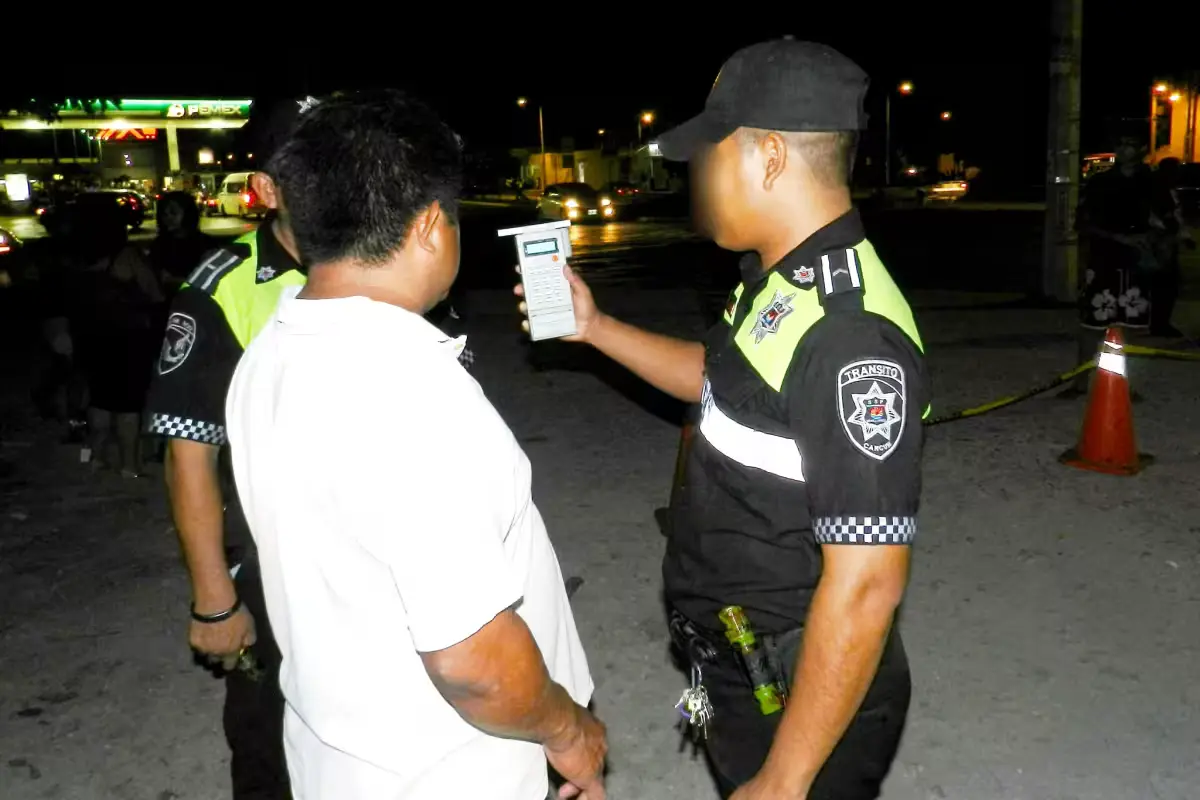
Cancún, Quintana Roo — Municipal authorities have canceled the city’s breathalyzer checkpoint program, citing public distrust and allegations of corruption that have divided residents over whether the move ends abuse or increases road risks.
Officials announced the suspension, stating the program had become a controversial tool that generated social discontent and doubts about its application. They said the decision responds to the need to rethink road safety strategies with greater transparency and public credibility.
The program had faced constant accusations of alleged authority abuses, opaque procedures, and possible irregularities during its execution. While authorities acknowledged its purpose was to prevent accidents related to alcohol consumption, they admitted negative perception ultimately undermined its legitimacy.
A local survey of seven residents revealed mixed opinions. Mariana López, a hotel sector employee, supported the suspension, saying, “Many people were afraid of how the checkpoints were conducted.” In contrast, private transport driver Juan Ramón Morales Ramírez argued that removing checkpoints could raise risks on roads, calling it “an action that did promote prevention.”
Businessman Wilberth T. commented the initiative could have been positive if applied lawfully and focused on those actually driving drunk. “I don’t think they used it to prevent accidents, but to stop people who had two or three beers with a meal and extract money from them. In that sense, I think it’s right they remove it; it wasn’t implemented as it should be, unlike other places,” he said.
Fernando Padilla noted, “The breathalyzer is a useful tool because it reduces traffic accidents; what’s not acceptable is that some officers take advantage to get money. They shouldn’t allow corrupt elements to act, and those caught driving under the influence should face appropriate penalties. It could even be expanded into a comprehensive program that includes drug and weapon detection.”
Horacio Reyes emphasized, “In Mexico, as in civilized countries, there are rules to prevent excesses that cause tragedies. Alcohol and other substances create conflicts and even deaths due to irresponsibility.” He stressed checkpoints are needed due to some people’s lack of awareness, and fines help regulate that behavior.
Former lawmaker Francisco Amaro said the measure was initially necessary due to some drivers’ recklessness and the ineffectiveness of transit authorities, which forced the implementation of checkpoints that initially succeeded in reducing fatal crashes. “Today it should only be applied during high seasons, as a reminder that it’s not persecution but prevention. Canceling it would be regrettable, though in its final stage it became an extortion mechanism. There were officers stationed two blocks before bars to stop and pressure drivers. It works, but it needs reorganization and strengthening,” he stated.
Laura Méndez, a downtown merchant, agreed the plan needed adjustments, not elimination. A university student added the device had lost credibility due to citizen complaints and any new strategy must ensure clear rules and fair treatment.
The municipal government clarified the suspension does not mean relaxing transit actions but starting a review to design more effective prevention mechanisms with greater public acceptance. Alternatives under consideration include awareness campaigns, different supervision schemes, and citizen organization participation in monitoring future measures.
Interviewees noted that in Cancún, where tourism is a key economic driver, the checkpoint debate has gained relevance due to the constant flow of national and foreign visitors.
Discover more from Riviera Maya News & Events
Subscribe to get the latest posts sent to your email.