Cancún, Quintana Roo — Neighborhoods that were only recently regularized in this resort city can apply for municipal participatory budget funds for the first time, after a redistricting that expanded the program from seven to 10 zones.
The change formally brings a string of developing communities into the process, most notably settlements in zones 2 and 3 such as Diamante and Zac Be, whose residents can now submit public infrastructure proposals, said Berenice Sosa Osorio, head of the Municipal Secretariat of Wellbeing.
Sosa Osorio said families in the newly integrated areas have responded enthusiastically, turning out for training workshops on how the participatory budget works. The mechanism lets residents decide how a portion of public money is spent through what city officials describe as a transparent, auditable process carried out in public view.
City Hall Begins 10 Co-Creation Workshops
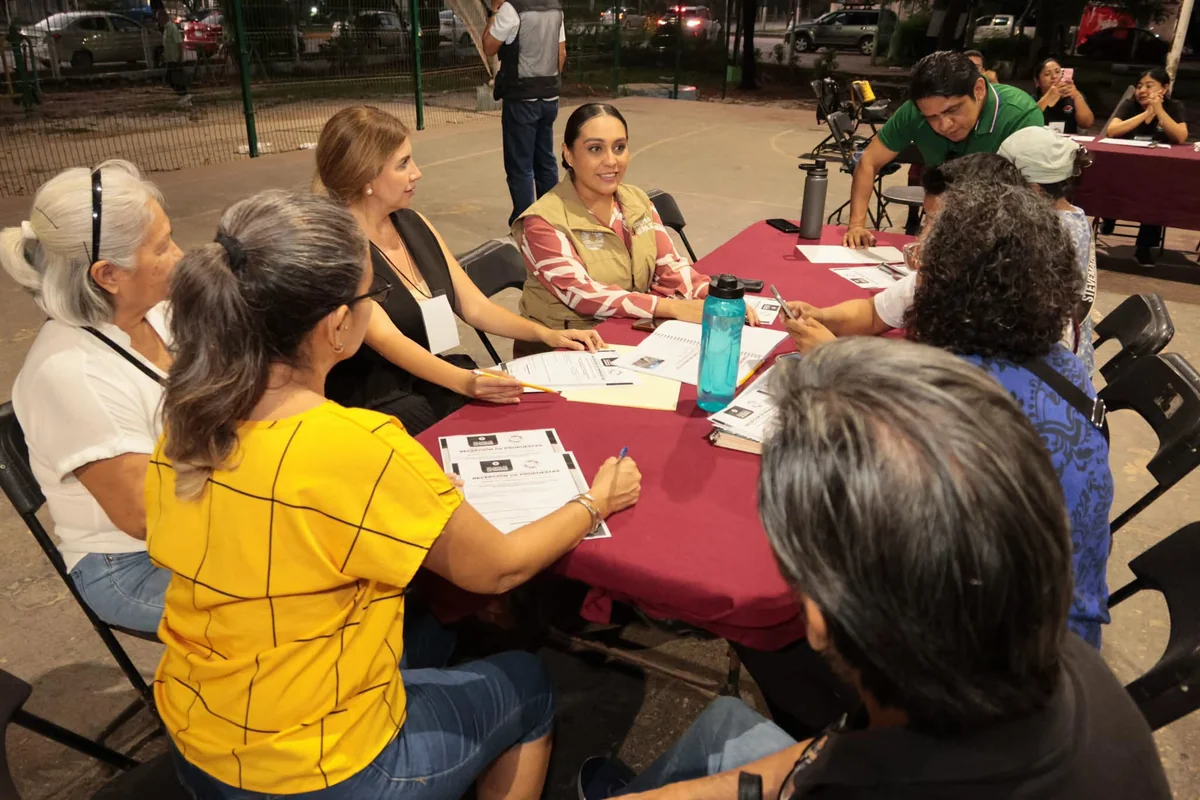
Ahead of the 2027 participatory budget, the Benito Juárez municipal government has started the first of 10 scheduled co-creation workshops. In these neighborhood sessions, residents draft proposals to attract municipal investment in priority areas.
Demand has clustered around strengthening public services, urban and rural infrastructure, sustainable mobility, ecological preservation and public safety measures in communities.
Staff from key agencies advise the working groups directly: the Municipal Secretariat of Wellbeing, the Institute for Urban Development Planning (IMPLAN), Urban Development, Citizen Security and Traffic, Municipal Patrimony, and the Directorate of Transport and Roads. Their involvement is meant to ensure projects address real problems and are technically, legally and financially viable.
100 Million Pesos Across 254 Blocks and Neighborhoods
To allocate the 100 million pesos approved for this cycle, the municipal government divided the territory into 10 strategic zones covering 254 blocks and neighborhoods. The newly regularized neighborhoods fall under the Alfredo V. Bonfil delegation and sit within zones 2 and 3.
- Zone 2 has a programmed budget cap of 8,471,942.89 pesos.
- Zone 3 has 10,010,643.78 pesos assigned to carry out the projects residents choose.
To guide decisions, authorities present a detailed sociodemographic profile at each workshop so that proposals match each area’s actual needs.
Young Populations, Different Priorities
Zone 2 has 34,843 residents, about 4% of the municipality, with a near-even gender split of 49.7% women and 50.3% men. It is a young area: 72.7% of residents are of working age and children and teenagers make up 23%, one of the highest shares in the municipality, while people over 65 account for just 4.3%. Officials say that points to demand for educational, recreational and sports spaces.
Zone 3 has 44,145 residents, 5% of Benito Juárez’s population, and the highest share of women in the municipality at 51.7% against 48.3% men. Its population is 73.7% working age, 22.1% children and young people, and 4.3% older adults — a mix officials say calls for infrastructure that serves both children and elderly residents.
Sosa Osorio stressed the importance of putting the data in the hands of neighborhood committees so residents and the government can review technical requirements together and decide based on evidence. Program details are available on the municipal government’s website.
Residents may submit proposals individually or collectively, and each one is reviewed jointly with the municipality. Once the most viable proposals are approved, residents vote on which project their community will receive.
A Program That Began in 2022
Cancún introduced the participatory budget in 2022 under then-mayor Mara Lezama, now governor of Quintana Roo. Under current mayor Ana Paty Peralta, the model has been consolidated and expanded through stronger co-creation workshops and both in-person and online voting.
More Government
- Firms Pursue Battery Storage Plant in Playa del Carmen Despite Semarnat Rejection
- Playa del Carmen Rights Commission to Follow Up on Canadian Tourist’s Extortion Complaint Against Police
- Gas Leak Triggers Evacuation at Coppel Store in Playa del Carmen’s Plaza Las Américas
- Cattle Trucks Resume Entry at Xmatkuil Fair After Dzununcán Ejidos Lift Blockade
- Cancún Residents Halt Aguakan Roadworks in Villas Otoch Over Missing Permits
More Cancun
- Mexican Caribbean Forecasts Winter Tourism Surge as Flight Seats Rise 24 Percent
- Gunmen Shoot Taqueria Employee as He Closed Up in Cancún
- Cancun Family Identifies Missing Man in Viral Video, Leading to Reunion After Five Months
- Encuentro Mariano 2026 Expects 2,700 Faithful in Cancún and Debuts in Playa del Carmen
- Quintana Roo Expects Strong Buen Fin and Favorable Close to 2026