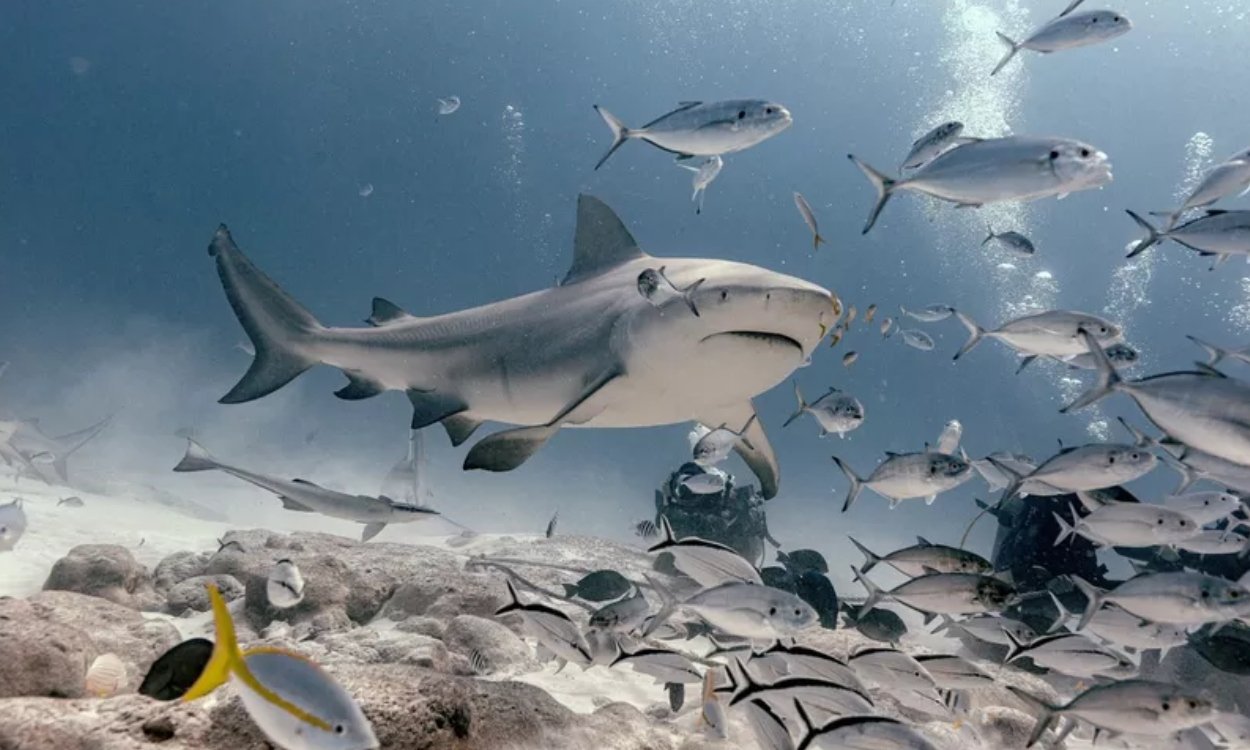
Playa del Carmen, Quintana Roo — The 2026-2027 bull shark observation and diving season opened officially in Playa del Carmen with at least 12 females confirmed during the first immersion of the season, an activity that pairs tourism with conservation work.
Among the sharks observed were Frizzia and Lizza, two animals already identified in the area through tracking and photo-identification efforts.
Marine biologist and conservationist Ana Cecilia Gutiérrez Navarro, a projects officer with the organization MarAlliance and head of the community initiative Ba’alche Proyecto Azul, stressed the importance of keeping diving activities under strict conservation criteria.
She urged visitors to enjoy encounters with the animals through responsible practices that do not alter their behavior or interfere with their natural habitat.
Three Years of Monitoring Show a Stable Population
According to MarAlliance records, monitoring carried out over the past three years indicates that the bull shark (Carcharhinus leucas) populations in the region have remained stable.
Census work involving researchers and Playa del Carmen residents has also produced a catalog of at least 40 identified individuals in the area.
One result specialists highlight is a rise in the number of juvenile sharks recorded. That indicator matters because it shows new generations are present and provides data for assessing the population’s continuity.
The research also sheds light on how the species moves and how it relates to the marine and coastal ecosystems of the Mexican Caribbean. The information gathered will serve as a baseline for judging over the long term whether the population grows or holds steady, and will help shape conservation and management strategies for protected natural areas.
Responsible Diving Takes Center Stage
The arrival of bull sharks is a draw for specialized dive tourism, but it also places responsibilities on service providers and visitors.
Gutiérrez Navarro said the positive conservation results stem from coordinated work among the specialized diving sector, local fishermen and authorities at all three levels of government, particularly the National Commission of Protected Natural Areas (Conanp).
She noted that the bull shark is a key predator for ecological balance, feeding on fish, rays, crabs, squid and even other sharks. Its role extends beyond the food chain, helping connect different ecosystems and drive the movement of energy between aquatic environments.
Conserving the species is also an opportunity to strengthen nature tourism in Playa del Carmen, provided activities follow protocols that avoid disturbing the animals.
Research Aims to Expand Knowledge Across Quintana Roo
Scientific teams use various methods to identify individual sharks and study their behavior in northern and central Quintana Roo. One goal is to extend monitoring to strategic areas such as Banco Chinchorro National Park.
The project also seeks to build a baseline of information on the state’s marine megafauna, with records that track how populations change and support future environmental decisions.
Local communities play an important part by reporting sightings and promoting a culture of respect for marine wildlife.
Officials Ask Public to Respect the Sharks’ Habitat
Responding to the perception that sightings are happening closer to shore, Gutiérrez Navarro said bull sharks have always lived in these waters and that their presence is part of the region’s natural cycles.
She called on tourists, residents and service providers to learn the codes of conduct for observation and diving so they do not interfere with the animals.
Specialists insist the goal should be to observe and learn about the sharks while remembering they are wild animals in their own environment.
More Tourism
- Six Injured as Two Passenger Vans Collide Near Tulum’s Parque del Jaguar
- Crocodile Hidden in Vegetation Startles Pedestrian in Cancún’s Hotel Zone
- Grupo Mundo Maya Seeks to Build 158-Space Parking Lot Inside Tulum National Park Preservation Zone
- Cancún Opens World Aquatics Open Water World Cup 2026/27
- Yucatán Governor Opens Xmatkuil 2026 Fair, Expecting Thousands of Families Through November 29
More Playa del Carmen
- Playa del Carmen Kicks Off Eight-Park Renovation Under Parquemanía Program
- Canada’s Pouzza Fest Brings Punk, Ska and Cumbia to Playa del Carmen in 2027
- Playa del Carmen Offers Cash for Guns in Weeklong Disarmament Drive
- Playa del Carmen Launches Free Eyeglasses Program Across 291 Public Schools
- Playa del Carmen Visitors Say App-Booked Taxi Demanded Extra Cash