
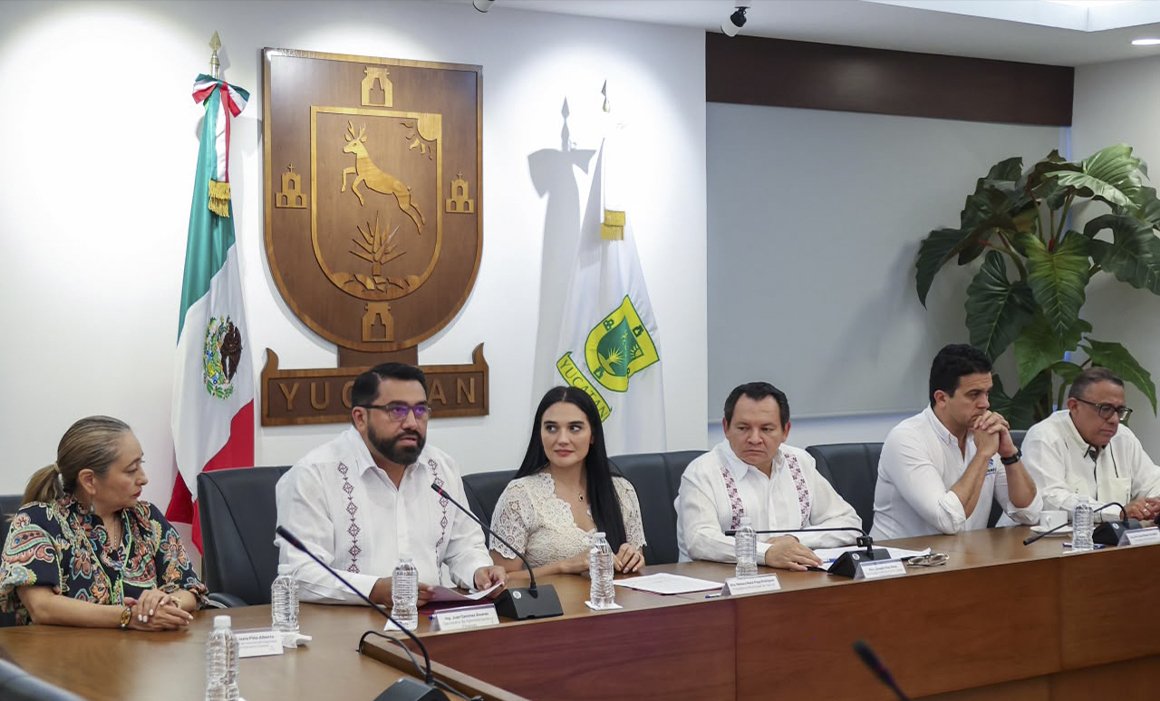
Mérida, Yucatán — Governor Joaquín Díaz Mena on Sunday signed administrative collaboration agreements with the municipalities of Izamal and Progreso to strengthen local property tax collection, a move that will give both towns more resources for public works and services while simplifying payment for residents.
Under the agreements, the two municipalities join the State Strategy for Strengthening Municipal Finances, allowing them to tap into the systems, collection offices, electronic payment platforms, legal expertise and operational capacity of the Yucatán Tax Administration Agency (AAFY). State officials said the arrangement will make it easier for residents to pay their property taxes and boost municipal revenue without infringing on local autonomy.
“This agreement means more resources to address what families need every day: better streets, public lighting, parks, markets, cleanliness and infrastructure,” Díaz Mena said. “Collecting better is serving people better.”
The governor said the municipalities will also gain access to 30 percent of the growth component of the Municipal Development Fund, unlocking additional federal funding for infrastructure and community projects.
“Izamal and Progreso are making a responsible decision that strengthens their finances and will allow them to offer better services to their people,” he said. “Our commitment is to accompany all municipalities that wish to join this effort.”
Díaz Mena highlighted that his administration continues to promote municipal strengthening through institutional coordination, efficient use of public resources and transparency. He noted that Mexico’s Secretariat of Finance and Public Credit recently ranked Yucatán first nationally in performance-based budgeting.
Mario Can Marín, director general of AAFY, said the goal is to put the state’s technical and technological capacity at the service of municipalities so that every peso collected translates into more works and better services. He stressed that municipalities will retain full authority to set property values, rates, discounts and fiscal incentives while using a modern platform that reduces administrative costs and makes payments easier for taxpayers.
Juan Sánchez Álvarez, secretary of administration and finance, said the strategy strengthens municipalities’ ability to deliver results through more efficient administrative processes and greater investment capacity.
Izamal Mayor Melissa Puga Rodríguez said the agreement will help her council respond more quickly to residents’ needs, improve public services and simplify paperwork. “Property tax represents a direct investment in communities, translating into more works, better infrastructure and better living conditions for families,” she said.
Progreso Mayor Erik Rihani González said the coordinated work with the state government will allow for more efficient citizen services, make tax compliance easier and bring technological tools to modernize local management.
Dalia Isela Piña Alberto, director general of the Yucatán Institute for Legal and Property Security (Insejupy), also attended the ceremony. Her agency participates in coordination efforts that strengthen property cadastre management and provide greater legal certainty for property owners.
More Government
- Cancún Orders Removal of Grounded Boats From Nichupté Lagoon
- Cancún Mayor Ana Paty Peralta Says She Will Finish Her Term and Skip ‘Gino’ Segura’s Campaign
- DHS Fentanyl Trafficking Investigations Fall 24% as Focus Shifts to Immigration Enforcement
- Unpaid Municipal Debt Worsens Garbage Crisis on Holbox
- Trump Urges Mexico to Prosecute Officials Who Help Drug Cartels
