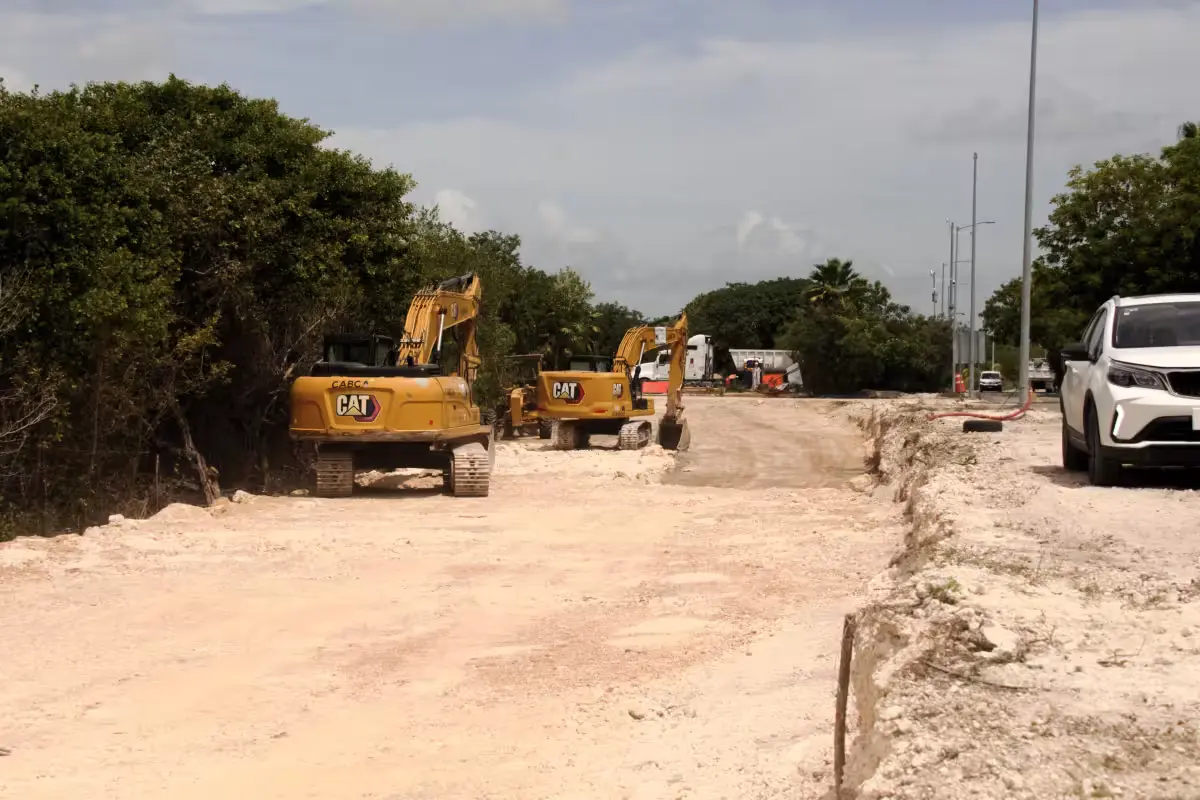
Cancun, Quintana Roo — A biologist is conducting daily inspections along the first phase of the Cancun-Costa Mujeres boulevard construction to ensure environmental regulations and wildlife protection measures are being followed.
Biologist Jesus Arturo Lopez said he patrols the area to rescue animals displaced by the work. “Basically, we come across iguanas; we rescue them and move them to a safe area. There are also some birds, but no habitat impact has been reported,” he said.
The project, with an investment of 183 million pesos, is currently in the earthwork leveling phase and identification of electrical, water, and other utility lines.
The boulevard is part of the Cancun-Isla Blanca Tourist Corridor rehabilitation on the mainland portion of Isla Mujeres. This phase covers two kilometers from kilometer 7+000 to kilometer 9+000. The road will be widened from two to four lanes, and will include a bike lane, wider sidewalks, and a median.
Work is being carried out by the Secretariat of Infrastructure, Communications and Transportation (SICT). The full route will span 25 kilometers; stages one and two, totaling about 4.3 kilometers, are scheduled for this year.
Tasks include earthmoving, storm drainage installation, street lighting, and asphalt concrete paving. The project also includes complementary infrastructure for safe and sustainable mobility, such as bike lanes, wider sidewalks, and a central median.
Subsecretary of Infrastructure Juan Carlos Fuentes Orrala said the initiative will benefit 526,795 residents and generate 19,645 jobs.
Motorists acknowledged the work is necessary but noted that traffic has been affected by the reduction to one lane in each direction.
Worker Miguel, who is digging a trench for the hydraulic network connection, said the project is divided between two companies, each assigned specific sections.
Lopez noted that the area had already been impacted before, so native wildlife is limited.
More Environment
- Cancún to Host Climate Change Colloquium With Experts From Mexico, Guatemala and New York
- Tulum Records Over 6,000 Sea Turtle Nests as Beach Furniture Threatens Hatchlings
- Lab Coral Restoration Urgent as Caribbean Reefs Decline, Expert Warns
- Quintana Roo Bolsters Sargassum Strategy With Satellite Monitoring and Research
- Stationary Front to Bring Rain Across Yucatán on Tuesday