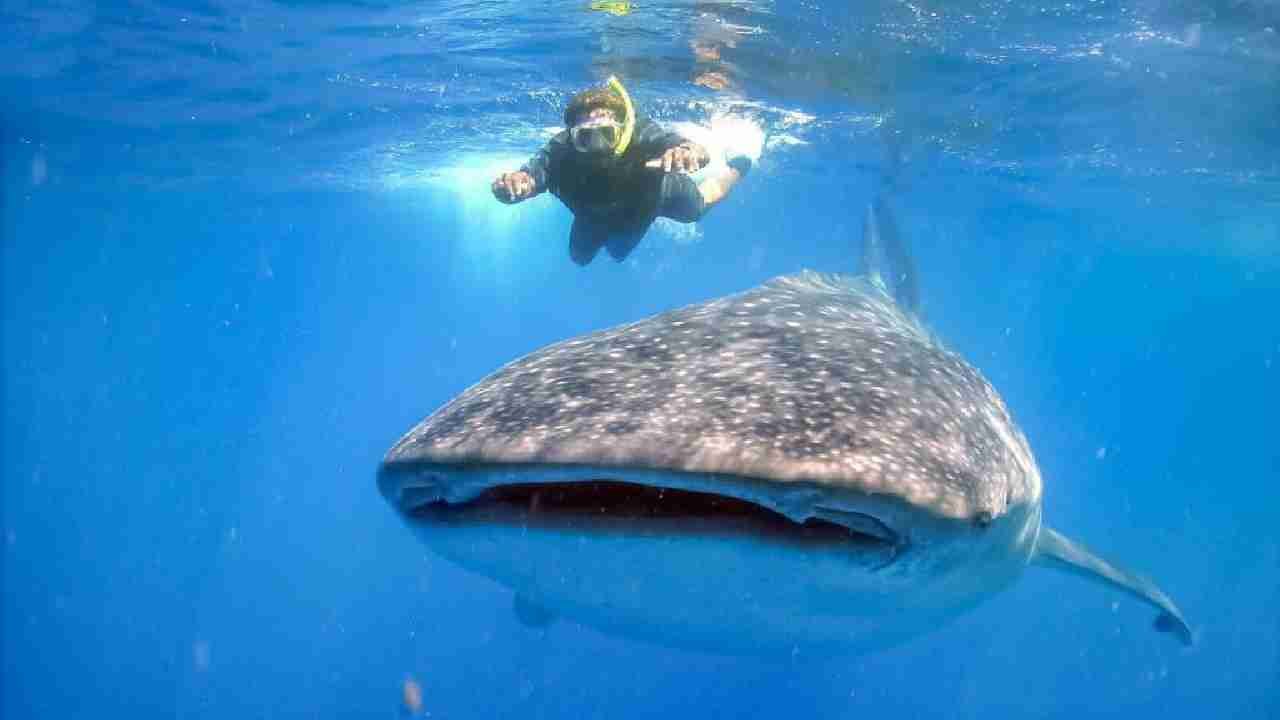
Holbox, Quintana Roo — The whale shark viewing season on Holbox Island is gaining momentum, and local tourism operators are optimistic that the end of the 2026 FIFA World Cup will drive a surge in both domestic and international visitors.
Juan Rico Santana, president of the Holbox Tourism Cooperatives, said the activity is currently operating at 50% capacity, with 15 to 20 boats departing daily. July and August typically mark the peak demand for this ecotourism experience.
“July and August are the strongest months of the season, with hundreds of tourists arriving to swim responsibly with whale sharks in the waters of the Mexican Caribbean,” he said.
Rico Santana noted that whale shark viewing is one of Holbox’s main summer attractions, drawing primarily domestic tourists as well as visitors from England, France, and Spain. He emphasized that the activity follows a responsible tourism model, as the whale shark is a protected species. Encounters are conducted under strict environmental regulations to ensure both visitor safety and species conservation.
During last year’s peak season, up to 300 whale sharks were sighted in a single day, making the area one of the world’s top observation sites for the species, he recalled.
For the current season, which runs until mid-September, Mexico’s National Commission of Natural Protected Areas (Conanp) has authorized 146 permits for the activity: 92 in Isla Mujeres, 48 in Holbox, and six in Chiquilá, distributed among 14 tourism cooperatives.
The Whale Shark Biosphere Reserve covers approximately 146,000 hectares of marine surface, stretching from Isla Contoy to Bahía de la Ascensión and the Yum Balam Flora and Fauna Protection Area, a critical ecosystem for the species’ conservation.
Beyond offering a unique experience for visitors, whale shark viewing has become a key economic driver for Holbox, generating income for hotels, restaurants, transportation providers, and nautical services, bolstering the island’s tourism activity during the summer season.
More Tourism
- Isla Mujeres Ready for Luz y Vida 2026 Festival With Free Pandora Concert
- Paraguayan Tourists Challenge Asur Over $30 Exit Fee at Cancún Airport
- Mexico Hoteliers Warn of 1.1 Million Air Tourist Loss as U.S. Arrivals Slump
- Playa del Carmen Businesses Seek Later Closing Hours for Bars and Restaurants
- National Geographic Names Maya Ka’an Among Top Destinations to Visit in 2027