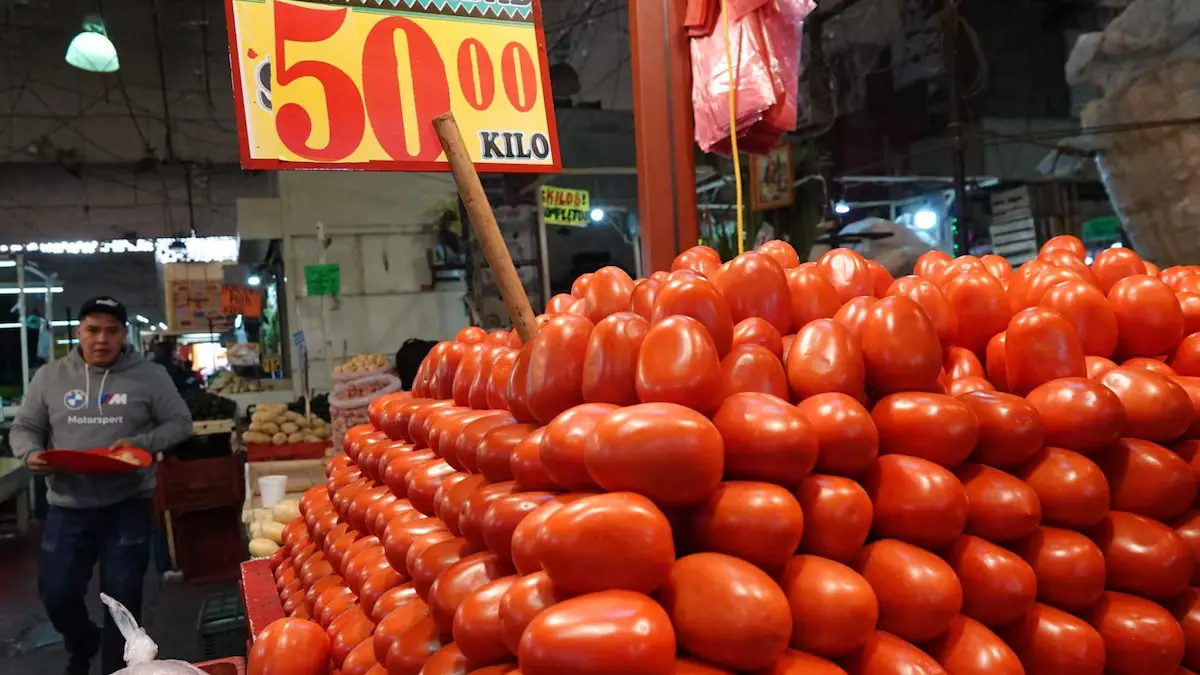
Washington, D.C. — The US International Trade Commission (ITC) has upheld a 17.09% tariff on Mexican tomatoes, ruling that the duty is necessary to protect the domestic industry from continued harm.
The decision keeps in place the tariff that has applied to Mexican tomato exports since July 14, 2025. The measure stems from an extraordinary review under the Tariff Act of 1930, which allows US authorities to revisit determinations when market conditions change — as they did following signals detected in January.
The ITC ruling also opens the door to a new evaluation by the US Department of Commerce (DOC), which could adjust the tariff rate for the 2025-2026 period. The DOC’s ordinary review, scheduled for July, will focus on recalculating the dumping margin — the difference between the price of Mexican tomatoes in the US market and their production cost or home-market price.
Based on the results, US authorities will decide whether to maintain, increase, or decrease the tariff.
In response, the Mexican Association of Protected Horticulture (AMHPAC), which represents tomato exporters, has asked its members to voluntarily submit information to strengthen the industry’s defense before US authorities.
Industry groups warn that raising the tariff to between 25% and 30% would be a “catastrophe” for Mexican producers. The Confederation of Agricultural Associations of the State of Sinaloa (CAADES) reported that for the fall-winter 2025-2026 cycle, tomato planting area is expected to drop 30%, from 11,500 hectares last season to 8,000 hectares.
Producers also fear that US authorities could demand retroactive payment of the difference between the current 17.09% tariff and any new rate, adding further financial pressure.
The current tariff originates from an anti-dumping investigation launched in 1995-1996 after the Florida Tomato Exchange accused Mexican producers of unfair trade practices. The investigation was suspended under a Tomato Suspension Agreement, but that agreement expired in 2025, allowing the US government to revive the probe and reimpose the duty.
Under procedural rules, the tariff was calculated using price references from about 30 years ago, as the legal framework prevented the inclusion of more recent data.
More Economy
- Quintana Roo Warns Against Unchecked Hotel Growth as It Courts Brazil and Colombia
- Tren Maya Lost 5 Billion Pesos in Six Months as Operating Costs Soar
- Cancun’s Night Bike Ride Returns to Avenida Bonampak on October 3
- Volaris to Suspend Tulum Airport Flights, Second Mexican Carrier to Pull Out
- Proposed 351.80-Peso Non-Resident Fee Hike Threatens Tulum Tourism Recovery in 2027