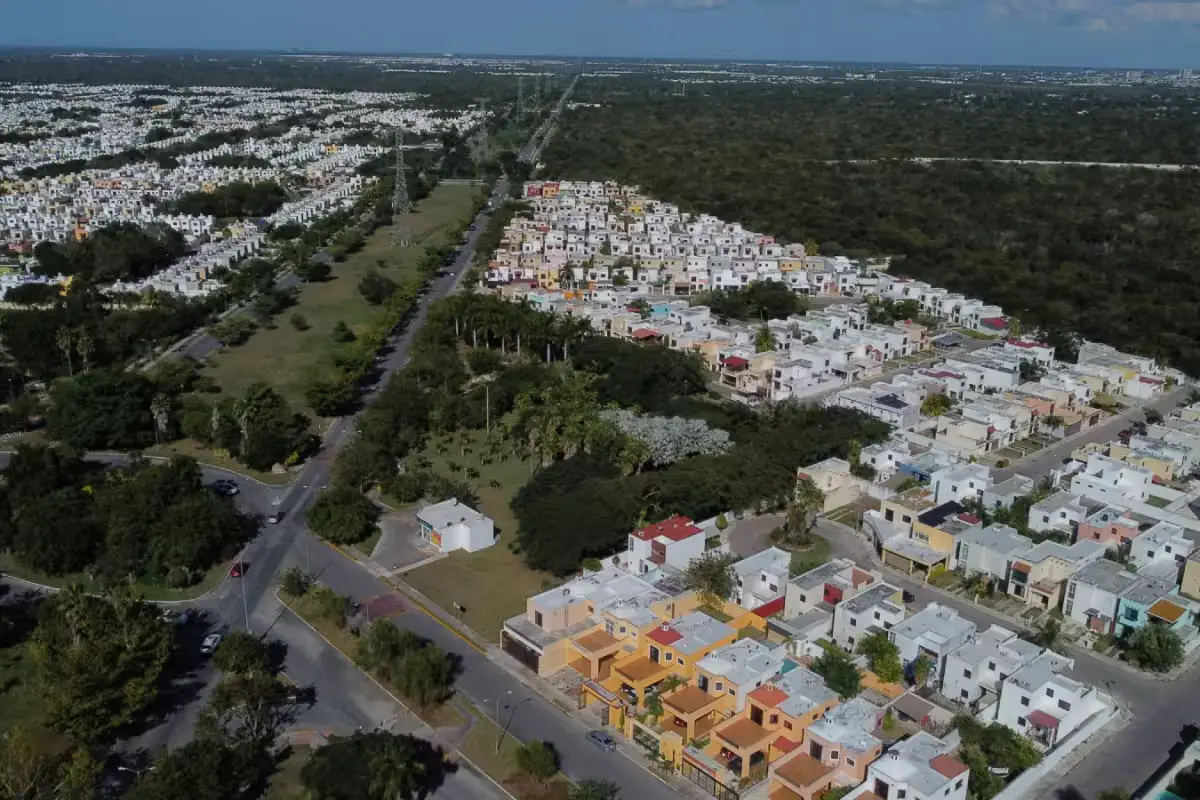
Mérida, Yucatán — More than 10,000 “investment lots” were sold across Yucatán between 2020 and 2024 by Grupo Foret, according to an investigation. Many of the properties lack environmental viability and basic services, and were sold despite negative rulings from Semarnat, the federal environment agency.
Warnings from the real estate sector
Mauricio Morales Greene, president of the National Chamber of Housing Development and Promotion (Canadevi) in Yucatán, said the “investment lot” model is being stamped out under new laws. “It is vital to tell customers that the investment lot is real estate fraud in the full sense of the law and is punishable,” he said.
In a joint statement, Canadevi and the Mexican Association of Real Estate Professionals (AMPI) in Mérida called the vast majority of these products a financial trap that, under current law, can lead to criminal liability for those who market them without meeting legal requirements.
Speculation distorts the market
Morales Greene said speculation on rural land has distorted the formal market and created a product sold as an accessible investment but rarely fit for habitation. The chamber has identified projects, mainly near the coast, with no urbanization, infrastructure or surrounding services. Some are even offered on wetlands, without an environmental impact statement or other permits.
Land prices in the region have risen by as much as 100 percent, according to industry figures. In some cases, Yucatán lots are advertised in the United States for up to $240 per square meter — about 4,300 pesos. Canadevi warns that this segment is at risk of a real estate bubble.
The lots share common shortcomings: narrow dirt-road access, no electricity, drinking water, drainage or street lighting, and locations miles from urban areas or the coast, with no guarantee services will arrive in the short or medium term.
Fraud cases reach the courts
The case in Seyé illustrates how the scheme plays out in court. According to the State Prosecutor’s Office, a couple promoted and sold lots in a supposed residential complex between July 2021 and June 2022, signing purchase agreements with buyers who handed over money. Investigators determined the couple allegedly had no intention of subdividing the land or honoring the contracts. The case is being prosecuted under case number 293/2026, and a judge issued an indictment for fraud in June. Both remain in pretrial detention.
In Tizimín, the state Sustainable Development Secretariat detected a project in February that was already being promoted on social media with streets, electricity and drinking water, despite lacking environmental authorization. The 160-square-meter lots were offered from 288,000 pesos.
Pedregales de Misnebalam has previously been cited by analysts as one of the state’s largest real estate frauds. Now Grupo Foret has joined the list, with investigative reports indicating buyers were promised high returns and urbanization but received vacant land without access or services.
Coastal ecosystems pay the price
The damage extends beyond family finances to coastal ecosystems. In Chelem, in the municipality of Progreso, the Federal Attorney’s Office for Environmental Protection (Profepa) closed a site in January after confirming the removal, burning and clearing of mangrove vegetation and its subdivision for irregular settlement. The initial damage covered 5,749 square meters.
A follow-up inspection in February found two more damaged areas within the same property, covering a combined 18,596 square meters — 13,022 on the east side and 5,574 on the west. The western section already had inhabited structures connected to drinking water and electricity. Investigators documented tree stumps, cut branches, evidence of fire, and posts and yellow tape used to mark lots before sale.
In March, Profepa, the Agrarian Prosecutor’s Office and the National Agrarian Registry signed a coordination agreement to curb illegal deforestation and prevent irregular land-use changes from being consolidated through agrarian procedures.
What the law requires
Existing law already covers these practices. Yucatán’s Real Estate Development Law, reformed in April 2025, regulates project authorization, and its regulations require documentation on roads, infrastructure, equipment, services and land use. Federal standard NOM-247-SE-2021 also requires real estate providers to offer truthful information when advertising uses images or location references that could mislead buyers about a property’s actual infrastructure.
Before making a down payment, Morales Greene said buyers should verify current municipal licenses, environmental authorization if required, registration of property-related documents with the Yucatán Institute of Patrimonial Legal Security (Insejupy), and the existence of standard-form contracts registered with the Federal Consumer Attorney’s Office (Profeco).
“The fact that the final customer researches the construction companies is the best mechanism we can have to avoid fraud and protect family assets,” he said.
A plot plan, a private contract or even a deed do not guarantee that land can become a housing development. To ensure certainty, a buyer must confirm the project matches the permitted land use, holds current authorizations, has urban development conditions, and can legally support the services it promises.
With demand for land rising around Mérida and its surrounding municipalities, the industry’s advice is straightforward: before buying cheap land, verify what you are buying and what can legally be done with it.
More Development
- Quintana Roo Moves to Power Public Buildings With Clean Energy
- Mayakoba Residents Cite Robberies as Playa del Carmen Announces New Park
- Rain-Filled Trenches Trap Drivers on Cancún’s Avenida Colegios
- Fonatur Weighs Options for Contested Malecón Tajamar Land in Cancún
- Pending Urban Development Plan Stalls Real Estate Growth in Cruz de Servicios, Playa del Carmen