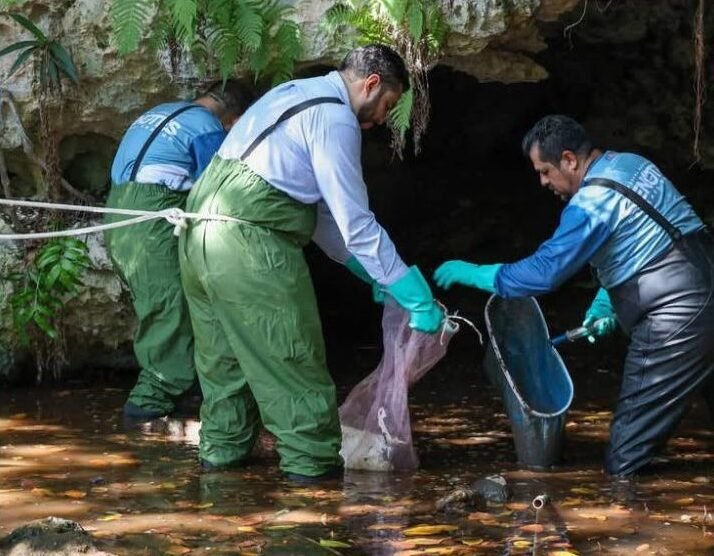
Cancún, Quintana Roo — Beneath Cancún’s image as a tropical paradise of white sand and turquoise water, a less visible crisis is unfolding. The city’s underground aquifer and its network of urban cenotes are being degraded by pollution tied to decades of rapid growth.
Unlike most of Mexico, the Yucatán Peninsula has no surface rivers. Fresh water flows through an extensive system of underground rivers, caves, and sinkholes known as cenotes. The region’s porous limestone, or karstic geology, acts like a sponge, quickly absorbing whatever is on the surface — sewage, chemicals, trash, and other urban pollutants.
As Cancún has expanded, its sanitation infrastructure has not always kept pace. Environmental researchers warn that some urban cenotes have become critical pollution hotspots, threatening the city’s drinking water supply, biodiversity, and the tourism industry on which the local economy depends. A 2021–2024 regional water program from the National Water Commission (Conagua) identified population growth, pressure on the aquifer, and sanitation needs as the main challenges for the Yucatán Peninsula’s hydrological region. Hydrogeology specialists have also warned that urban development must account for the fragility of the karst system, since building over underground caves and rivers can alter the natural flow of water.
Studies Document Microbiological and Chemical Contamination
Scientific evidence shows the contamination is no longer just a warning. A report card on Cancún’s urban cenotes, released in July 2021 by the Scientific Research Center of Yucatán (CICY), found microbiological and chemical damage in water bodies across the municipality of Benito Juárez.
Researchers detected fecal bacteria such as Escherichia coli and fecal coliforms, with concentrations that can rise during rainy season as pollutants wash in from streets, homes, commercial areas, and settlements lacking proper sanitation. The tests used limits established by the Mexican official standard NOM-001-SEMARNAT-2021, which governs wastewater discharge.
CICY’s Water Sciences Unit has also documented emerging contaminants in the cenotes, including residues from medications, antibiotics, painkillers, caffeine, cleaning products, and other compounds linked to human activity. High levels of nitrogen and phosphorus — largely from detergents, fertilizers, and wastewater — are altering the natural chemistry of the water and destabilizing these ecosystems.
A Direct Link to the Caribbean Sea
The damage does not stay within city limits. Cancún’s groundwater is connected to the coast through an underground river network that carries water and contaminants into mangroves, coastal lagoons, and eventually the Mesoamerican Reef, the world’s second-largest coral barrier reef.
Nutrient-rich water reaching the marine environment can trigger eutrophication, a process that fuels runaway growth of macroalgae. The algae compete with coral for space and sunlight, weakening the reef’s ability to survive. A degraded reef also loses its role as a natural barrier that protects beaches from erosion and softens the impact of hurricanes.
For a destination that depends on its natural assets, aquifer pollution is not merely an environmental issue. It is an economic and public health risk, experts say.
Cenotes Used as Illegal Dumps
Wastewater is not the only problem. Cleanup efforts in recent years have exposed another side of the crisis: urban cenotes have been used as illegal dumping sites. Volunteers and authorities have pulled out plastic bottles, tires, furniture, appliances, construction debris, and even large objects from the water.
Discarded oils, fuels, metals, and synthetic materials can slowly seep into the ground and contaminate the water for years. Even after a cenote is cleaned, specialists stress that removing visible trash addresses only part of the damage. The real recovery depends on stopping pollution at its source and improving sanitation systems.
Municipal Officials Step Up Cleanup and Monitoring
Local authorities and researchers have begun responding to the threat. Fernando Haro Salinas, director of ecology for Benito Juárez, said the municipality has carried out two cleanups of urban cenotes this year as part of its Urban Cenote Cleaning Program. He added that in 2026, water quality studies are being conducted with CICY’s Water Sciences Unit in Cancún to update scientific data and guide conservation strategies.
Haro Salinas also noted that the city’s cenote cleanup program received recognition from the United Nations in 2025, on World Water Day, for its environmental and community impact.
The scale of the challenge is considerable. Ivette Lorena Manjarrez Cardona, a city councilor who chairs the Tourism, Ecology and Environment Commission, said more than 80 urban cenotes lie beneath Cancún, all connected by the underground river system. She described protecting them as a water security issue for future generations.
Community Service Helps Restore Natural Spaces
Some of the cleanup work is being done by people sanctioned for minor administrative offenses. Jorge Rivero, director of the city’s civic courts, told reporters that since February, more than 400 hours of community service have been performed under the program. Between 30 and 40 offenders have taken part alongside the ecology department in cleaning cenotes, parks, green spaces, and other public areas.
Prevention Remains the Hardest Part
While cleanups and scientific monitoring are important steps, officials and researchers agree that the main challenge is to address the root causes of contamination. That means tighter urban planning, expanded sewage infrastructure, and stronger environmental enforcement.
Cancún’s aquifer is the foundation of the region’s water supply, supporting terrestrial ecosystems, mangroves, reefs, and the tourism economy itself. For decades, the city has been measured by hotel counts, visitor numbers, and international flights. Increasingly, its future may depend on protecting something far less visible: the water running beneath its streets.
The paradise of the Mexican Caribbean is not only on the coast. It also lives underground.
More Development
- Profepa Shuts Down Work Damaging Coastal Dune in Yucatán
- Cancún Urban Development Plan Reaches 50% as Officials Weigh Where City Can Grow
- Isla Mujeres Residents Demand Land for Cemetery, Market and Slaughterhouse
- Cozumel Residents March Against Malecón Rehabilitation Project
- Playa del Carmen Draws Over $1.6 Billion in New Tourism and Real Estate Projects
More Cancun
- Cancún Orders Removal of Grounded Boats From Nichupté Lagoon
- Mexico City, Cancún and Puerto Vallarta Top Searches for Independence Day Weekend
- Cancún Mayor Ana Paty Peralta Says She Will Finish Her Term and Skip ‘Gino’ Segura’s Campaign
- Father of Emma, Girl at Center of Cancún Abduction Case, Denies Being Violent
- Cancún Airport Posts Worst Day in Decades as Tourism Slump Deepens