
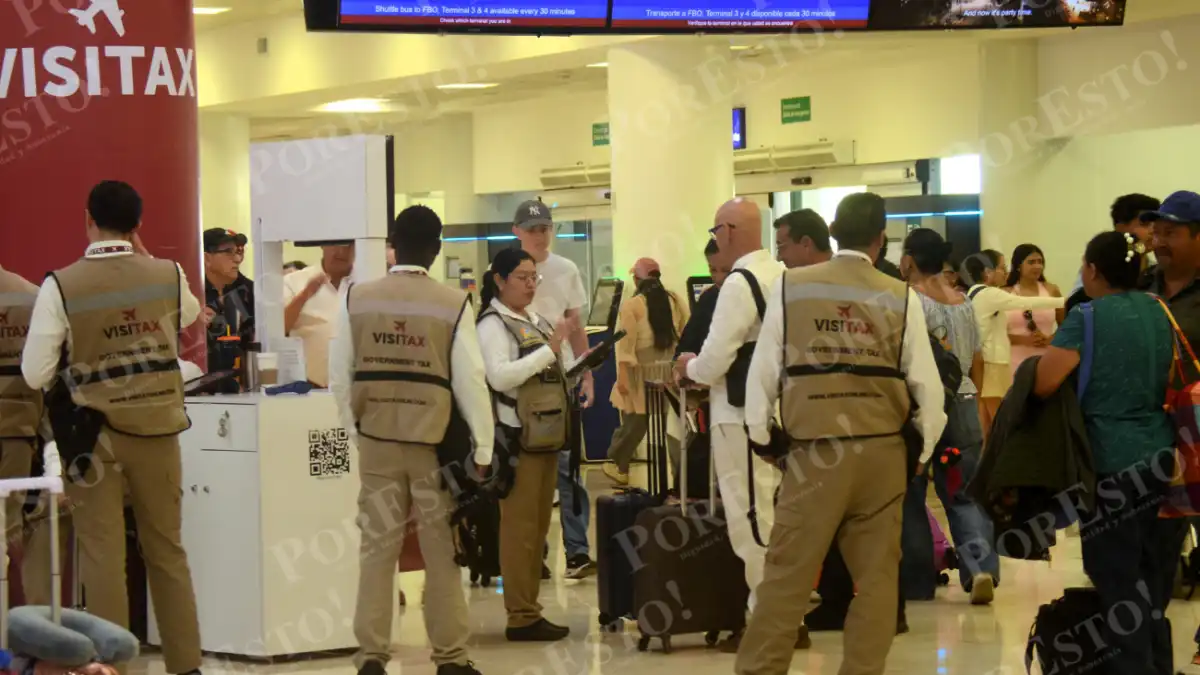
Cancún, Quintana Roo — Foreign tourists passing through Terminal 2 of Cancún International Airport say they are being charged up to 550 pesos per person for the Visitax, a state tourism tax they claim they knew nothing about, and they are questioning the pressure applied by collectors inside the facility.
Three travelers from Costa Rica raised the complaint during a visit to Quintana Roo. Two of them agreed to speak, saying that although their eight-day stay went smoothly, the demand for payment left a sour impression as they were leaving the destination.
Cristina, one of the visitors, said the procedure struck her as wrong. It was her second trip to the state, she said, and she had never encountered anything similar before. She also questioned why, after paying for flights, lodging and food, she should face a charge she said she did not know existed.
Fabián, another of the tourists, objected both to the payment itself and to the way collectors approach passengers. In his view, the process is intimidating and unethical, and it damages Cancún’s image as an international tourist destination. A third Costa Rican traveler also voiced frustration but asked not to be recorded.
Rate Announced at 285 Pesos, Booths Charging 550
The dispute centers on the gap between the announced rate and the amount demanded. In December 2025, the Quintana Roo government said the Visitax would remain at 285 pesos through 2026. Yet collection booths at the airport have documented charges of up to 550 pesos per person — 265 pesos more than the figure officials publicized.
Although the Visitax is a state levy rather than an airport fee, the collection points operate inside the terminal concessioned to Grupo Aeroportuario del Sureste (Asur), which has placed the airport operator at the center of the complaints. Travelers confront the charge directly as they move through the building.
State Tourism Secretary Bernardo Cueto acknowledged the complaints on Monday and said the matter was being reviewed with the Secretariat of Finance and Planning (Sefiplan). The tax itself remains in place while authorities examine the collection mechanism, and the booths continue to operate inside the terminal.
Asur had not issued a position on the Costa Rican travelers’ complaints, nor on what steps it will take to monitor how passengers are treated in Terminal 2, as of the close of this edition.
More Tourism
- Bacalar Launches Digital Registry to Certify Vacation Rentals
- Belize Plans 160-Km Railway to Mexico Border, With Feasibility Study Due in Two Weeks
- Isla Mujeres Nears Gridlock as 15,000 Vehicles Crowd a 422-Hectare Island
- Cancún Offers Free Shuttles and Announces Road Closures for Janal Pixán 2026
- Cancún Ranks Fifth in Mexico for Cosmetic Surgery Tourism
More Cancun
- Quintana Roo Tops 224,000 Respiratory Infection Cases in 2026
- Searching Mothers Protest at Cancún’s Kilometer Zero Over Delays in Ex-Prosecutor Case
- Federal Judge Denies Delphinus Injunction Bid Over Profepa Dolphin Welfare Rules in Cancún
- Cancún Tourism Sector Urges Dialogue After Transporter Protests Snarl Airport Access
- Cancún LGBTQ+ Community Urges Public to Dismantle HIV Myths
