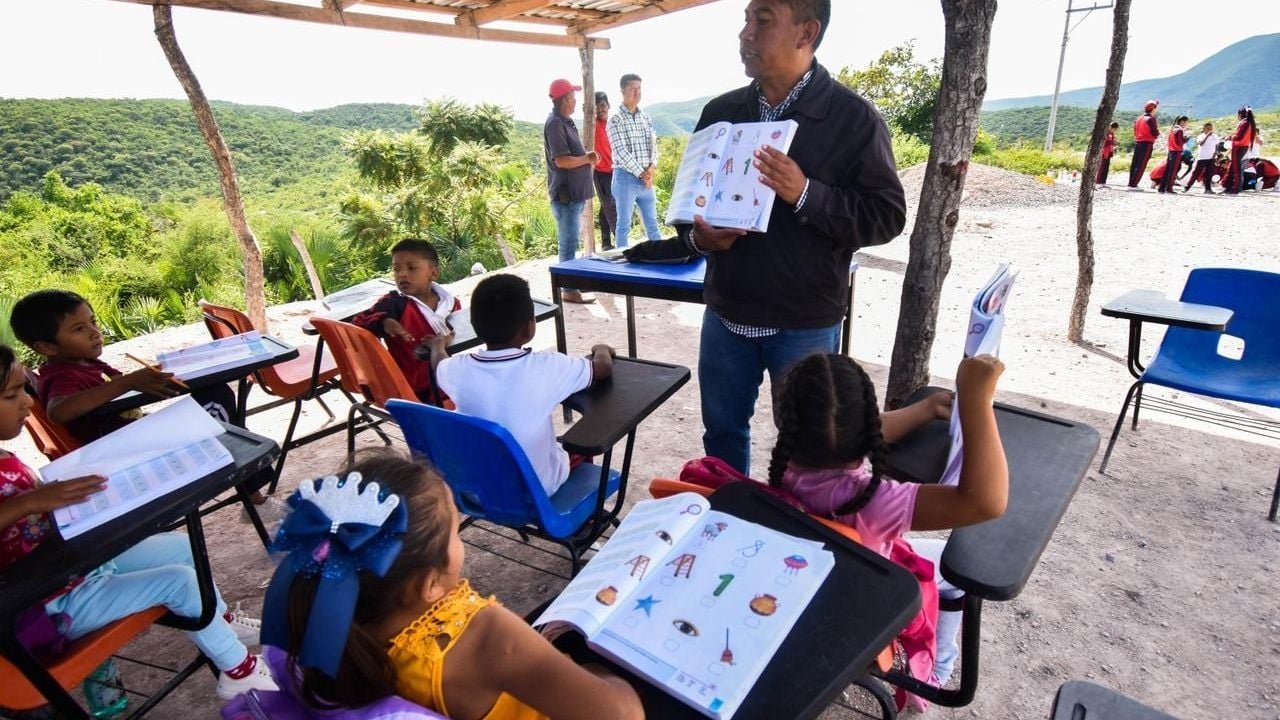
Mexico City — Recent data from UNESCO reveals Mexico is failing in primary education, with over 60% of students not reaching expected reading comprehension levels and seven out of ten schools lacking sufficient internet and computers. While countries like Chile, Uruguay, and Costa Rica have connected nearly all their schools, Mexico remains trapped in an educational gap that directly affects millions of children’s futures.
The paradox emerges in funding: educational investment continues to increase, with more resources allocated to the sector in 2026 than last year. However, this growth isn’t aligned with international standards, and results show no real improvements in learning or opportunities. The numbers don’t lie: more money hasn’t meant better education.
The “Becas para el Bienestar” (Well-being Scholarships) program in Mexico has expanded with the Universal “Rita Cetina” Scholarship, providing 1,900 pesos bimonthly to families with secondary school students and extending to primary education, reaching over 13 million beneficiaries. While impressive in scale, these supports haven’t generated the expected educational impact. In many cases, they haven’t translated into better learning outcomes or effective access to educational tools, with some students still lacking basic resources for academic development.
The situation worsens with decisions that appear to relax educational priorities: potential elimination of fundamental subjects, budget cuts, and proposals like making professional certification cards optional for identification. These signals point to decreasing standards and weakening incentives to study and train, just as the global environment demands greater competencies, especially digital skills.
“Education isn’t a luxury or an administrative formality: it’s the foundation of the country’s social, economic, and democratic development,” the report states. “Every girl and boy who doesn’t receive adequate training represents wasted talent, limited opportunities, and a compromised future. UNESCO’s figures and national indicators show we’re still far from meeting this objective.”
The time has come to act clearly: ensuring scholarships fulfill their purpose, guaranteeing connectivity and technological tools in all schools, strengthening teacher training, maintaining educational standards, and reinforcing reading and comprehension from the earliest years. Mexico needs a comprehensive, sustained strategy that places education at the center of the national agenda.
Discover more from Riviera Maya News & Events
Subscribe to get the latest posts sent to your email.