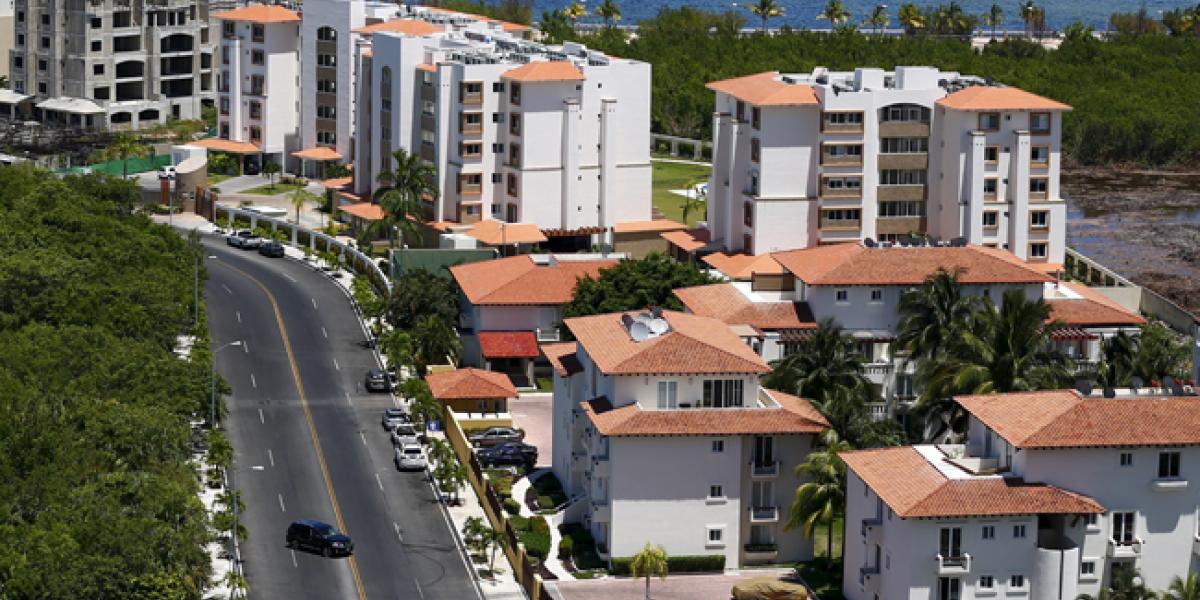
Mexico City — The rapid expansion of vertical housing in Tulum, which led to a saturated market with slow sales and absorption, has become a cautionary tale for developers looking to replicate the model in other Mexican cities where land scarcity is driving high-rise construction.
According to an analysis by real estate consultancy Revo RE, several Mexican markets offer better prospects for long-term vertical housing development, driven by population growth, mortgage demand, and economic dynamism.
“The operational key to success lies in analytically distinguishing between choosing where to buy land for an immediate project and choosing where to establish a presence with a structural strategy,” said Francisco Escobosa, CEO of Revo RE.
The report highlights Tulum as an example of the risks of ignoring structural variables. In less than three years, the destination went from being one of the country’s most attractive markets to one of the most saturated. “Most of the developments launched during that boom now face serious difficulties in selling and absorbing units,” the document states.
Top Markets for Vertical Housing
According to the report, Monterrey, Valle de México, Saltillo, Chihuahua, and Cancún are the markets that best combine current housing demand with solid fundamentals for future growth.
- Monterrey: Leads as the country’s largest mortgage market, with nearly 50,000 loans placed in 2024. Its economic diversification and integration with the northern industrial corridor support demand for mid- and mid-high-income housing.
- Valle de México: Economic and demographic growth keeps it attractive for new projects. Rising land values in Mexico City have reduced the viability of affordable housing, but conurbated municipalities in the State of Mexico still offer favorable conditions.
- Saltillo: Stands out for having the highest GDP per capita in the analysis. Its strong automotive industry and integration with the northeastern manufacturing chain sustain demand with purchasing power for mid- and mid-high-income housing.
- Chihuahua: Nearshoring and industrial expansion linked to the border drive economic activity and housing demand. The city recorded one of the highest growth rates in mortgage loans between 2022 and 2024.
- Cancún: Appears in the ranking due to strong population and economic growth. However, the analysis warns developers to monitor inventory levels to avoid oversupply scenarios similar to those seen in other markets.
“The difference between developers who scale profitably and those who compromise their liquidity lies in where they focus the depth of their analysis. It is not enough to observe the superficial dynamism of the present; true asset value is consolidated on absolute bases of demographic absorption and real mortgage capacity,” Escobosa emphasized.
Licenses and Permits Key to Profitability
The analysis also highlights that the speed at which municipal governments grant licenses and permits is a determining factor for project profitability. “Every month that a procedure is delayed translates into a higher cost of capital on the investment made and increases the burden of fixed team costs. Current investment trends also underscore that future viability will depend heavily on technological capabilities, such as real estate digitalization and hyperconnected amenities, to protect long-term property values,” the report states.
According to official figures, three out of every 10 homes built in Mexico correspond to the vertical segment. Although horizontal housing still accounts for most of the supply, urban growth and land scarcity are pushing developers toward higher-density projects.
More Business
- Cancun Hotels Push for 6% Rate Hike and Promotion Support
- Cancun Hotels Get Free Renovation Licenses Until 2026
- Quintana Roo Builders Pin 2026 Hopes on Public Works
- National Guard Allegedly Tied to Cancun Uber Payments
- Tourists Say Playa del Carmen Pemex Station Charged Them $150 for a Partially Filled Tank
More Cancun
- Cancun Shield Deploys 102 Officers to Fight Crime
- Quintana Roo to Boost Tourism Promotion by 20% as Cancún Travel Mart 2026 Opens
- Mexico State Symphony Orchestra Brings Free Concert to Cancún Airport Station
- Mexico’s Caribbean Diversifies Markets as US Tourist Flow Slows, Tourism Secretary Says
- Red Ambiental Donates 25 Breast Prostheses and 80 Medical Screenings in Cancún