
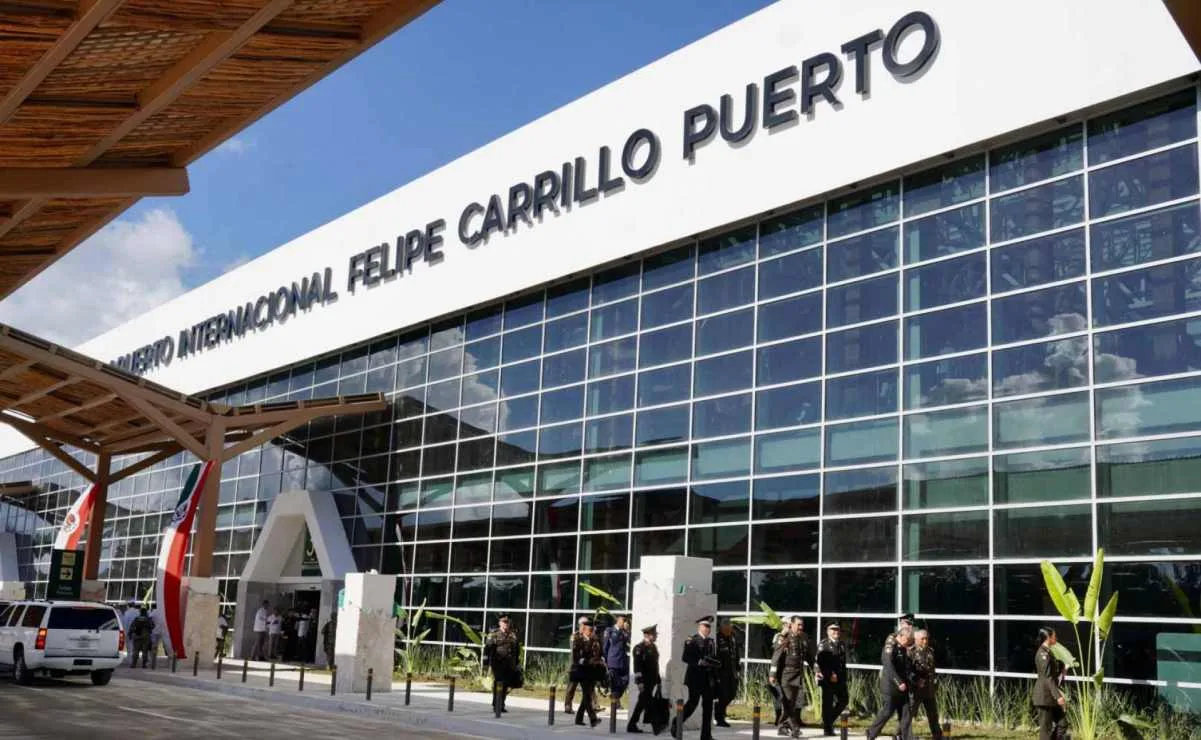
Tulum, Quintana Roo — The Tulum International Airport “Felipe Carrillo Puerto,” which opened in December 2023 with high hopes of drawing more tourists to the southern Riviera Maya and easing pressure on Cancún International Airport, is facing a significant slowdown just two and a half years into operation.
According to figures from the airport and Mexico’s Federal Civil Aviation Agency (AFAC), the airport handled 1.233 million passengers in 2024 and 1.244 million in 2025. But from January through April 2026, it recorded only 366,000 passengers, raising concerns about whether demand is strong enough to support the level of service initially expected.
The decline is especially noticeable in international traffic. During the first quarter of 2026, the airport received 178,000 international travelers, a 34 percent drop compared to the same period in 2025. That represents 90,800 fewer international passengers, despite the fact that January through March is normally peak season for Canadian and U.S. tourists escaping winter. Domestic traffic also fell, with 36,000 passengers in the first quarter, down 25 percent from the same period last year.
Industry experts say the slowdown reflects a combination of weaker demand for Tulum, route cuts by airlines, high ground transportation costs, sargassum, security concerns and the broader challenges facing the destination.
Aviation consultant Fabricio Cojuc said that in June 2024, foreign airlines offered service from Tulum to at least 12 international destinations, including Chicago, Los Angeles, New York, Atlanta, Dallas, Houston, Miami and Panama City. Today, only four international destinations remain: Atlanta, Dallas, Houston and Miami, served by American Airlines, Delta Air Lines and United Airlines.
“Eight destinations were lost, and from 10 daily departures two years ago, there are now only three,” Cojuc said. “Connectivity to New York was lost at both JFK and Newark airports.”
Several foreign airlines have suspended service to Tulum entirely, including Avianca, Copa Airlines, JetBlue and Volaris Costa Rica. Cojuc said the problem was not necessarily the airport itself, but the difficulty of maintaining simultaneous operations in both Cancún and Tulum when demand did not grow as expected.
“The expectation was that a lot of traffic would shift to the southern Riviera Maya, generating enough demand,” he said. “At first there was a bubble, a buzz, but gradually the numbers didn’t meet expectations, and airlines began cutting schedules, reducing seats and prioritizing Cancún.”
Transportation has become another major complaint. Unlike Cancún, which has a large and established network of airport shuttles, buses, private transfers, taxis and rental car services, Tulum’s airport still lacks a mature ground transportation system. Uber does not operate in Tulum, and travelers and business owners have reported that taxi and bus services from the airport to the hotel zone can be expensive, limited and unpredictable.
“There have been complaints that taxi and bus services are very expensive,” Cojuc said. “Getting from the airport to the hotel zone is costly, unpredictable and lacks sufficient service providers, something that doesn’t happen in Cancún.”
The airport’s struggles are also tied to the larger tourism slowdown affecting Tulum. Karim Goudiaby, CEO of Iad Mexico and a real estate investment specialist, said the destination is dealing with three major pressures: sargassum, weaker hotel infrastructure and insecurity.
“Tulum had an oversupply of hotel rooms and an overestimated dependence on digital nomads,” Goudiaby said. “But one of the most important causes is sargassum. Cancún offers a first-world hotel experience even when there is sargassum, but Tulum has smaller hotels that have amenities but are not all-inclusive like in Cancún or Playa del Carmen.”
He added that Tulum’s appeal has always been closely tied to its beach experience.
“The appeal of Tulum is walking on endless white sand beaches, and that’s not the same with a brown sea or an unkempt beach,” Goudiaby said. “Hoteliers in Tulum don’t have the resources for constant cleaning.”
Security has also affected the destination’s image, particularly among North American travelers. Goudiaby said reports of shootings and violent incidents in Tulum have damaged confidence in the market.
“In the end, the destination becomes less competitive if you have to pay for expensive accommodation, expensive transportation and eventually expensive food,” he said.
Despite the slowdown, the airport remains one of Mexico’s top 10 airports for international passenger traffic. In December 2025, it reported 64,600 international travelers and handled more than one million passengers during the first 10 months of that year.
Cojuc estimates Tulum may close 2026 with around 700,000 passengers, down sharply from 1.2 million last year. His projection is based partly on a 60 percent decline in seat capacity for May 2026 compared to May 2025, with the next winter high season still months away.
Goudiaby said Tulum can recover, but only if authorities and the private sector address the destination’s weaknesses. He pointed to the recent NASCAR event held at the Tulum airport as an example of efforts to diversify the destination beyond music festivals and beach tourism.
“The destination is high quality, but the risk is insecurity,” he said. “If it’s an unsafe place, it will be difficult.”
For now, Tulum Airport remains an important piece of infrastructure for the southern Riviera Maya, but expectations are being reset. Rather than quickly becoming a major competitor to Cancún, the airport may need to stabilize as a smaller regional gateway while the destination works through the transportation, security, pricing and beach-quality issues that are shaping traveler demand.
More Tourism
- Mexicana de Aviación Adds 24 Winter Flights to Tulum as Rivals Pull Out
- Playa del Carmen Recognized as International Bull Shark Zone
- Punta Allen Road Rehabilitation Reaches 80 Percent Completion
- Cancún Business Council Launches Push to Diversify Quintana Roo’s Economy Beyond Tourism
- Playa del Carmen to Build Tactical Operations Center to Boost Fifth Avenue Security