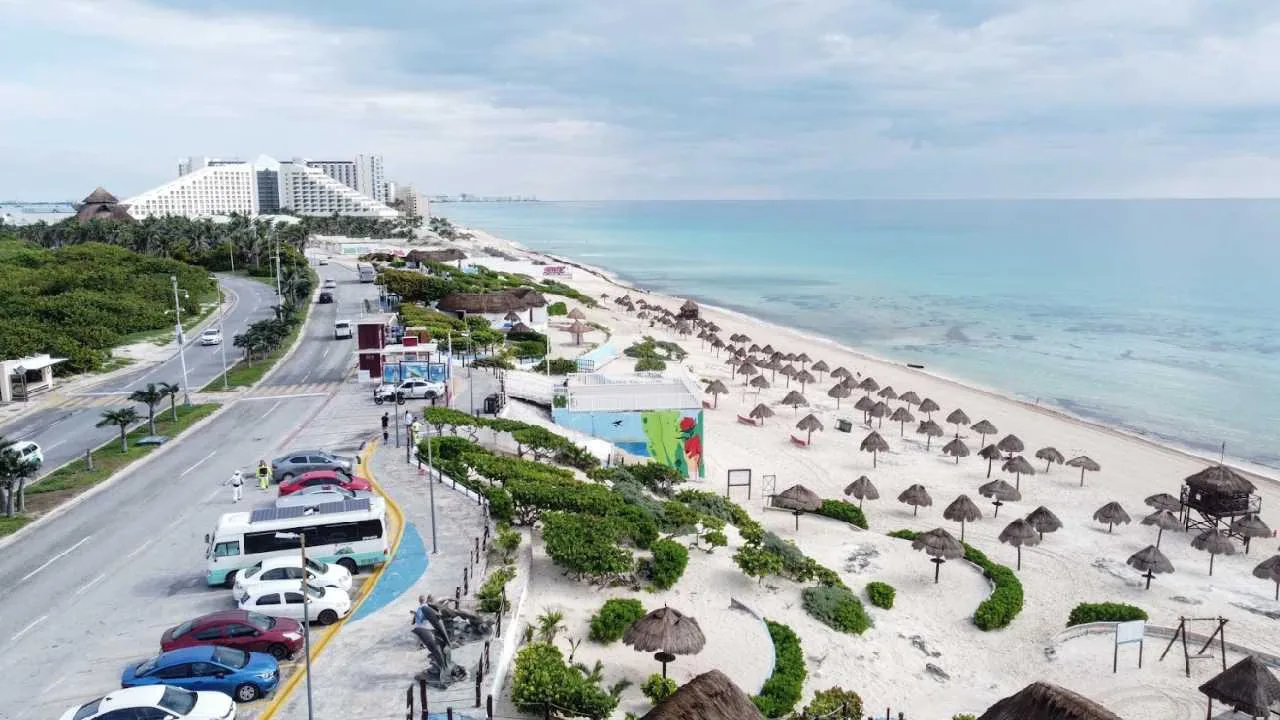
Cancún, Mexico — Environmental organizations are demanding that the new Urban Development Plan restore public access to several beaches in the municipality to prevent their privatization and maintain user rights.
In Cancún, civil society groups are alerting the public to changes in land use that could restrict access to public beaches, putting their status as a common good at risk. The environmental group responsible for defending the environment has requested that municipal authorities rectify the classifications of several traditional beaches, which currently appear under categories that favor their privatization and private control, in contrast to their legal recognition as public spaces.
Historically, the coastal strip of the tourist destination has experienced advances in its occupation by private projects and concessions, limiting access for the local population and visitors. Since the 1980s, various social movements have insisted on the importance of keeping these spaces open, describing them as fundamental to the culture and the citizen's right to free transit, especially in a tourist hub of great economic and social impact.
The current debate is intensifying with the reforms to the Urban Development Program, in which technical and legal inconsistencies have been detected. Despite current legislation stipulating that maritime beaches are goods for common use and cannot be restricted, recent changes in urban categories appear to contradict these principles by classifying certain stretches as tourist areas.
The lack of an official response from the Benito Juárez municipal government highlights the need for greater transparency in the approval process of the Urban Development Program and in urban planning decisions. Experts and the academic community agree that guaranteeing universal access to beaches must be a priority in the formulation of public policies, especially in a region that depends on tourism and the conservation of the natural environment.
The ongoing review of the new plan will be decisive in defining whether collective rights over these emblematic spaces are respected and whether protective measures are adopted against processes of progressive privatization.
More Business
- Playa del Carmen Visitors Say App-Booked Taxi Demanded Extra Cash
- Tulum to Host Sixth Employment Fair With 524 Job Openings
- Mexican Caribbean Businesswomen Urged to ‘Surf the Wave’ of AI
- Semarnat Approves Club 8 Beach Club in Puerto Morelos With Strict Environmental Conditions
- Tourism Firms Cut Costs and Borrow to Survive 2026, AFEET Says
More Cancun
- Quintana Roo Governor Celebrates ACLUVAQ’s 40 Years as a Vacation Tourism Leader
- Quintana Roo Keeps Free Winter Vaccination Drive Running in All 11 Municipalities
- Cancún to Host More Than 500 Dancers From 21 Countries for Pump It Up Championship
- Cancún Medical Tourism Holds Steady With 25,000 Foreign Patients
- Mexico Air Traffic Rises 1.7% in August as Domestic Travel Grows, but US Routes Fall 6.1%
