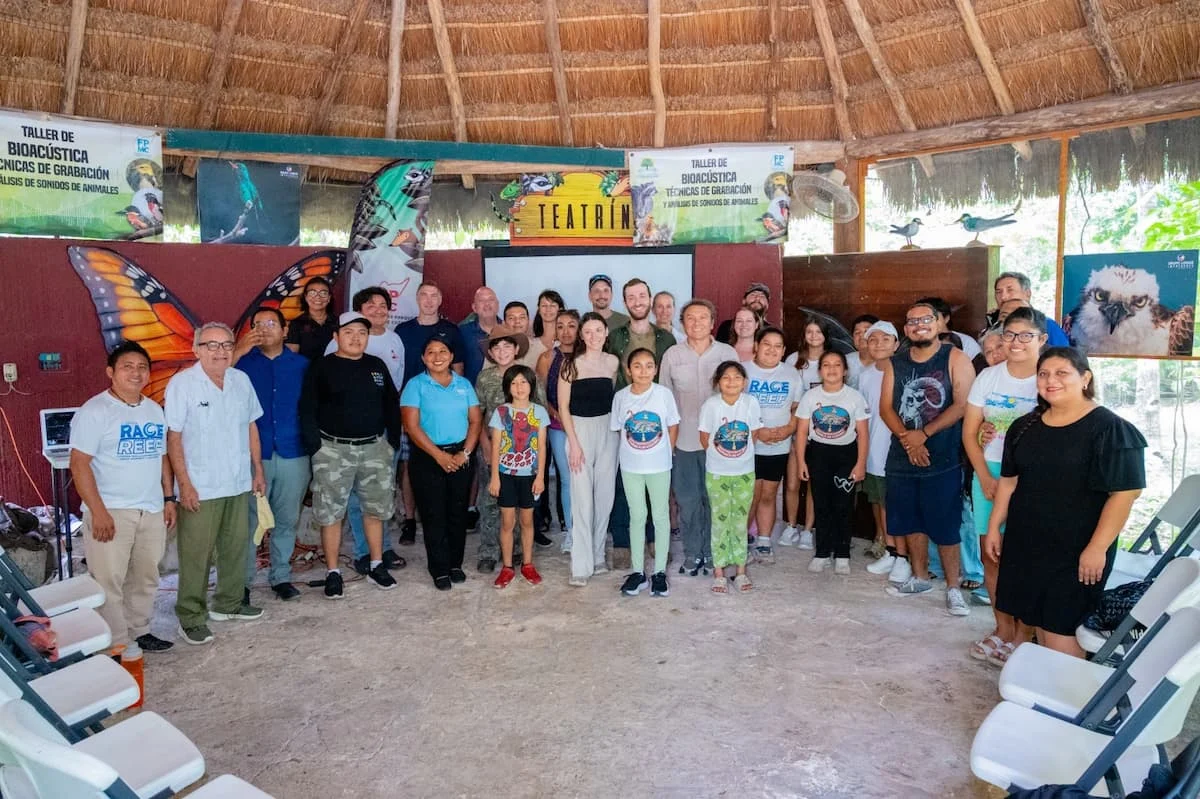
Cozumel, Quintana Roo — The Foundation of Parks and Museums of Cozumel (FPMC) hosted a free conference titled “Hidden Wildlife Cozumel,” led by biologist and conservationist Travis Bayer, founder of Pathos Wildlife, to engage the community in understanding and protecting the island’s natural heritage.
The event took place at the Center for Conservation and Environmental Education (CCEA), where Bayer shared findings from research focused on Cozumel’s terrestrial fauna, particularly the search for an elusive endemic fox whose existence was considered uncertain for decades.
Bayer explained how new technologies are revolutionizing conservation efforts through the use of camera traps, thermal imaging drones, and remote monitoring systems that allow scientists to study species in complex ecosystems such as mangroves, jungles, and tropical forests.
Cozumel hosts exceptional biodiversity and one of the highest concentrations of endemic species recorded on an island worldwide, making it a valuable natural laboratory for science and conservation, Bayer noted.
After more than a year and a half of fieldwork in the southern part of the island, Bayer’s team has installed dozens of camera traps to gather data on various species, including the pygmy raccoon and dwarf coati, both endemic to Cozumel. The efforts have also yielded new evidence of the mysterious fox’s presence, reinforcing the need for continued study and protection.
Bayer acknowledged the collaboration of FPMC biologists Rafael Chacón Díaz and Ricardo Peralta Múñoz, who worked with him to place approximately 90 camera traps, mainly in the southern part of the island, and to monitor the research, which is expected to provide invaluable information about Cozumel’s wildlife.
Beyond the search for the endemic fox, the project has documented the presence, behavior, and distribution of other mammals and various wildlife species inhabiting the island’s ecosystems. These records constitute a valuable source of scientific knowledge, opening new opportunities for future research and conservation strategies by offering a broader view of the biodiversity and ecological interactions that maintain Cozumel’s balance.
FPMC Director General Juanita Alonso Marrufo emphasized that biodiversity conservation is a shared responsibility and a priority aligned with the New Agreement for the Welfare and Development of Quintana Roo promoted by Governor Mara Lezama Espinosa. She said promoting scientific knowledge, environmental education, and citizen participation helps strengthen the protection of the island’s natural heritage for current and future generations.
More Environment
- Maya Frog and Toad Shell Pendants May Reveal Ancient Trade Routes
- Heavy Rains to Soak Quintana Roo as Unstable Weather Moves In
- Brain-Eating Amoeba Found in Six Artificial Lakes in Mérida; Water Contact Restricted
- Semarnat Approves Artificial Reefs and Sand Relocation for Akumal Hotel
- Chetumal Plans 836 Million Pesos in Stormwater Works to Curb Flooding
More Cozumel
- FPMC Opens Txepo’s Art + Architecture Dreamscape in Cozumel
- Winjet Drops 9 p.m. Cozumel Ferry, Narrowing Options for Late Travelers
- Cozumel Bird Festival Records 70 Species Across Island Sites
- Monarch Butterfly’s Caribbean Migration Route Revealed in Quintana Roo
- Researchers Document First Recorded Spawning of Priority Coral Species in Cozumel Reef Park