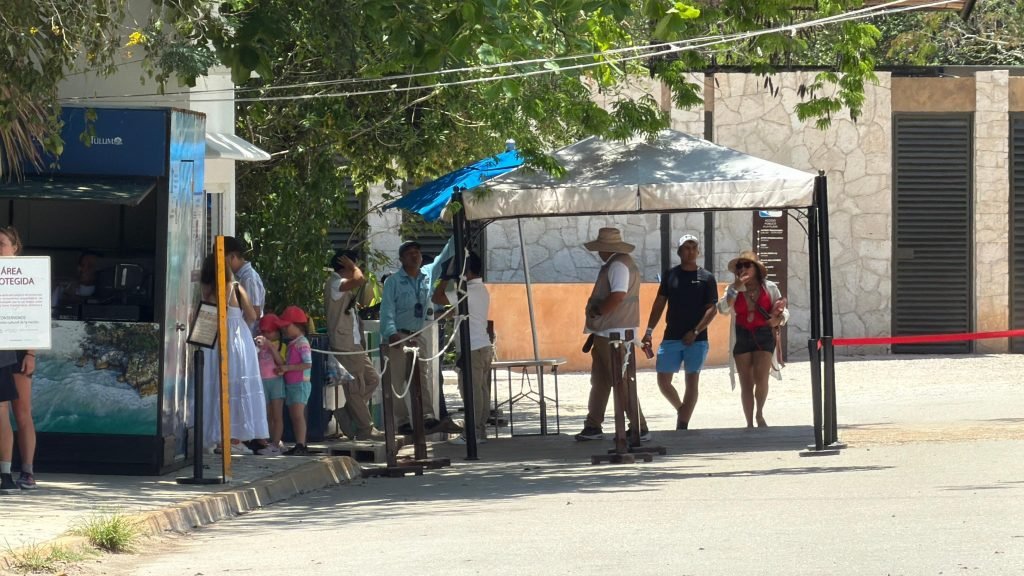
Tulum, Quintana Roo — Despite official operations and announcements about reorganizing access to the Tulum Archaeological Zone and Jaguar Park, tourism service providers and local merchants say street touts known as “jaladores” continue to work on a daily basis, including on Federal Highway 307, where their presence is a hazard for visitors and drivers heading to Playa del Carmen.
According to complaints, these touts not only aggressively offer tours and tourist services, but also position themselves between vehicles or stand at the roadside to grab drivers’ attention.
Service providers say the practice damages the destination’s image and increases the risk of accidents on one of the region’s busiest highways.
“It’s no longer just about harassment of visitors. The problem has escalated to a more serious level, because now these people invade the federal highway to try to stop drivers or get their attention, exposing themselves and putting everyone who travels that road at risk,” said Jesús Perera, a local guide.
Perera said there is a lack of enforcement, since despite inspectors and security forces being present, these activities continue without visible penalties. He said the situation contradicts institutional statements about an orderly and safe access for visitors to one of Quintana Roo’s main attractions.
Pedro Castillo, an artisan vendor, said operations carried out by authorities from all three levels of government have only produced temporary effects. He explained that after each intervention, the touts leave for a few hours or days, but later return to the same spots to offer services, intercept tourists, and even walk among vehicles moving along the federal highway.
Those raising the complaints agree that while authorities continue to report progress on reorganizing access to the archaeological zone and Jaguar Park, the problem persists, hurting visitors’ experience and keeping road safety at constant risk.
More Tourism
- Polo strengthens to a Category 5 hurricane off Mexico’s Pacific coast in Record Time
- Culture Ministry to Inspect Ceremonial Pole Ahead of Voladores de Papantla Return to Tulum
- Erasmo Catarino Nearly Drowns at Cancún Beach, Rescued by Raúl Sandoval
- Sargassum Collection in Quintana Roo Tops 133,000 Tons, Setting New Record
- Quintana Roo Courts European Airlines to Boost Winter Flights to Cancún
More Tulum
- Tulum Beach Cleanup Pulls 32 Kilos of Marine Debris From Playa del Pueblo
- Coastal Dune Loss Weakens Natural Defenses in Quintana Roo
- Felipe Carrillo Puerto Weighs Access Fee for Puerta al Mar
- Playa Aventuras DIF Records Historic Sea Turtle Nesting Season
- Tulum Faces Budget Deficit as Tourism Slump Slashes Revenue