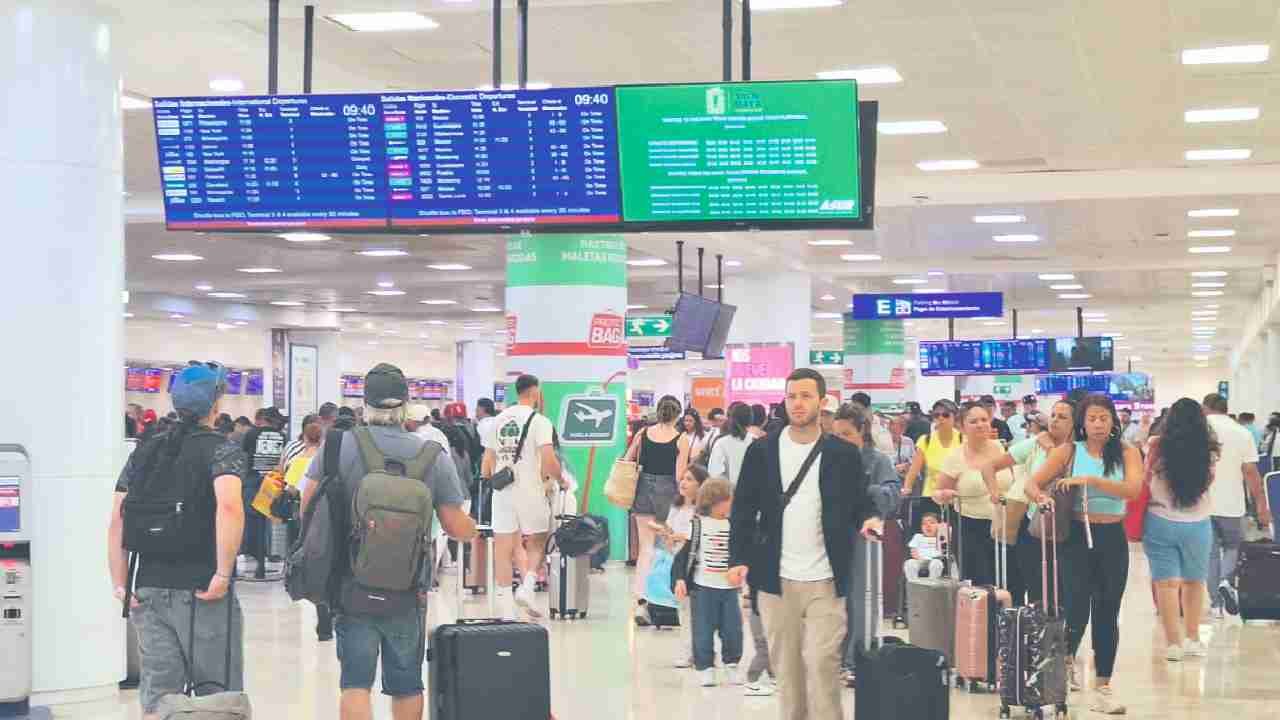
Cancún, Quintana Roo — Geopolitical uncertainty, security concerns, rising travel costs and perceptions of sargassum are reshaping how international tourists choose their summer vacation destinations, according to market studies and an analysis by the Center for Advanced Research in Sustainable Tourism (STARC) at Anáhuac University Cancún.
Security and Costs Also Weigh on Destination Choices
Francisco Madrid Flores, director of the center, said the scenario represents one of the main challenges for the Mexican Caribbean in 2026.
According to data from the consultancy Ipsos, 72% of tourists consider geopolitical instability a decisive factor when deciding whether to travel, while 51% have changed destinations because of border controls or travel advisories. Safety also plays a growing role: 66% of travelers say they are concerned about crime, scams or terrorism before choosing a tourist destination.
In the Mexican Caribbean, the perception of sargassum continues to influence mainly tourists from western Canada and the most distant regions of the United States, markets considered more sensitive to beach conditions.
Sargassum Shapes Hotel Strategy in the Mexican Caribbean
Madrid Flores said the southern United States shows less concern about the seaweed when planning vacations, which has helped keep demand from that region more stable.
The hotel industry has responded by strengthening its communication strategies to provide real-time information on beach conditions. “Reservation centers have access to cameras that show the behavior of the sargassum and provide updated information to potential visitors,” he said.
Madrid Flores also noted that although some tourists base their decisions on the condition of the coastline, a growing number are looking for more complete experiences. “The number of travelers who recognize that the Mexican Caribbean offers gastronomy, nature, culture, entertainment and adventure activities, in addition to the traditional sun-and-beach tourism, is also growing,” he said.
Travelers Adjust Budgets to Take Vacations
International trends also show changes in spending habits. According to the report, 42% of travelers plan to vacation within their own country in 2026; of those, 31% will choose beach, rural or mountain destinations, and 19% will opt for city breaks.
Despite higher costs, interest in travel remains strong. Some 82% of travelers say they need a vacation, and 86% plan to take at least one excursion this year. To make it possible, 61% have reduced non-essential spending, and 47% have adjusted their vacation budgets.
Despite the international environment, Mexico’s federal Tourism Secretariat maintains a favorable outlook for the summer season. It forecasts a 5.6% increase in the number of tourists staying in hotels across the country and expects Cancún to keep its national lead in hotel occupancy, though with more moderate growth than last year.
More Tourism
- Polo strengthens to a Category 5 hurricane off Mexico’s Pacific coast in Record Time
- Culture Ministry to Inspect Ceremonial Pole Ahead of Voladores de Papantla Return to Tulum
- Erasmo Catarino Nearly Drowns at Cancún Beach, Rescued by Raúl Sandoval
- Sargassum Collection in Quintana Roo Tops 133,000 Tons, Setting New Record
- Quintana Roo Courts European Airlines to Boost Winter Flights to Cancún
More Quintana Roo
- Quintana Roo Climbs 12 Spots to 9th in Competitiveness Index
- Mayan Council Urges Mexico’s Supreme Court: Don’t Decide About Us Without Us
- Quintana Roo Construction Demand Jumps 40% on Hotel Renovations
- Mexican Caribbean Sets Its Sights on Panama to Diversify Tourism
- Quintana Roo Transport Union Prepares Bid for 20% Fare Increase