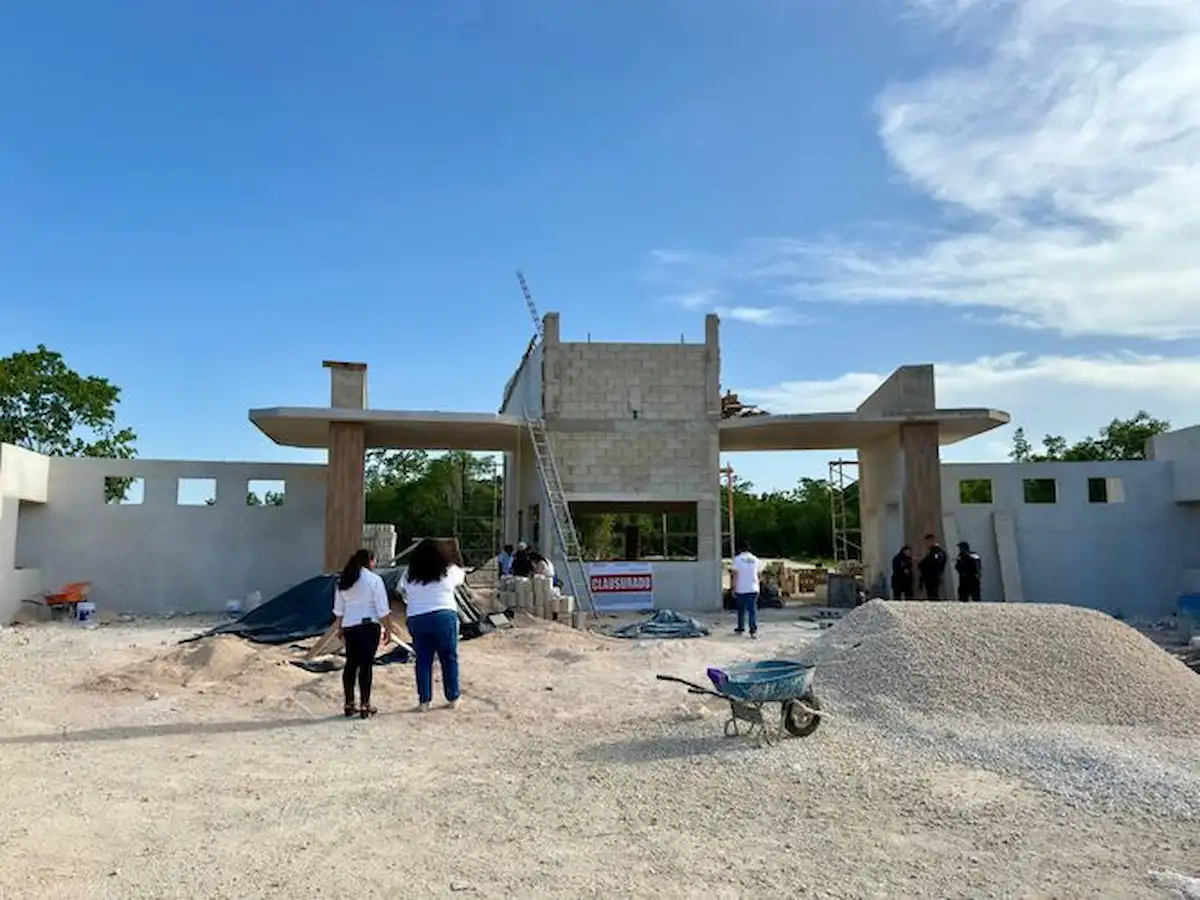
QUINTANA ROO, Mexico — State authorities are warning prospective property buyers to check a public database before paying a deposit or signing a contract after identifying 123 developments being marketed without required permits and supporting documentation.
The projects appear in the State Registry of Irregular Real Estate Developments, maintained by Quintana Roo’s Secretariat of Sustainable Territorial Urban Development, known as SEDETUS.
Gabriela Peña, the agency’s director of real estate affairs, said the developments were added after inspections established that required state or municipal documentation was missing.
“They can leave the list once they regularize and comply with the requirements,” Peña said. “Until then, they remain there so people can check before buying.”
The highest concentrations are reportedly in Playa del Carmen and Tulum, followed by Benito Juárez, which includes Cancún. These are also among the areas experiencing the state’s fastest real estate growth and highest levels of preconstruction sales.
Where to find the 123 developments
SEDETUS has not released the current 123 names as a downloadable document. Instead, it maintains a searchable, continually updated online registry:
Search the official SEDETUS registry
The database is the most reliable way to check the current list because projects can be added, removed or marked differently as inspections and regularization proceedings advance. SEDETUS reported 116 developments in the registry at the end of 2025; that number had increased to 123 by August 2026.
Users can search by development name and review information including:
- The date it entered the registry.
- Its status.
- Municipality and locality.
- The reason it was classified as irregular.
- Location information.
- Websites or social media used to promote it.
- The property or investment being offered.
- Available contact and promoter information.
Because the registry changes, copying all 123 names into a static article could quickly create an inaccurate blacklist. Buyers should search the live database immediately before making a payment, even if a development does not appear on an older published list.
Tulum projects previously identified
A review of the registry in April 2026 found 29 developments listed in the municipality of Tulum:
Adamar, Akun, Arunte, Atman Place, Aurea, Beautiful Tulum, Bosque Tulum, Brahma, Carey Tulum Condos, Casa Selva, Cenote Gardens, Cibelia, Dalai, IIK Ha, Ko Ol Kaab, Loch, Lula Sanctuary, Maiim, Naia Holistic Community, Nova Tulum, Oken (El Origen), Padma Tulum Life, Sagradha, Selvarum, Trobbú Tulum, Tulum Ha, Uxan Tulum Bamboo Villas, Viventum and Jade.
That April list should not be treated as the complete current Tulum inventory. Projects may since have regularized, while others have been added. SEDETUS recently issued separate public warnings involving Mayab Tulum and Ocean Tulum, demonstrating how quickly the situation can change.
The database also currently contains developments elsewhere in the state, including entries in Playa del Carmen, Cancún, Isla Mujeres, Puerto Morelos, Bacalar and Othón P. Blanco. One recently indexed Playa del Carmen entry is Framboyanes, in Jacinto Canek, while Rancho Ramal has appeared for the Continental Zone of Isla Mujeres.
What “irregular” means
Most registry entries cite violations of Articles 80 and 81 of Quintana Roo’s Human Settlements, Territorial Planning and Urban Development Law.
The recurring issue is that properties are being advertised or sold without a state urban compatibility certificate or required municipal licenses and permits. A listing does not, by itself, prove that a developer has committed fraud. It means SEDETUS has determined that the project lacks documentation required to market or develop the property legally.
Although some coverage describes all 123 projects as “clausured,” the registry is more accurately understood as a list of developments verified and flagged as irregular. A listing does not necessarily establish that authorities have physically closed every construction site.
That distinction also applies to complaints from buyers. SEDETUS director José Alberto Alonso Ovando said the agency is handling three complaints from foreign purchasers, two involving Tulum projects and one in Playa del Carmen. He said the allegations currently concern possible breaches of contract, not fraud proven in court.
A late delivery, failure to refund a deposit and the absence of development permits can overlap, but they are separate legal issues that may proceed through consumer, administrative, civil, commercial or criminal channels.
Not appearing on the list is not full approval
A development’s absence from the registry should not be treated as proof that everything is in order. It may simply mean the property has not been inspected or reported.
Before paying, buyers should request and independently verify at least:
- The state urban compatibility certificate.
- Municipal land-use and construction authorizations.
- Proof of ownership and freedom-from-lien certificate.
- An approved subdivision or condominium-property regime, when applicable.
- Environmental authorizations required for the location.
- The contract’s registration with Mexico’s consumer protection agency, when required.
- The identity and authority of the company accepting the money.
Documents should be reviewed by an independent Mexican real estate attorney and not solely by a lawyer, broker or notary recommended by the seller.
Check the advisor, too
Quintana Roo requires real estate advisors to hold a state-issued registration. SEDETUS maintains a separate resource for checking accredited professionals:
SEDETUS real estate advisor information
An advisor’s registration does not guarantee a development is legal, but it provides another layer of accountability. Buyers should verify both the individual selling the property and the project itself.
Anyone unable to locate a development or uncertain about its documentation can contact SEDETUS at atencion@sedetus.gob.mx or by telephone at 983 835 1700. The agency’s central office is at Avenida Álvaro Obregón 474 in Chetumal.
More Development
- Quintana Roo Climbs 12 Spots to 9th in Competitiveness Index
- Mayan Council Urges Mexico’s Supreme Court: Don’t Decide About Us Without Us
- Quintana Roo Construction Demand Jumps 40% on Hotel Renovations
- Coastal Dune Loss Weakens Natural Defenses in Quintana Roo
- Cancún Enters Final Year With 2.3 Billion Pesos in Public Works
More Quintana Roo
- Sargassum Collection in Quintana Roo Tops 133,000 Tons, Setting New Record
- Quintana Roo Courts European Airlines to Boost Winter Flights to Cancún
- Mexican Caribbean Sets Its Sights on Panama to Diversify Tourism
- Quintana Roo Transport Union Prepares Bid for 20% Fare Increase
- Quintana Roo Business Group Urges Taxpayers to Prepare for 2027 Fiscal Changes