
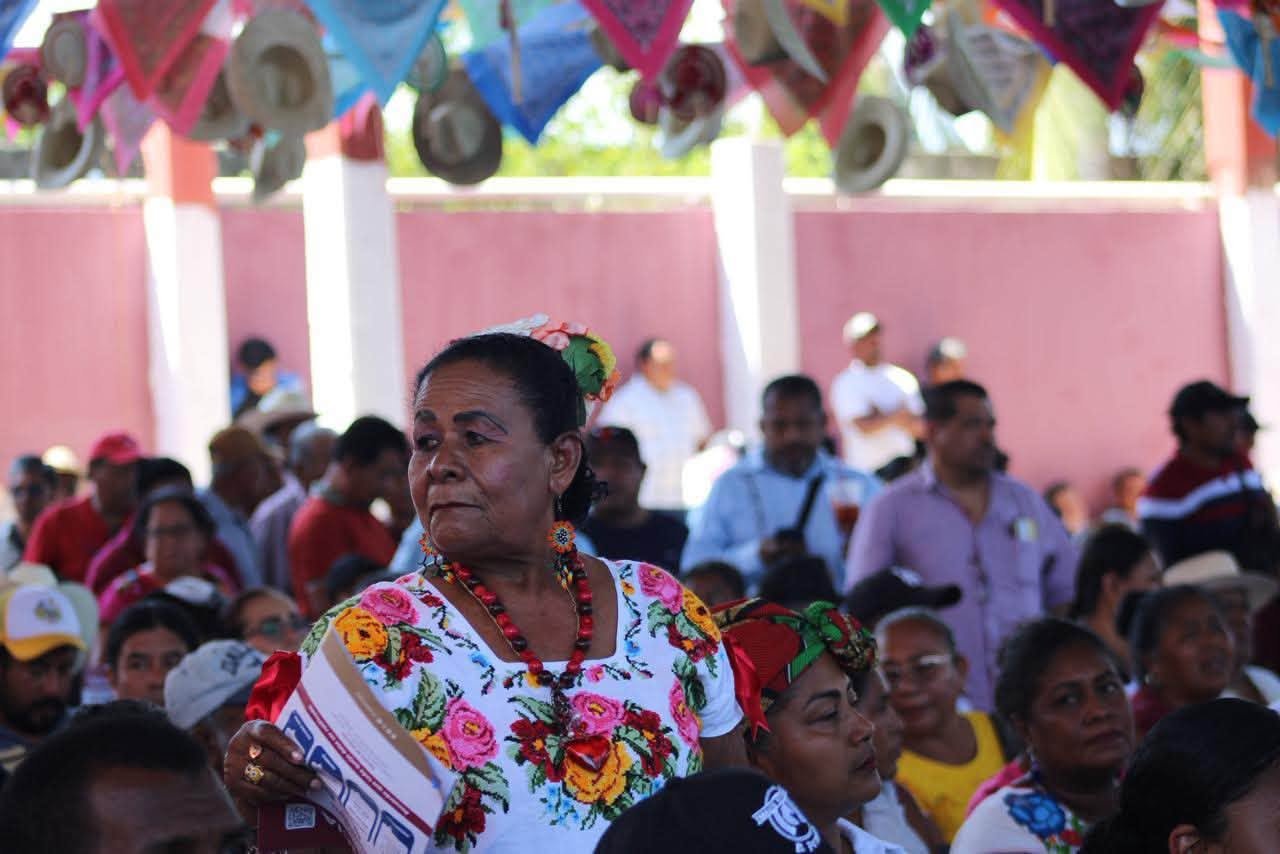
Felipe Carrillo Puerto, Quintana Roo — Indigenous communities need more than symbolic recognition; any new consultation on their rights must guarantee real autonomy and self-government, the municipal chronicler of Felipe Carrillo Puerto said.
Carlos Chablé Mendoza expressed skepticism about the planned national consultation to draft the General Law on the Rights of Indigenous and Afro-Mexican Peoples. He warned that the process must not become a political simulation designed to legitimize government decisions.
Nationwide, regional assemblies and working groups are already underway as part of the Prior, Free and Informed Consultation Process on the proposed bill. In Quintana Roo, an assembly for the Maya, Ch’ol and pluricultural communities will be held on August 21 at the municipal dome on Calle 63, No. 762, in the Cecilio Chi neighborhood of Felipe Carrillo Puerto.
Chablé Mendoza said the Mexican government has yet to demonstrate sufficient political will to enforce rights already recognized by the state, which is why Indigenous sectors remain skeptical about yet another consultation.
He noted that past consultations have not led to full recognition and respect for Indigenous rights, citing railway projects in southern Mexico as an example. Those projects, he said, have affected the territories, biodiversity and rights of Indigenous communities in Oaxaca, Chiapas and the Yucatan Peninsula.
The chronicler recalled that in September 2021, a proposed Indigenous reform initiative based on a consultation organized by the National Institute of Indigenous Peoples (INPI) was handed to then-President Andrés Manuel López Obrador. On February 5, 2024, the federal executive presented a constitutional reform initiative to recognize Indigenous communities and the Afro-Mexican people as subjects of public law with legal personality and their own patrimony.
Chablé Mendoza pointed out that these rights have been recognized for three decades in ILO Convention 169 and the UN Declaration on the Rights of Indigenous Peoples, both part of Mexico’s legal framework but still not fully applied.
More Government
- Canaco-Servytur Seeks Tax Incentives for Sargassum Management in Quintana Roo
- Cancún to Hand Out 117,000 Pairs of School Sneakers Starting Monday
- Hepatitis A Outbreak Prompts Class Suspension in Tizimín Village
- Cancún Animal Welfare Hospital Reaches 85% Completion in First Phase
- Quintana Roo Border Dispute Reaches Final Stage at Mexico’s Supreme Court
More Tulum
- Tulum Faces Budget Deficit as Tourism Slump Slashes Revenue
- Drought Stalls Corn Planting in Tulum’s Maya Communities
- Mexico Moves to Curb Misleading Hotel Ads Claiming Private Beaches
- Tulum Tour Guides Pin Recovery Hopes on Cruise Ships and Year-End Holidays
- Man Shot Dead in Tulum Irregular Settlement as Neighbors Cite Land Threats
