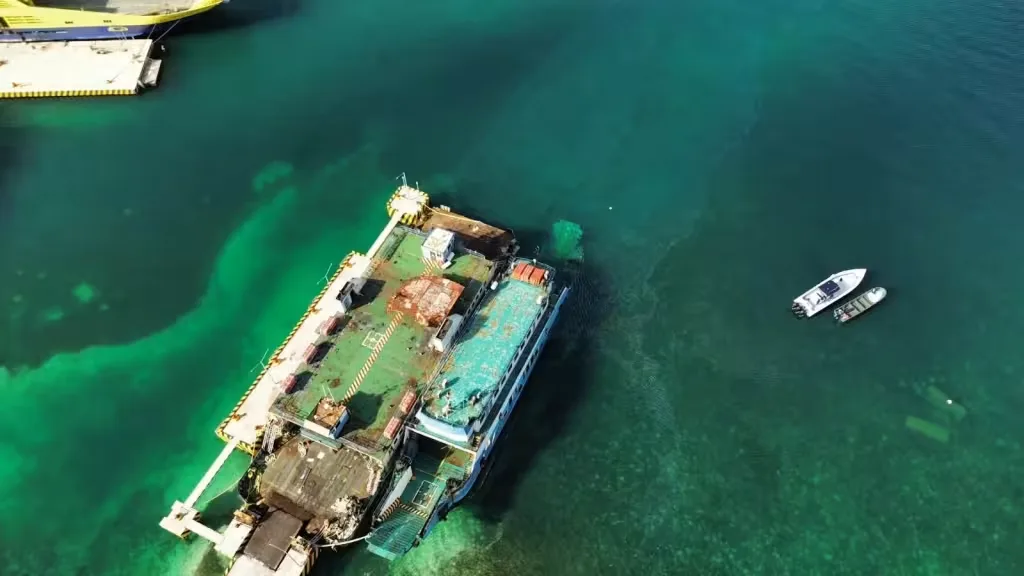
Isla Mujeres, Quintana Roo — The partial sinking of an out-of-service vessel escalated into an environmental emergency in Isla Mujeres, Quintana Roo, after the former ferry Sergio Gracia Aguilar released hydrocarbons into the sea. The incident occurred on Sunday, November 8, and prompted intervention by the Federal Attorney for Environmental Protection (Profepa) due to the risk of contamination in the bay.
Vessel Docked Since 2018
The ferry had been docked since 2018 at one of the piers managed by the Quintana Roo Port Authority (Apiqroo), alongside another vessel called Isla Blanca. Both ships ceased operations when the company Marítima Isla Mujeres suspended its transport services between the island and Punta Sam, leaving them exposed to deterioration and corrosion for years.
Partial Sinking and Emergency Response
On Sunday morning, the Sergio Gracia Aguilar began listing to one side, allowing water to enter until it was partially submerged. The situation mobilized more than 20 personnel from the Mexican Navy (Semar), Civil Protection, and the Fire Department, who carried out operations to address the sinking and reduce risks to the port facilities.
The situation worsened when an oil slick was detected near the pier. Upon discovering the fuel in the water, Profepa personnel intervened to contain and recover the pollutant, aiming to prevent it from spreading to other areas of the bay.
According to information published by Por Esto!, personnel from the federal agency indicated that the spilled fuel had been recovered. However, as of Monday, November 9, the amount of hydrocarbons spilled, the type of substance involved, and the extent of the affected marine area had not been officially reported.
Environmental Concerns
The incident has raised concerns about its potential impact on the Isla Mujeres ecosystem, home to diverse marine species and areas of seagrass beds and reefs. The presence of hydrocarbons can affect water quality, harm aquatic organisms, and disrupt the environmental balance, depending on the amount spilled, its composition, and the duration of exposure.
Questions Over Port Oversight
In addition to the environmental damage, the sinking has called into question the actions of the authorities responsible for managing and overseeing the port facilities. According to the same source, the vessels had gone approximately eight years without proper maintenance, despite their evident deterioration.
The accusations extend to the administration of Apiqroo, headed by Vagner Elbiorn Vega, as well as to the officials responsible for port operations in Isla Mujeres. The controversy centers on the lack of timely action to remove the vessels, whose condition posed a risk to both maritime activities and the environment.
The Maritime Navigation and Commerce Act includes mechanisms for intervention when a vessel poses a risk of sinking or interferes with port operations. In this context, the incident has raised questions about the preventative measures that could have been taken and the potential liabilities arising from the vessels’ continued presence at the port.
Tourism and Next Steps
The situation also poses a challenge to the tourism image of Isla Mujeres, one of the most renowned destinations in the Mexican Caribbean for its beaches and natural beauty. The presence of contaminants in its waters comes as the destination prepares to receive visitors during the end-of-year holiday season.
To date, no official timeline has been released for removing the ferry wreckage, nor has it been specified whether there will be penalties for the environmental damage. Removing the vessel will be a crucial step in reducing the risk of further spills and preventing its structure from continuing to deteriorate within the bay.
From Maritime Incident to Accountability Case
The sinking of the Sergio Gracia Aguilar has ceased to be merely a maritime incident and has become a case that raises questions about port oversight and environmental risk prevention. After eight years of neglect, authorities now face the challenge of ensuring the cleanup of the area, assessing the potential impacts, and determining the corresponding responsibilities.
The emergency also highlights the importance of promptly addressing out-of-service vessels, before their deterioration becomes a threat to coastal ecosystems and the communities that depend on them.
More Environment
- Yucatán Poultry Farmers to Cull 225,000 Birds After Avian Flu Outbreak in Umán
- Profepa Closes 25 Properties in Quintana Roo Over Illegal Clearing of 332 Hectares of Jungle
- Japan to Back Mexico With Technology and Funding to Fight Sargassum and Clean Up the Caribbean Coast
- Playa del Carmen Aims to Approve New Urban Development Plan by Early 2027
- Quintana Roo Wildlife Agency Rescues Up to 15 Animals a Week as Cold Weather Drives Snakes Into Homes