
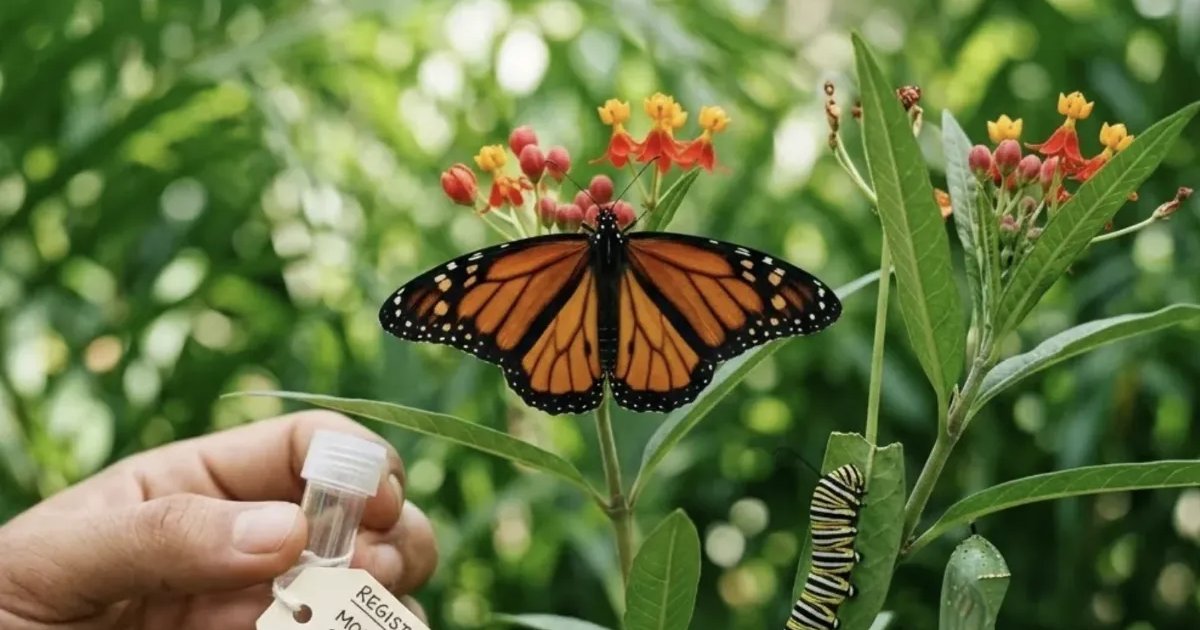
Quintana Roo — More than 353 monarch butterfly sightings have been recorded in Quintana Roo, according to data compiled on the iNaturalist platform by Conabio, Mexico’s National Commission for the Knowledge and Use of Biodiversity.
The reports position the state as one of the leading observation points for the species on the Yucatan Peninsula.
The records have been logged by specialists, residents and environmental conservation groups, who have helped identify the areas where monarchs find conditions suitable for feeding, breeding and sheltering during different stages of their lives.
Quintana Roo Accounts for 67% of Peninsula Records
Quintana Roo accounts for 67% of the observations registered on the peninsula, while Yucatan represents 23% and Campeche 10%.
In total, monitoring platforms count 353 sightings in Quintana Roo, 125 in Yucatan and 47 in Campeche — 525 across the region.
Where the Butterflies Have Been Seen
The iNaturalist reports show a significant concentration of sightings in Benito Juárez, Cozumel, Playa del Carmen and Lázaro Cárdenas, particularly on Holbox.
In these communities, pollinator-friendly gardens and conservation areas managed by local groups have encouraged the monarch’s presence by providing feeding and resting spaces.
Native vegetation also plays a key role in keeping the butterflies in the area. Among the most important plants is milkweed, which the monarch uses during its reproductive cycle.
Although the species’ main migratory route crosses Mexico’s central highlands toward the oyamel fir forests of the country’s interior, the Quintana Roo records show the butterfly also uses tropical ecosystems.
Specialists therefore consider these areas to serve as rest stops for migrating individuals and as habitat for populations that stay year-round.
Citizen Reports Drive the Monitoring
The rise in reports is also tied to growing participation by residents interested in learning about and protecting local biodiversity.
Through photographs and observations shared on digital platforms, residents and environmental organizations supply information that helps map the monarch’s distribution across municipalities.
Community initiatives also make it easier to track the insect’s movements and to identify natural areas that matter for its conservation.
Specialists say each documented sighting improves understanding of monarch populations and provides data for designing protection strategies, particularly as shifting temperatures and habitat loss affect the insects in various regions.
More Environment
- Isla Pasión Off Cozumel Named World’s Best Beach in Tripadvisor 2026 Awards
- Maya Women and Youth in Saban Build a Community-Run Tourism Model
- Los Rápidos Is Closed, but Its Operators Say Visitors Are Still Entering the Bacalar Channel
- Mexican Navy Seizes 1.8 Tons of Undocumented Octopus on Yucatán Coast
- Cancún’s Arboriza Program Reaches 4,000 Trees Planted, With 11,000 Targeted by 2027
More Cozumel
- Cozumel Welcomes 41.5% of Mexico’s Cruise Passengers as Industry Grows 15%
- Cozumel’s FPMC Presents ‘Las Piedras Parlantes,’ Eduardo Aguilar Zarandona’s Book on the Olmec World
- Cozumel Council Session Collapses as Six Members Skip Vote on 2027 Tax Plan
- Playa del Carmen Withholds CFE Permits for Cozumel Power Line Pending Environmental Ruling
- Rafael Nadal and Meliá Open First Zel Hotel in Mexico on Cozumel
