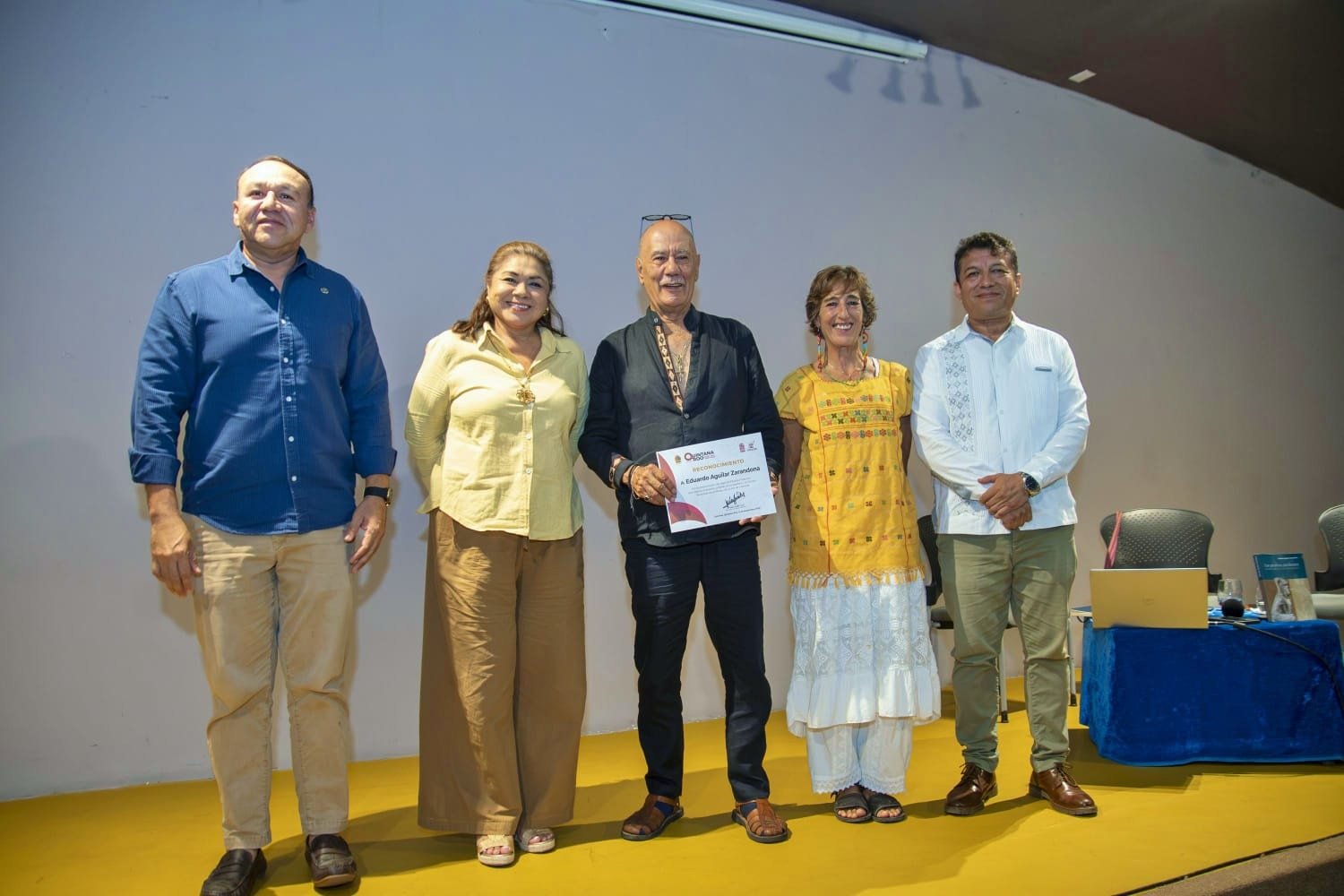
Cozumel, Quintana Roo — The Fundación de Parques y Museos de Cozumel (FPMC) presented “Las Piedras Parlantes,” a book by writer Eduardo Aguilar Zarandona that explores the history and worldview of the Olmec civilization, widely considered one of the oldest cultures in Mesoamerica.
Journalists Saide Sesin Martínez and Alejandro Moreno Peña led the presentation, walking the author through the main arguments of his research, which draws on archaeological findings to examine Olmec cosmology and its cultural legacy.
Aguilar Zarandona described how the Olmecs interpreted the cycles of nature and wove them into their calendars and ritual practices, elements that also shaped how their communities were organized. He stressed the civilization’s importance and its influence on the development of other Mesoamerican cultures.
The author thanked the foundation for opening a space for his work and for bringing it to a wider readership, noting the value of cultural venues that allow research to be shared and spark interest in history.
Isela Carrillo Cupul, director of the Museo de la Isla, said the event gave the public new perspectives on history and reaffirmed the museum as a meeting place for literature, research and the promotion of cultural heritage.
At the close of the event, FPMC councilor Alejandro Queb Franco presented Aguilar Zarandona with a recognition for sharing his work at the Museo de la Isla and for helping to promote literature and historical knowledge.
More Culture
- Edith Encalada Releases ‘Contigo Aprendí’ Video, a Tribute to Armando Manzanero
- Mara Lezama Delivers 4.25 Million Pesos for 40 Cultural Projects in Quintana Roo
- UADY Presents ‘Wáay Chivo,’ a Wordless Graphic Novel Reinterpreting a Yucatecan Legend
- Cancún’s Tardes de Lucha Libre Wraps 2026 Season with 6,400 Fans
- Aurora, Andrómeda, Chapo Albury and 319 Take Top Honors at World Brahman Congress in Yucatán
More Cozumel
- Cozumel Council Session Collapses as Six Members Skip Vote on 2027 Tax Plan
- Playa del Carmen Withholds CFE Permits for Cozumel Power Line Pending Environmental Ruling
- Rafael Nadal and Meliá Open First Zel Hotel in Mexico on Cozumel
- CFE Submarine Cable to Boost Power Supply in Playa del Carmen and Cozumel
- Cozumel’s Central Hotel Association Seeks Tax Relief Under New Leader