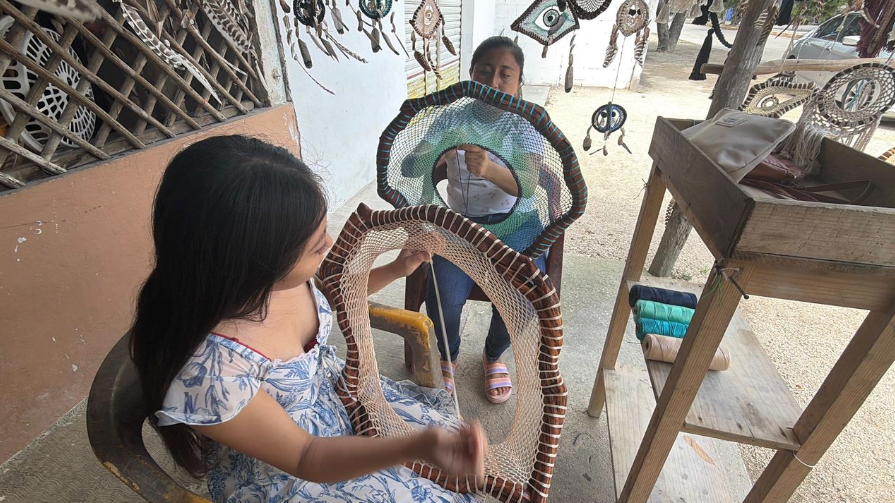
Tulum, Quintana Roo — A cooperative of women artisans and traditional cooks has launched the first North-Center-Southeast Artisan Network, an initiative to eliminate middlemen and open new commercial channels for local producers by connecting them directly with consumers and tourist markets.
Marta Medel Alcántara, president of the cooperative, said the strategy will allow artisan goods made in northern and central Mexico to be sold in the southeast, while products from this region gain access to other markets.
She noted that Tulum is a strategic hub because of its importance as a tourist destination and the presence of the Maya Train, where artisan products — including works by local creators — are currently sold.
One of the network’s main goals, she said, is to revive crafts that have been left behind for lack of promotion and to create more opportunities for women in vulnerable situations, many of whom belong to families that have passed down their knowledge for generations.
Medel Alcántara said the model is designed so that artisans can sell directly to consumers, avoiding intermediaries who keep a significant share of the profits and reduce the price paid to the people who make the products.
The cooperative is also promoting community tourism, which would take visitors directly to the communities where artisans produce their work and prepare traditional food, generating income for families and helping preserve cultural expressions.
In addition, she announced a training project involving universities in Tlaxcala and Quintana Roo, state authorities and the federal Secretariat of Economy. The program aims to give artisans tools in finance, marketing and business management.
On August 14 and 15, promotional activities will be held at Maya Train facilities, where the project will be presented and organizers hope to strengthen ties between producers, institutions and consumers.
The network also plans to expand to the Tulum International Airport and Mexico City’s Benito Juárez International Airport, taking advantage of the flow of national and international tourists.
Medel Alcántara said the aim is for visitors to learn where the products come from and for direct contact with artisans to increase their commercial and cultural value. She added that the initiative seeks to strengthen communities and contribute to Tulum’s economic revival through the consumption of local products.
More Culture
- Quintana Roo to Present Mexican Caribbean Cenote Guide at DEMA Show 2026
- Quintana Roo Artisans Win Dedicated Law to Protect and Promote Their Craft
- Mundo Maya Nations Agree on Multi-Destination Tourism Route
- Cozumel Artists Accuse Veracruz Project of Copying Iconic Photo Booth
- Cave Divers Find Ancient Animal Bones in Yucatán Cave
More Tulum
- Tulum Firearms Seizures More Than Double 2024 Total, Officials Say
- Fatal Motorcycle Crash Closes Federal Highway 307 at Tulum
- Drainage Connection Gap Worsens Pollution of Cenotes and Beaches in Quintana Roo
- At Least 10 Shots Fired at Tulum Office Building, Triggering Major Police Response
- Aeroméxico to End Flights to Tulum Airport After September