Felipe Carrillo Puerto, Quintana Roo — A cooperative led and run by Maya women is bringing solar power to communities across Felipe Carrillo Puerto, and its members have documented the work in a book set for presentation on Nov. 16.
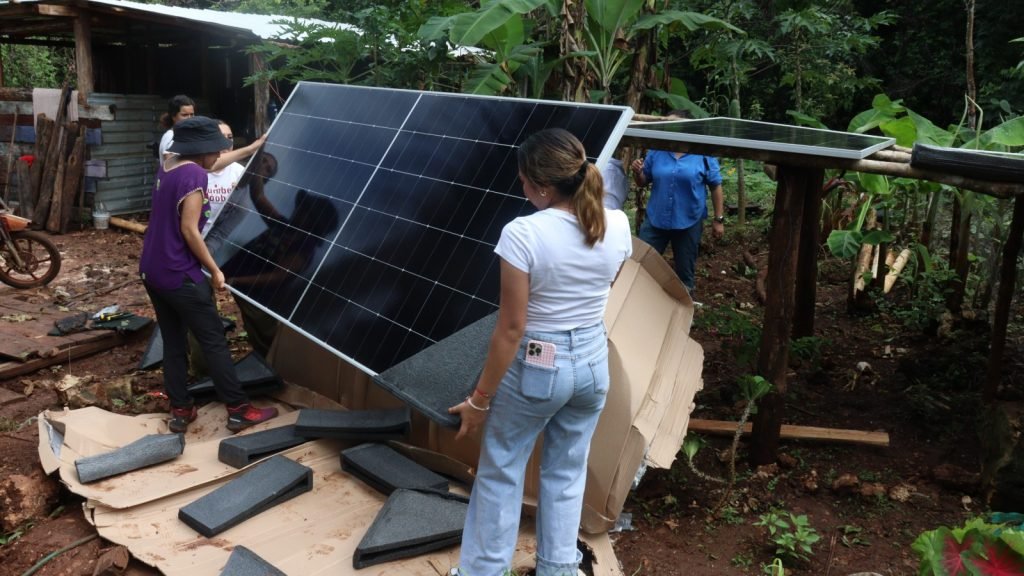
The group, Cooperativa Túumben K’ooben, has installed 21 solar systems for lighting and water pumping, according to Dulce Magaña, a representative of the cooperative. Thirteen of the systems went into family homes and eight into community centers and shared spaces.
Members are now installing another 37 systems, which would bring the total in operation to 58.
Training and technical support in 29 communities
Under the project Mujeres Mayas Promotoras de Energía Solar (Maya Women Solar Energy Promoters), the cooperative has reached 29 communities through installations, training sessions and energy caravans. The work also includes instruction and technical support so that Maya women can install, use and maintain the equipment themselves.
The book, titled Las ingenieras solares. Construyendo una transición energética justa desde el territorio (The Solar Engineers: Building a Just Energy Transition from the Territory), will be presented on Nov. 16 in Felipe Carrillo Puerto.
Magaña said the publication poses two central questions: who decides how energy is produced, and who benefits from it. It also examines how the technical leadership of the so-called “solar engineers” challenges gender roles that treat energy as an exclusively male field.
A transition built on social justice
The book traces the cooperative’s history and its search for energy alternatives that benefit both the environment and living conditions in the region’s most disadvantaged communities. Its members argue that access to solar power is not only about hardware: it also means sharing experience, knowledge and lessons learned. Their proposal incorporates agroecology and environmental education as part of a transition grounded in justice for all forms of life, including nature itself.
Magaña said the consequences of climate change have pushed energy to the center of public debate, but warned that inequalities in energy consumption receive far less attention. She noted that the world’s 80 richest countries hold 23 percent of the global population but account for 55 percent of total energy consumption — a gap that reflects unequal access to energy resources and unequal responsibility for global warming.
In the Yucatan Peninsula, tourism also weighs heavily on electricity demand. According to regional consumption studies, six tourist municipalities in Quintana Roo accounted for 45 percent of the electricity used in 2022 across the peninsula’s 128 municipalities.
Solar pumps change daily life
Testimonies collected in the book describe how solar installations have changed families’ daily routines. Solar-powered pumps, members said, offer an alternative for expanding agroecological production in places where water access was once limited.
“We thought that if we put the solar pump here, what we’re doing would probably be more successful — and yes, it really was,” one testimony in the book reads.
Magaña said the cooperative’s experience has spread to other groups, states and even countries, and that its work shows it is possible to rethink what energy is produced for, how it is produced and who it serves.
More Community
- Quintana Roo Taxis Required to Add GPS and Surveillance Cameras Under Security Push
- Solomun to Return to Tulum on Jan. 7, 2027, for Show at Tehmplo
- Cancún Opens FIP Junior America Padel Cup With 11 Nations
- Tulum Mayor Inspects Progress on New Football Pitch
- Mexico Adds Ozempic’s Active Ingredient to Public Health Catalog for Diabetes and Obesity
More Zona Maya
- Solar Project Near La Presumida Raises Deforestation Fears in José María Morelos
- Puerto Morelos to Host 10th Mesoamerican Ballgame Championship
- Farmer Warns Climate Shifts Are Making Agriculture Unviable in Tulum’s Maya Zone
- Mayan Legends Festival Brings Oral Tradition to Life in José María Morelos
- Tulum Mayor Diego Castañón Pitches Shared Prosperity Market in Bacalar