
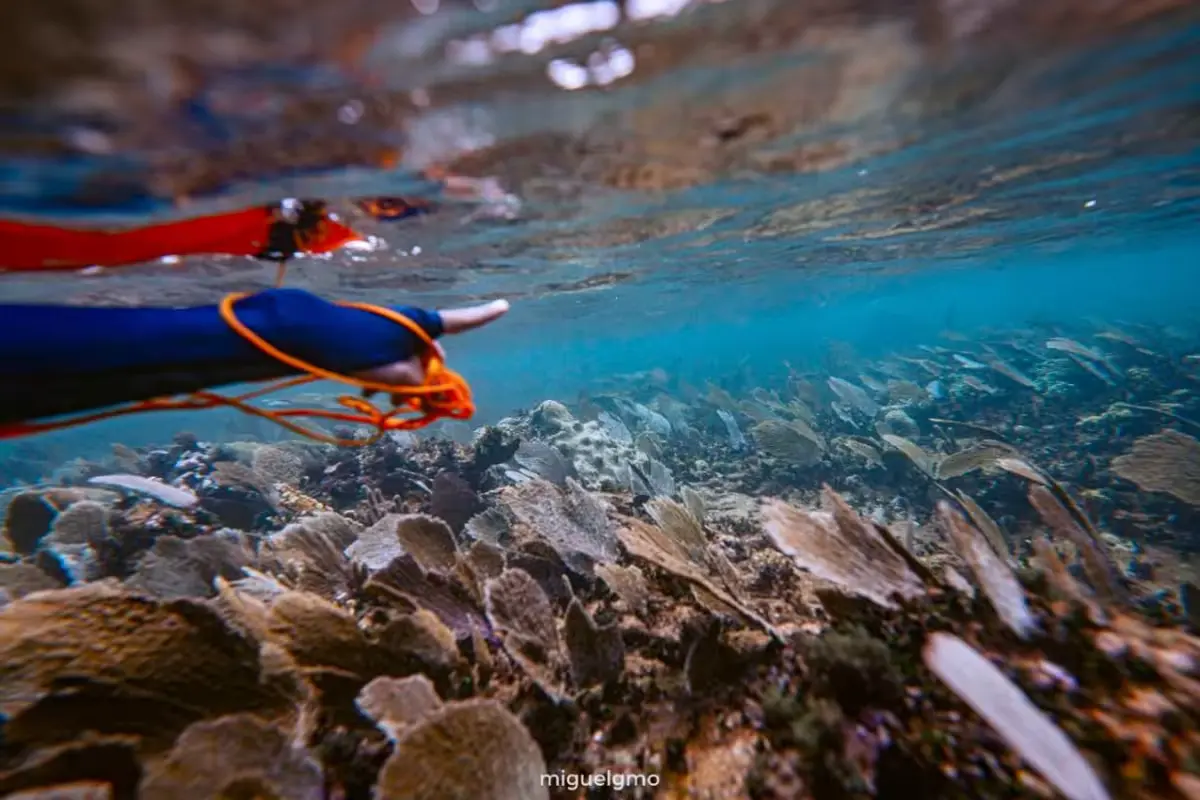
Playa del Carmen, Quintana Roo — Environmental activists and biologists are warning that a planned two-hotel resort in Punta Venado, about 30 minutes from downtown Playa del Carmen, could cause irreversible damage to reefs, mangroves, seagrass beds, and coastal dunes.
The project, called the Riviera Maya Ecotourism Complex, received partial approval from Mexico’s Environment Secretariat (Semarnat) after the developer, Oleum Joint Venture S. de R.L. de C.V., a Mexican company with foreign investment, submitted a regional environmental impact statement. But members of the local group Cenotes Urbanos say the developer left out key ecological information to win the permit.
Activist Elías Siebenborn said a tour of the 70-hectare site found shallow reefs with extensive elkhorn coral formations and large areas of seagrass that support marine life and provide feeding grounds for sea turtles. He accused the developer of omitting those features from its application.
“We’ve explored the zone and observed significant marine fauna diversity, including octopus, lobsters, and various fish species that depend directly on the reef and seagrass to survive,” Siebenborn said.
The property sits between two ecological conservation zones, according to biologist Patricia Ocaña Luna, president of the College of Biologists of Quintana Roo. She said any construction there represents an imminent risk of irreversible damage because the ecosystems are highly fragile.
Biologist Roberto Rojo, also with Cenotes Urbanos, said the reef is connected to adjacent mangrove areas. “If there’s any contamination, they deteriorate,” he said.
Alejandra Flores, another group member, said the threat extends beyond the sea. Mangroves, seagrass, and reefs form an interconnected coastal network that maintains water quality and productivity, she said. Building a hotel complex would damage or destroy mangroves and other coastal systems, and “no hotel should be built on the coastal dune,” she added.
“Any contamination or modification of hydrological flows would have consequences for the reefs, seagrass, and the species that depend on them,” Flores said.
According to the project summary filed with Semarnat, the Punta Venado property on Federal Highway 307 was sold by Rosa María Joaquín Alcérreca through a sale contract with a title reservation.
Siebenborn vowed to keep fighting the project. “The developer omitted all this information,” he said. “We won’t let them destroy the ecosystems.”
More Environment
- Mexican Navy Opens Youth Photography Contest on Ocean Conservation
- WHO Warns El Niño Poses Major Global Health Threat
- Hurricane Polo Hits Category 5; Five Mexican States Brace for Heavy Rain
- Isla Mujeres Fishermen Face Grouper Shortage as Catch Barely Covers Local Demand
- Cancún Officials Urge Residents to Protect Pets After Reported Puma Sighting in Cuna Maya
More Playa del Carmen
- Playa del Carmen Beach Restoration Clears Environmental Hurdle, Mayor Says
- Bidding Process to Define Renovation of More Than 10 Parks in Playa del Carmen
- Body Cameras Reduce Complaints Over Police Detentions in Playa del Carmen
- Lone Robber Steals 3,000 Pesos From Playa del Carmen Pharmacy
- Three Raids in Playa del Carmen and Cancún Net One Detention and Suspected Drugs
