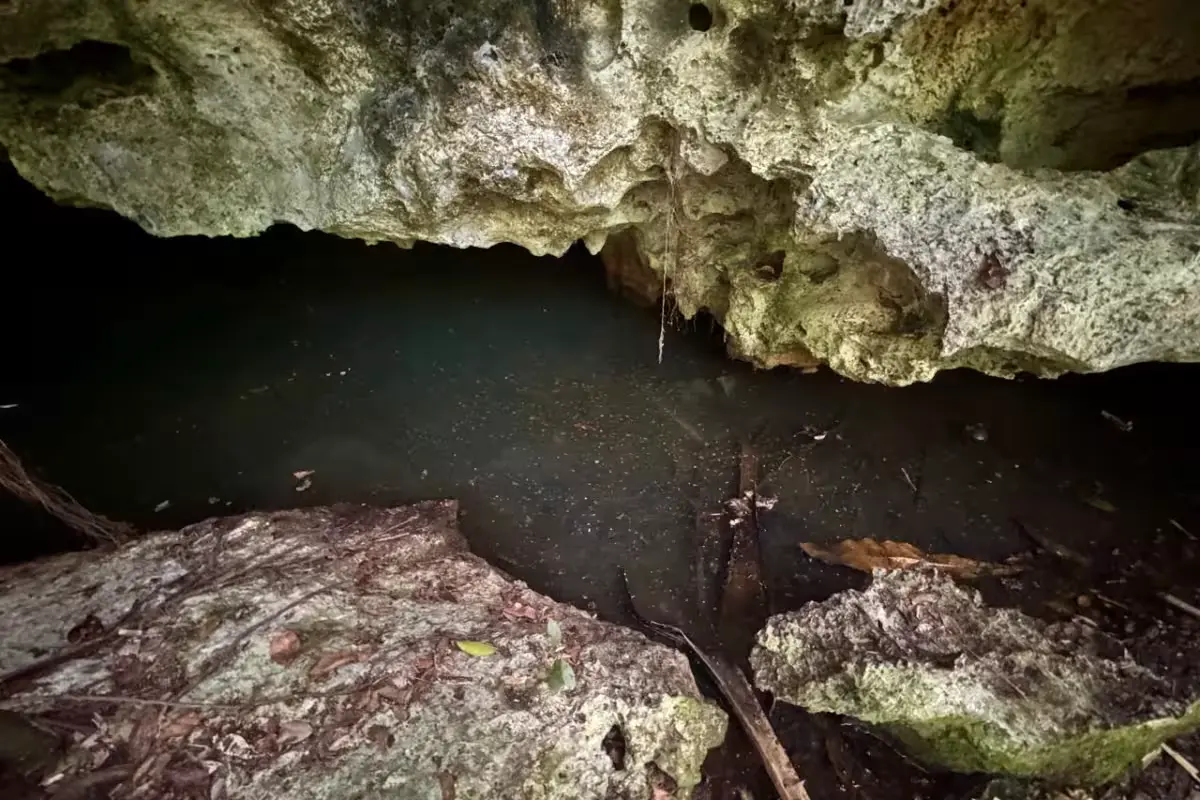
Playa del Carmen, Quintana Roo — Residents of the Las Palmas II neighborhood are urging municipal authorities to stop clearing vegetation on a plot where the city plans to build a community center, saying the work is damaging jungle habitat and threatening two cenotes, one of which already shows signs of pollution.
The group — identified as Anselmo de la Cruz, Francisco Torres, Juan Carlos Rodríguez, Andrés García, Zoila Salazar and Mauricio González — said the cleared land is home to trees and wildlife, including species at risk of extinction, and should be preserved as a green space.
Biologist Roberto Rojo, a member of Cenotes Urbano and Selvame MX, said the property contains protected species and a cave of high biological value that should be conserved. He also noted records of biodiversity at the cenotes or caves, including plants, fungi and fauna such as the leopard frog.
Residents said one of the cenotes has not been explored. Its water is dirty and surrounded by unique vegetation, and the area fills with water during the rainy season.
Anselmo de la Cruz said the neighborhood has few trees left. “We want the property preserved as the city’s green lung, because we no longer have trees. The mayor of Playa del Carmen, Estefanía Mercado, ordered the vegetation cleared out of political whim, without citizen consensus,” he said.
The adjacent cenote should be protected, he added, because cenotes are the main source of fresh water in the Yucatan Peninsula, sustain unique ecosystems with endemic species, and hold great cultural and historical value as sacred sites of the Maya civilization.
Francisco Torres said authorities have shown “no respect or empathy for nature.” He believes the cenote is already contaminated because street vendors in the area left solid waste that over time has ended up at the bottom of the sinkhole.
Juan Carlos Rodríguez, a merchant, noted that the region has no surface rivers, so cenotes connect to underground river systems that supply water to the natural environment and local communities.
Andrés García criticized officials from the Green Ecologist Party of Mexico (PVEM), saying “they have nothing green about them. They are even less green because they lack the vision to work on protecting and conserving natural resources.”
Zoila Salazar called for sanitation efforts and environmental education. “We urgently need awareness campaigns so people stop throwing solid waste into cenotes,” she said.
More Environment
- Two Atlantic Low-Pressure Areas Watched; One Shows 40% Cyclone Chance
- Tren Maya Freight Complex in Chetumal to Break Ground in 2027
- Lawmakers Propose One Tree Every 15 Meters in New Quintana Roo Developments
- Bacalar Aims to Show the World Its Appeal Goes Beyond the Lagoon
- Quintana Roo Weighs Permanent Revocation of Permits for Legacy by Awa Playacar After Closure Seals Broken
More Playa del Carmen
- Man Gunned Down in Playa del Carmen; No Arrests Made
- Playa del Carmen Set to Host Pro Padel League International Stop
- Playa del Carmen Beach Restoration Clears Environmental Hurdle, Mayor Says
- Bidding Process to Define Renovation of More Than 10 Parks in Playa del Carmen
- Body Cameras Reduce Complaints Over Police Detentions in Playa del Carmen