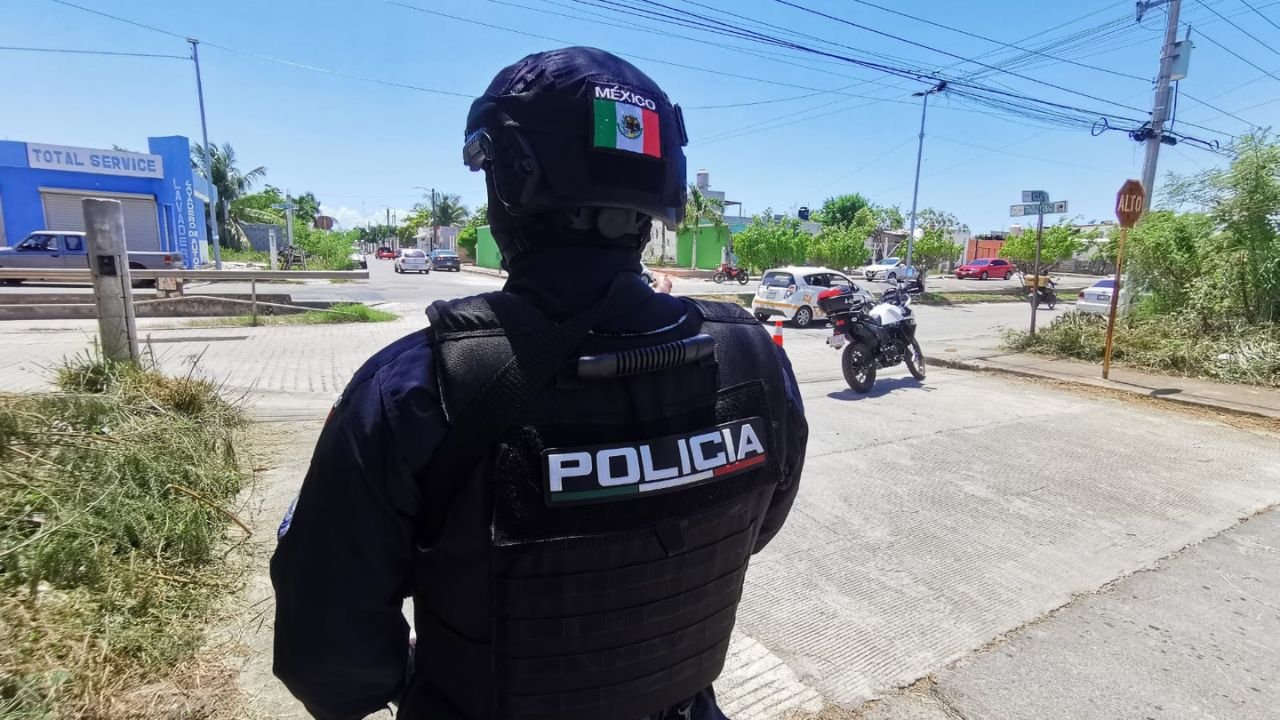
Quintana Roo, Mexico — Former law enforcement official Didier Felipe Vázquez Méndez has proposed gradually aligning police retirement in Quintana Roo with Mexico’s military pension system, saying officers now face severe labor disadvantages and retirement benefits that are insufficient for the risks they take.
Vázquez Méndez, a former director of the State Prosecutor’s Office in southern Quintana Roo and a former police chief in Othón P. Blanco and Felipe Carrillo Puerto, said state, municipal and investigative officers work exhausting shifts, face constant risk to their lives and earn low wages, all without social security protection designed for their duties.
The proposal would gradually bring police retirement benefits in line with those of the armed forces, create a state retirement fund to guarantee pension payments, and require changes to Quintana Roo’s constitution and its Social Security Law.
Vázquez Méndez said the initiative also aims to ensure that officers’ careers remain stable when municipal governments change. He said local police face lethal risks comparable to those of the military but remain far behind in benefits and retirement schemes, and that the physical and psychological toll on officers accelerates quickly.
The proposal is founded on constitutional principles including the progressive realization of rights, substantive equality and international agreements on decent work, he said.
Key reforms proposed
To move forward, Vázquez Méndez proposes four structural changes:
- Amend the Quintana Roo Constitution to formally recognize the high risk of police work.
- Reform the state Social Security Law to create a special retirement system for police.
- Create a State Police Retirement Fund with sufficient budget.
- Set up a technical committee made up of lawmakers, specialists and active police officers to guide the process.
“Public security starts by recognizing reality and is built with strong institutions, not speeches,” Vázquez Méndez said.
More Government
- Aeromexico Eyes New U.S. Routes After Mexico City Limits End
- Mexico Files New Complaint Over Migrant Death in ICE Custody
- Mara Lezama Hands Out 100 Sewing Machines in Chetumal to Boost Women’s Self-Employment
- Crystal Meth Addiction Surges in Quintana Roo, Fuels Nearly 90% of Homicides
- Quintana Roo Leads Yucatan Peninsula in Rape and Sexual Abuse Cases
More Quintana Roo
- Quintana Roo Youth Sailors Join Mexico’s Team for Optimist Championship in Uruguay
- Tourism Slump Forces 35% of Skål México Businesses to Borrow to Cover Payroll
- Orionid Meteor Shower to Peak Over Mexico on Oct. 21-22
- Cancún Prosecutor Arrested Over Sex Trafficking of Two Women
- Stationary Front to Bring Rain Across Yucatán on Tuesday