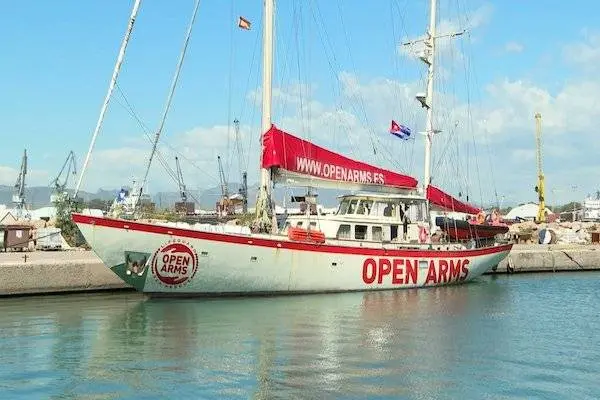
CANCÚN, Quintana Roo — The humanitarian vessel Astral, operated by the Spanish NGO Open Arms, made a technical stop in Cancún this week as it prepared for the final leg of a solidarity mission carrying medical supplies and solar-energy equipment to Cuba.
The stop is part of Rumbo a Cuba, a campaign led by Open Arms and supported by more than 150 social organizations. The mission’s stated goal is to draw attention to the effects of the U.S. embargo on Cuba while delivering a concrete form of aid: photovoltaic equipment intended to help power the intensive care unit at Havana’s Juan Manuel Márquez Pediatric Hospital.
Open Arms said the project was created to help support the hospital’s energy self-sufficiency through solar panels, a particularly urgent concern as Cuba faces repeated blackouts and severe strain on its health system.
The vessel is expected to arrive in Havana on Friday, where an international delegation will accompany the crew and participate in activities with Cuban institutions and civil society organizations.
From Migrant Rescue to Humanitarian Cargo
Open Arms is best known internationally for maritime rescue operations involving migrants and refugees in the Mediterranean. The organization was founded by Spanish activist Óscar Camps and has become one of the most visible civilian rescue groups operating in European waters.
The Astral, a former luxury sailing yacht converted for humanitarian missions, left Barcelona in May as part of the Cuba-bound campaign. Open Arms initially announced that the vessel would stop in several Spanish ports, including Valencia, Málaga, Cádiz and Las Palmas de Gran Canaria, before crossing the Atlantic.
La Jornada reported at the time of departure that the cargo included photovoltaic equipment for the Havana pediatric hospital, as well as medicines and food. The campaign involved more than 20 organizations in its early phase, including environmental, political and social groups.
More recent reporting by Europa Press, carried by Infobae, placed the number of participating entities at more than 150, suggesting the coalition expanded during the voyage.
Why Solar Panels Matter in Cuba Right Now
The solar panels are not simply symbolic. Cuba has been experiencing repeated nationwide blackouts amid fuel shortages and a deteriorating electrical system. The Associated Press reported this week that Cuba suffered its third nationwide blackout in two weeks, leaving the entire country without power and forcing authorities to restore service through smaller “micro-islands” designed to prioritize places such as hospitals and food production facilities.
AP also reported that fuel shortages have disrupted transportation, work schedules, flights, cooking, water supply, internet and telephone service. Hospitals have been among the priority sites when power is restored, underscoring why backup energy systems have become a humanitarian concern rather than a convenience.
Cuba’s health system has also been under pressure from shortages of supplies, medicines and energy. Reuters reported earlier this year that Cuban health officials acknowledged a reduction in patient visits, hospital admissions and basic supplies, with cancer care and pediatric treatment particularly affected.
In that context, a solar installation for a pediatric ICU could provide a degree of energy resilience during outages, especially for equipment and services that cannot safely depend on an unstable grid.
A Mission With Political Weight
The mission has also carried an openly political message. Open Arms and other organizers describe the U.S. embargo as a major factor in Cuba’s humanitarian crisis and say the campaign is intended to denounce its impact. Camps and other activists have referred to the policy as a form of siege, arguing that civilian populations should not be deprived of essential goods, medicine or energy.
The embargo remains one of the longest-running and most contested issues in U.S.-Cuba relations. The European Union stated earlier this month at the United Nations that it recognizes the adverse humanitarian impact of U.S. measures on the Cuban people and called for humanitarian support and access to be protected.
The U.S. position, however, has historically framed sanctions as pressure on the Cuban government over democracy and human rights. Critics of the Cuban government also argue that the island’s crisis cannot be attributed only to sanctions, pointing to internal economic management, restrictions on civil liberties and the government’s own policy failures.
That makes missions like Rumbo a Cuba politically charged. Supporters see them as humanitarian solidarity and a challenge to sanctions. Critics see them as insufficient to address deeper structural problems, or as efforts that risk being used by the Cuban government for political messaging.
Cancún as the Final Stop Before Havana
The Cancún stop gives the mission a regional connection. From Quintana Roo, the crossing to western Cuba is relatively short compared with the transatlantic route the vessel has already completed.
For local observers, the ship’s arrival also comes at a moment when Cuba’s crisis is again drawing international attention because of the frequency of blackouts and the pressure they are placing on hospitals and households.
Open Arms has said the aid will be monitored by civil society groups once it reaches Cuba. That detail will be important, because humanitarian missions to Cuba are often scrutinized over whether aid reaches intended recipients and whether deliveries can be independently verified.
For now, the Astral’s stop in Cancún marks the final stage of a voyage that began in Barcelona with a straightforward promise: to deliver light, literally, to a children’s hospital struggling through Cuba’s energy emergency.
More Lifestyle
- Cancún Opens Registration for Janal Pixan 2026 Catrina and Altar Contests
- Brain-Eating Amoeba Found in Six Artificial Lakes in Mérida; Water Contact Restricted
- Cancún Launches 2026 Ocular Prosthetics Program With Free Evaluations
- Playa del Carmen Health Center in Villas del Sol to Close Two Days for Maintenance
- Tulum’s Mureco Museum Adds 53 Archaeological Pieces From Across Mesoamerica
More Cancun
- Man, 25, Killed Outside Cancun Home; Dog Shot, Suspect Caught
- Uber Driver Murdered in Cancun’s La Joya: What We Know
- Air France Marks 15 Years of Paris-Cancún Flights
- Cancún Council Approves Programs for Caregivers, Students and People With Disabilities
- Study Finds Cancún’s Laguna Manatí Mangrove Could Qualify for Carbon Credits