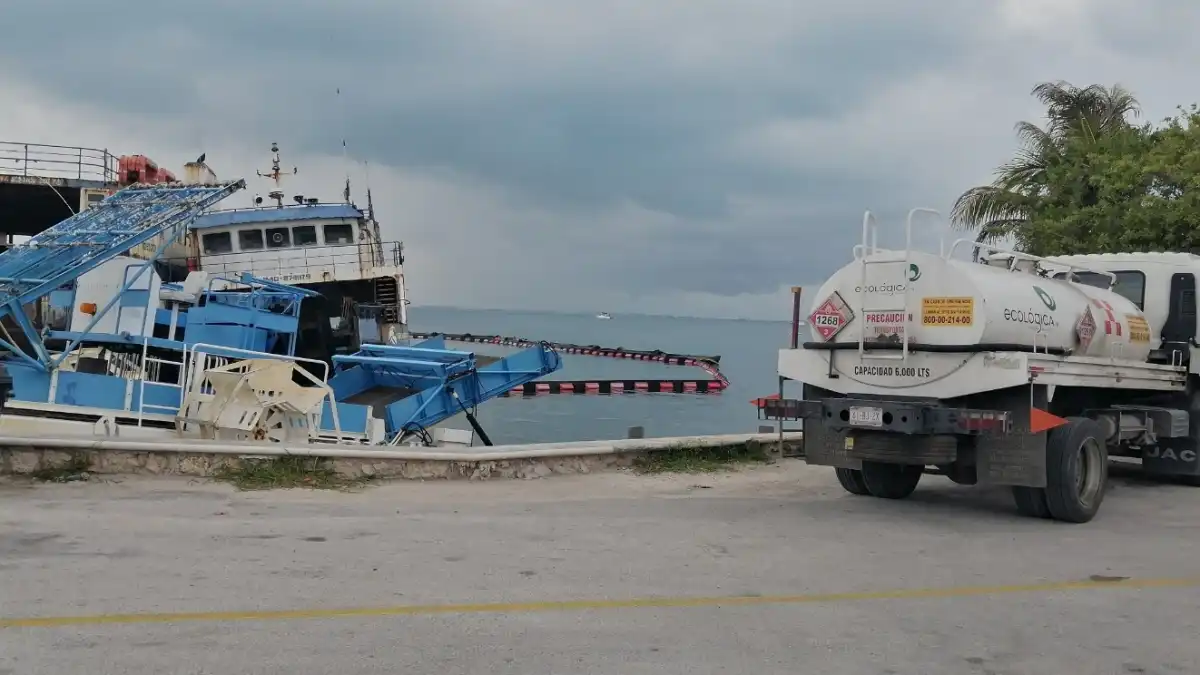
Isla Mujeres, Quintana Roo — The Mexican Navy’s Fifth Naval Region has extracted about 2,000 liters of diesel from the ferry Sergio Gracia Aguilar, whose stern sank days ago off Isla Mujeres, officials said Wednesday.
Crews continued working Wednesday to remove the remaining fuel and prevent environmental damage, according to a preliminary report. On Tuesday afternoon, officials said 1,200 liters had been removed, and the cleanup continued through midday Wednesday, an official with the Quintana Roo Port Administration (Apiqroo) said.
Separately, staff from the National Commission of Protected Natural Areas (Conanp) urged the owners of the Caribe ferry company—whose vessels are parked about 100 meters south of the damaged ship and are involved in a legal dispute—to remove the fuel from their own boats to prevent another accident. Those vessels, which had operated on the Cozumel–Playa del Carmen route, have been abandoned, Conanp said.
Carlos Gamboa, director of Civil Protection, had already announced that the status of these three vessels would be included in the analysis for removing the Sergio Gracia Aguilar, amid a lengthy administrative and legal process before the Port Captaincy and Apiqroo, according to sources at those agencies.
More Environment
- Advisory Council Begins Work to Protect 53,000 Hectares of Jungle in Playa del Carmen, Tulum and Cozumel
- Sian Ka’an Ranked Among Most Flood-Exposed Coasts as NASA Maps Project Sea-Level Rise
- Biologist Calls for Regulation of Chivita Snail Harvesting in Bacalar Lagoon
- IUCN Declares Mesoamerican Reef Critically Endangered
- UIMQROO Researcher Proposes Genetic Study of Dengue, Zika and Chikunguña to Aid Vaccine Research
More Cozumel
- Tulum, Chacchoben and Cobá Lead Quintana Roo Archaeological Visits in 2025
- Cozumel Opens Second Phase of 11th Avenue Repaving Ahead of Ironman 2026
- Quintana Roo to Add International Flights, Including Twin-Aisle Milan-Cozumel Route
- Cozumel Becomes First to Install Solar Panels at Public Schools
- Cozumel Braces for 38 Cruise Ships and 110,000 Passengers This Week