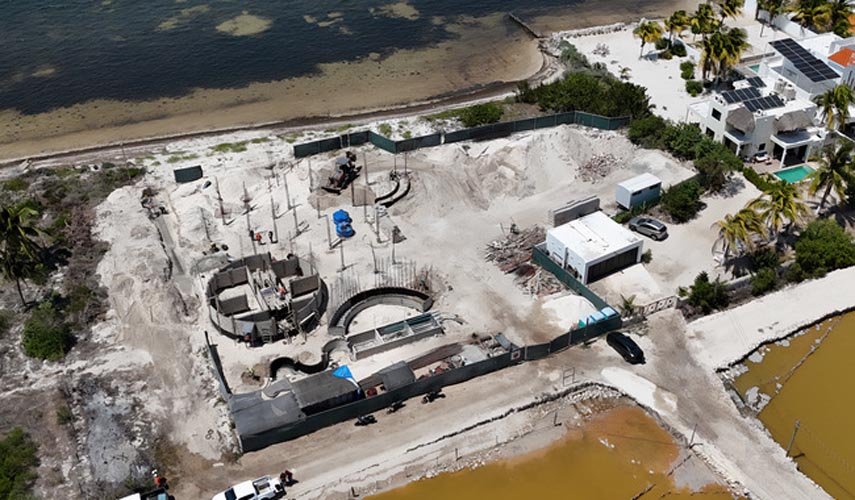
Cancun, Quintana Roo — Mexico’s Federal Environmental Protection Agency (Profepa) has intensified surveillance of coastal ecosystems in the country’s southeast, issuing multiple temporary closures and launching administrative proceedings in Quintana Roo, Yucatan and Campeche for unauthorized construction and development.
From May 11 to 17, the agency carried out the National Inspection and Surveillance Operation in Coastal Ecosystems across 17 states, in coordination with the National Guard, the Mexican Navy, the National Commission of Natural Protected Areas (Conanp), and state and municipal authorities.
In Quintana Roo, inspections focused on the municipalities of Othon P. Blanco and Bacalar, where authorities detected unauthorized construction on coastal dunes along the Mahahual–El Uvero stretch. Profepa imposed two total temporary closures. A separate inspection of a federal maritime-terrestrial zone (Zofemat) concession found no irregularities.
Officials stressed that these ecosystems are vital for coastal protection, climate regulation and biodiversity conservation, and also support tourism and fishing.
In Yucatan, surveillance covered the municipalities of Progreso, Hunucma, Celestun and Dzidzantun. During seven environmental impact inspections, Profepa found illegal clearing, landfilling and tourism-related construction affecting nearly 5,000 square meters of wetlands, mangroves and coastal dunes. The agency imposed six total temporary closures and seized a backhoe allegedly used in the works.
In Campeche, specifically in the municipality of Carmen, inspectors found buildings, restaurants and other structures erected without authorization in the federal maritime-terrestrial zone. Profepa imposed three temporary closures and initiated four administrative proceedings.
Profepa Director Mariana Boy Tamborrell said the operation aims to halt environmental degradation caused by illegal works and activities in areas critical for biodiversity and the environmental security of coastal communities.
Nationally, the operation resulted in 94 inspections, 44 closures and the seizure of heavy machinery in Yucatan and Tamaulipas. The main violations included real estate developments, landfilling and illegal construction on dunes, mangroves and wetlands.
The actions are part of Mexico’s National Strategy for the Cleaning and Conservation of Beaches and Coasts 2025-2030, which seeks to prevent pollution and strengthen the conservation of marine-coastal ecosystems in the country’s 17 coastal states.
More Environment
- Maya Frog and Toad Shell Pendants May Reveal Ancient Trade Routes
- Heavy Rains to Soak Quintana Roo as Unstable Weather Moves In
- Brain-Eating Amoeba Found in Six Artificial Lakes in Mérida; Water Contact Restricted
- Semarnat Approves Artificial Reefs and Sand Relocation for Akumal Hotel
- Chetumal Plans 836 Million Pesos in Stormwater Works to Curb Flooding
More Quintana Roo
- Mexican Caribbean Courts Convention Business at Las Vegas Trade Show
- Ten Rural Communities in Quintana Roo Form Community Conservation Territories
- Study Finds Cancún’s Laguna Manatí Mangrove Could Qualify for Carbon Credits
- Lawmakers Seek to Make Mexican Sign Language Mandatory in Quintana Roo Schools
- Quintana Roo Signs Deal for First Formal Sargassum Fishery, Involving Up to 840 Boats