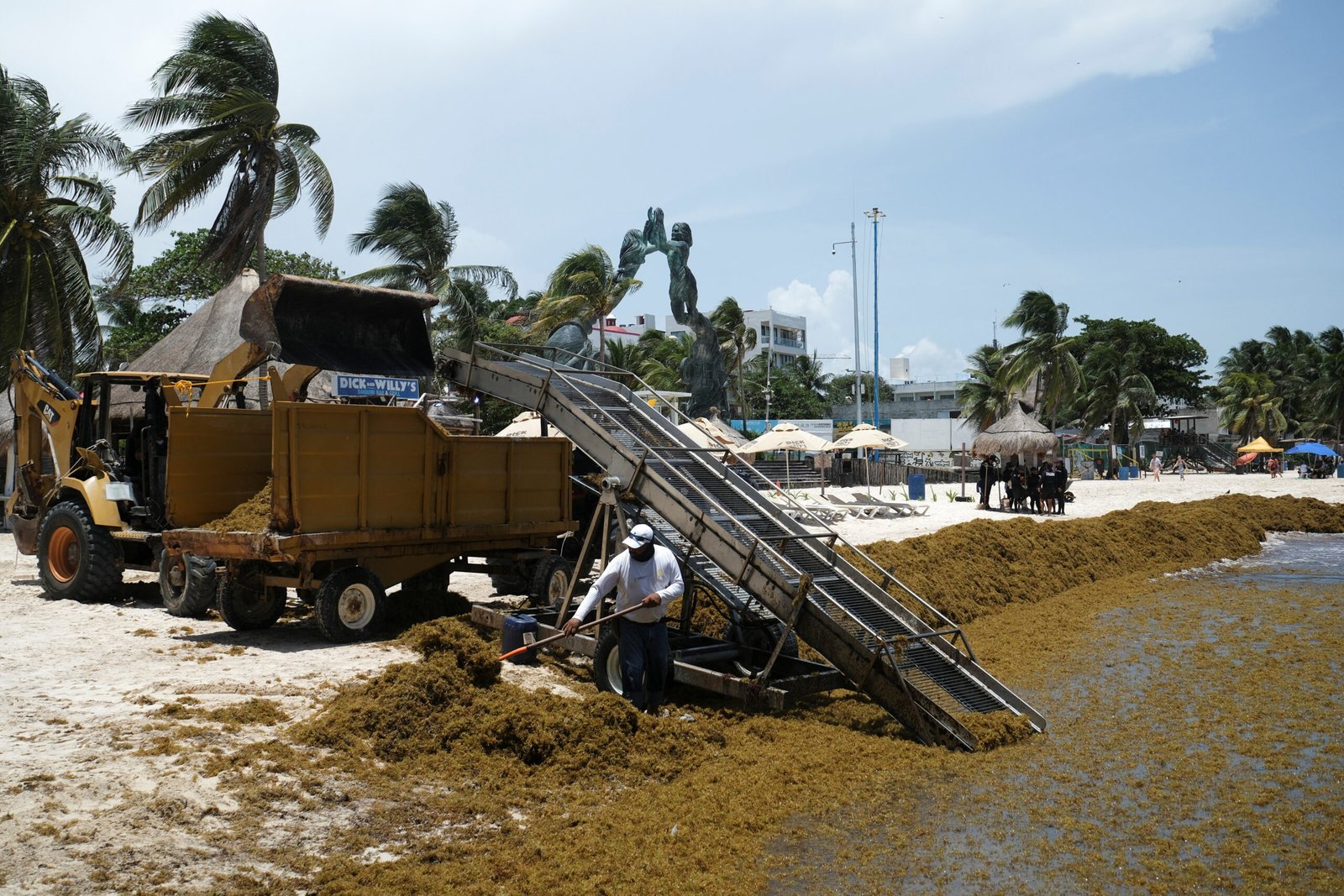
Chetumal, Quintana Roo — Researcher Guillermo Pedro Rodríguez Ortiz has unveiled a machine he says can process roughly 40 tons of sargassum an hour, technology he wants to deploy along the Quintana Roo coast to deal with the annual arrival of the seaweed.
The dehydrating unit, called “Lamm,” has already been built and is sitting in the state of Querétaro, waiting for government authorization and the permits needed to move it, according to its creator.
Rodríguez Ortiz said the project took 12 years of work and began after sargassum first hit the state in massive quantities in late 2011. He described the development as entirely Mexican, carried out independently with his own funds and backed by analyses endorsed by several universities.
Targeting the gases and runoff from rotting seaweed
According to the researcher, the dehydration process is designed to eliminate the contaminants produced when sargassum decomposes in the open air. In his account, it would prevent the release of biogases such as hydrogen sulfide and methane, as well as leachates that can harm human health and the coastal ecosystem.
As part of his outreach, Rodríguez Ortiz presented the project to President Claudia Sheinbaum Pardo during her recent visit to Chetumal. He is also seeking meetings with the Environment Ministry (Semarnat), the National Tourism Development Fund (Fonatur) and the Mexican Navy (Semar).
The aim is to set up a pilot program in Quintana Roo using an estimated fleet of seven machines — two operating at sea and five on land — to cover the state’s beaches.
More Environment
- Isla Mujeres Ports Reopen as Heavy Rain Targets Cancun
- Why Quintana Roo Is Checking Waters for Brain-Eating Amoeba
- Baby Manatee Dies After Boat Strike in Río Hondo
- Children’s Drawings on Climate Change Take Center Stage at Cancún Environmental Art Exhibition
- Maya Women in Mérida’s Outlying Communities Launch Stingless Beekeeping Projects
More Quintana Roo
- Timeshare Exit Scams: 5 Traps Owners Must Avoid
- Quintana Roo Real Estate Sales Fall Up to 15%: What’s Next?
- Poverty Fell 38% in Quintana Roo, Governor Mara Lezama Says
- Quintana Roo Tourism Falls 7% as Cancún and Tulum Airports Lose 800,000 Visitors
- Quintana Roo Beach Recovery Fund Tops 226 Million Pesos