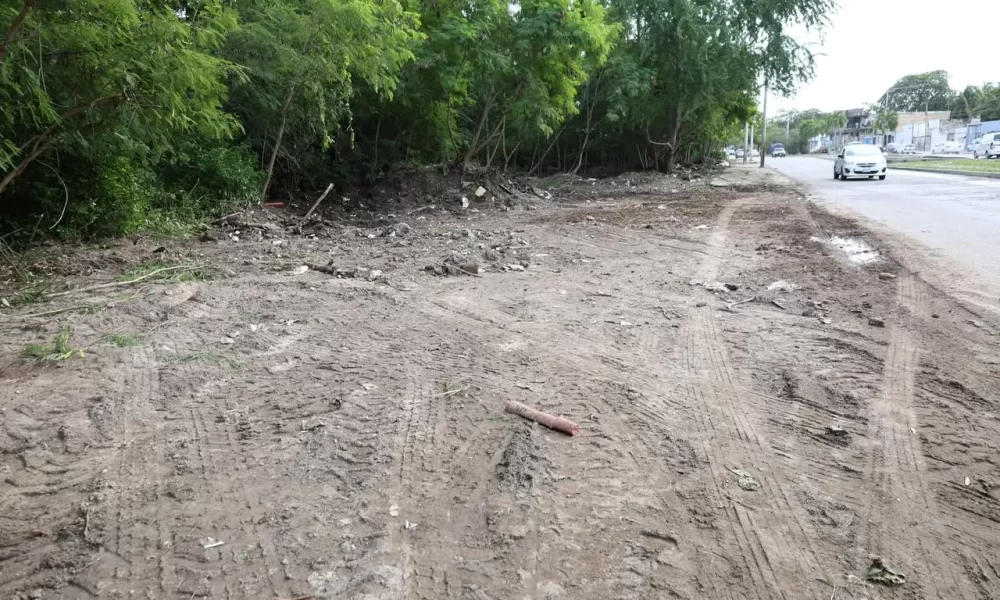
Cancún, Quintana Roo — The Benito Juárez municipal government carried out a major cleanup along the Bonampak Avenue mangrove, removing 112 cubic meters of waste from a section used for illegal dumping, officials said.
The operation, led by the Public Services Department with support from the Ecology Department and the Solid Waste Solutions agency (SIRESOL), deployed 36 workers to clear a 500-meter stretch between Candelario de Lira and Revolución streets. The cleanup followed recent rains and aimed to prevent pollution and infection risks.
Of the total waste collected, 84 cubic meters consisted of bulky items and inorganic trash dumped illegally, including tires, old furniture, plastics, wood and household appliances. The remaining 28 cubic meters were vegetative waste. Heavy machinery, including four dump trucks, a backhoe and a skid-steer loader, was used to speed up the removal.
Officials said they will step up surveillance patrols by SIRESOL’s Green Units and install restrictive tarps to deter environmental crimes. They also urged residents to keep public spaces clean and report illegal dumpsites around the clock through the ChatCun hotline at 998 778 4500.
More Environment
- BBVA México Places Up to 90 Billion Pesos in Sustainable Loans in Quintana Roo
- Aguakan Completes New Sewer Main on Huayacán Avenue, Benefiting Over 19,000 Cancún Residents
- Scientists Find New Tiny Crustacean in Yucatán Cave
- Playa del Carmen Targets 75 Abandoned Lots for Cleanup, May Bill Owners
- Cancún’s Sigfrido Channel to Close Three Days for Removal of Nine Abandoned Boats
More Cancun
- Cancún Taxi Driver Loses License After Alleged Harassment of Schoolgirls
- Quintana Roo Tourism Chief Warns of Flight Shortages Into 2027 as Hotel Occupancy Climbs
- Aeroméxico Stopover Program Lets Travelers Combine Cancún and Mexico City on One Ticket
- Mexican Judge Orders Trial for Man Accused of Selling Vapes in Cancún
- Mexican Federal Forces Arrest Alleged Drug Cartel Leader in Cancún