Mérida, Yucatán — The city of Mérida has certified 20 new Maya language interpreters, bolstering efforts to preserve the ancestral culture and protect the linguistic rights of Maya speakers.
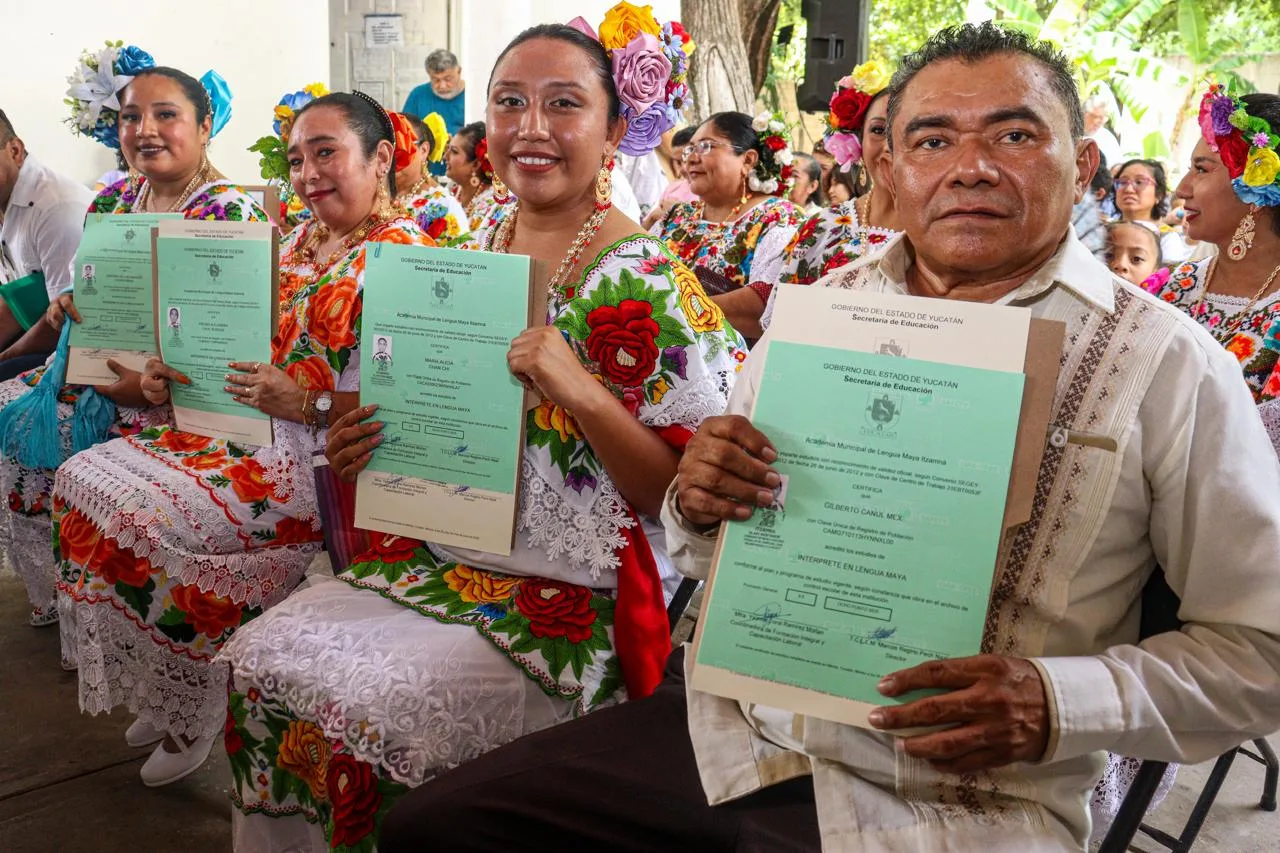
At the Municipal Institute for the Strengthening of Maya Culture, a festive ceremony marked the certificate delivery and course closure. Graduates wore traditional regional attire, celebrating the completion of a three-year professional training program that required dedication, discipline, and perseverance.
Karla Berrón Cámara, director of Identity and Culture, represented Mayor Cecilia Patrón Laviada and praised the students’ achievement and the institute’s work in revitalizing and preserving the Maya language and culture.
Since 2012, the Itzamná Municipal Academy of Maya Language, through the institute, has been certifying students in the Maya Language Interpreter Course under a labor training modality endorsed by the Yucatán State Education Department. To date, more than 230 people have graduated as interpreters.
On behalf of the graduates, Ligia Patrón Canché and Braulio May Chi addressed their peers in both Maya and Spanish, highlighting not only the completion of professional training but also the friendships forged along the way.
Graduates came from communities including Izamal, Uayalceh, Abalá, Tixkokob, Calcehtok, Tunkás, Sacapuc, Motul, Pencuyut, Tekax, Muna, and Mérida.
Juan de la Cruz Canché Várquez, 44, said completing the course was a major achievement. Despite being completely blind, he said his disability did not prevent him from growing and discovering new ways to promote culture and share knowledge through teaching and technology.
Roselia Argáez Tuz, 73, prepared to learn how to write the Maya language and honor her Maya-speaking parents. The closing ceremony included a puppet show performed by students from the Centro Cultural del Sur. At the end, female graduates proudly danced traditional jarana pieces, including “El Torito” and “Las mujeres que se pintan.”
Also attending were Zoila Karime Castro Reguera Baduy, supervisor of Zone 009 of the State Education Department; Josué Morelos Echeverría, deputy director of Heritage Conservation and Dissemination; and Marcos Regino Pech Naal, head of the Municipal Institute for the Strengthening of Maya Culture, along with family members.
More Community
- Cancún Looks to Promote Its Cultural Heritage to Tourists
- Car With Two Children Overturns at Paamul Curve on Highway 307
- Mexico Clears Sonora of Foot-and-Mouth Disease, Exports Resume
- Playa del Carmen Opens Nominations for Elvia Carrillo Puerto Award Honoring Outstanding Women
- Man Sentenced to 108 Years for Raping and Sexually Abusing His Three Stepdaughters