
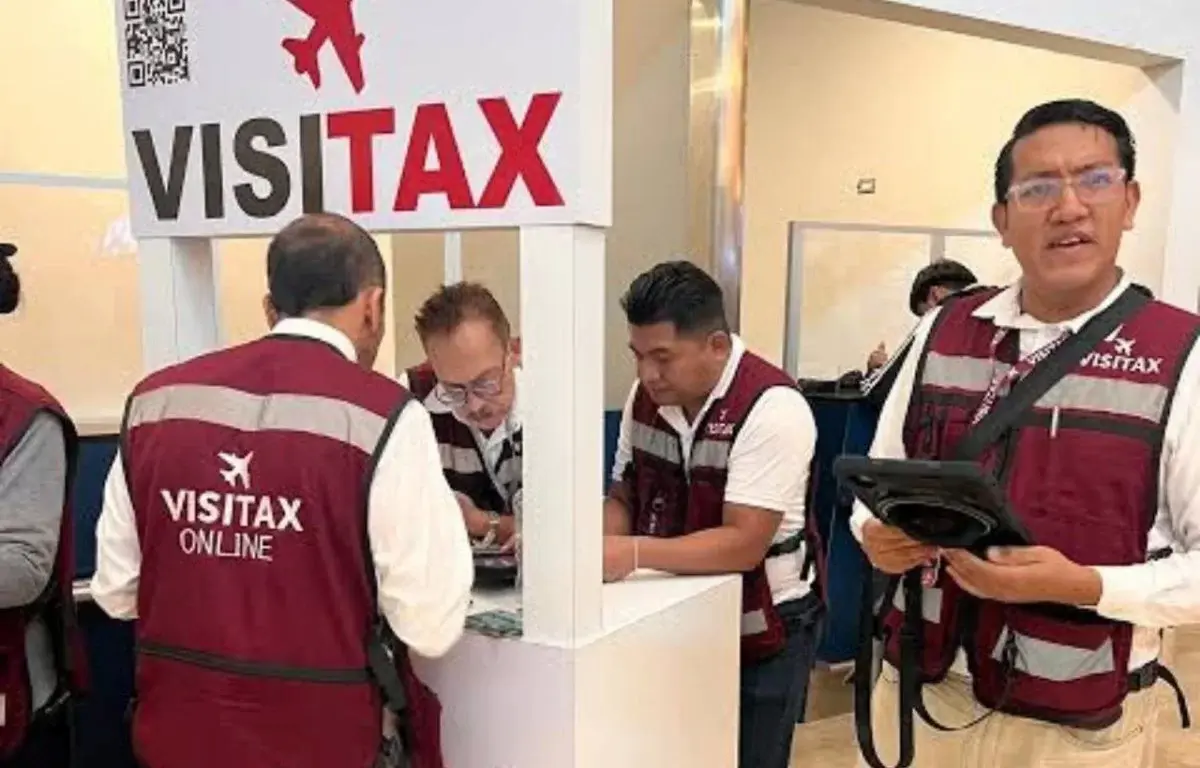
Cancún, Quintana Roo — Moving collection of Quintana Roo’s Visitax tourist tax out of Cancún International Airport and onto a digital platform will improve the experience of visitors to the Mexican Caribbean, business leaders said.
Miriam Cortés Franco, executive president of the Quintana Roo Vacation Clubs Association (ACLUVAQ), welcomed the change and credited Governor Mara Lezama, saying the in-person procedure had been poorly controlled and annoyed visitors — including foreigners who already hold Mexican nationality and were repeatedly asked to pay.
She said pulling the payment point out of the airport was necessary because, beyond the inconvenience, it sometimes led to excessive charges and abuses.
Cortés Franco argued that improving the visitor experience should be a priority for every sector involved in tourism, from the moment travelers land to their transfer to hotels.
“We have to work very hard on the experience, very hard. From where they arrive, how they arrive, the taxi driver… we all have to keep working very hard on that,” she said.
She acknowledged the coordinated work between the state government, the private sector and Grupo Aeroportuario del Sureste (ASUR) to improve operations at the airport, particularly by reorganizing transport services and addressing problems that affected passengers.
Still, she said, other issues remain under discussion, including customs operations and the regulation of taxi fares, areas where she said progress is being made.
Asked where the revenue from the tax — charged only in Quintana Roo and long a subject of scrutiny — actually goes, Cortés Franco said she has personally never been able to review the relevant public accounts. She noted that the promotion budget approved by the state Congress has ranged between 700 million and 800 million pesos, while the Quintana Roo Tourism Promotion Council (CPTQ) ultimately receives between 1 billion and 1.015 billion pesos. The difference is understood to come from additional Visitax-related resources, and she said it is important to understand how those revenues are accounted for and distributed.
What matters most, she stressed, is that the charge and the abuses at the airport terminal have ended, since they left tourists with a bad impression.
Alejandro Arvizu Contreras, president of the Caribbean Business Coordinating Council (CCE), also backed the state government’s decision.
“It’s a very good thing. The reality is that the main image we project abroad is the first image in many cases, so removing this payment process from the airport is beneficial,” he said.
Arvizu said collecting the tax through other platforms is fine, but doing it at the airport damages the image and perception of the destination.
“Hopefully someday they will eliminate it, but at least for now, that they do it differently,” he said.
More Tourism
- Cozumel and CFE Review 3.6 Billion Peso Submarine Power Cable Project
- Puerto Morelos to Host 10th Mesoamerican Ballgame Championship
- Cozumel Sets Up Working Group to Strengthen Tourist Assistance
- Santino Beach Club Opens on Playa del Carmen’s Calle 28, Taking On Mamita’s and Lola
- Isla Mujeres Port Concession Grows Nearly Ninefold After Navy Approves Expansion
More Cancun
- Cancún Restaurateurs Urged to Report Extortion After Playa del Carmen Gang Is Busted
- Community Program Reclaims 18 Public Spaces in Cancún, Playa del Carmen and Cozumel
- Mercado 28 in Cancún: What to Buy, Where to Eat and How to Haggle
- Cancún International Music Festival Returns With ‘América Mestiza’ Theme and More Than 15 Events
- Cancún’s ‘México Imparable’ Community Center Tops 80% Completion in Región 249
