Quintana Roo — Quintana Roo stands out in Mexico for adopting public policies aimed at adapting to climate change, according to Lorena Gudiño, coordinator of the Mexican-German Climate Change Alliance at the German Technical Cooperation Agency (GIZ). Gudiño spoke during the third edition of the Quintana Roo Sustainability Forum, held under the theme “Toward Regenerative Tourism.” The forum seeks to bring together the private sector, public institutions and civil society to set common sustainability goals.
During a panel discussion titled “From Vision to Action for a More Sustainable Quintana Roo,” Gudiño praised the state government’s willingness to work in a coordinated way on environmental policies. She also led the project “Climate Change Adaptation Based on Ecosystems with the Tourism Sector” (ADAPTUR), which GIZ carried out between 2017 and 2023 in pilot regions including the Riviera Maya, Los Cabos and the Riviera Nayarit-Jalisco, with funding from Germany’s Federal Ministry for the Environment.
Gudiño said the update to the Tourism Master Plan incorporates areas related to biodiversity, climate change and intersectionality, helping to lay the foundations for a regenerative tourism model.
Sustainable Tourism Master Plan 2050 Includes Four Pillars
The Quintana Roo Sustainable Tourism Master Plan 2050, presented in September by Governor Mara Lezama Espinosa, was updated with input from about 700 people from the environmental, academic, private and community sectors. The document outlines four strategic pillars:
- Environmental management and climate change.
- Land-use planning and carrying capacity.
- Shared social prosperity.
- Alignment with global agendas, including the United Nations Sustainable Development Goals.
The strategy aims to link tourism development with protection of the natural environment and the well-being of local communities.
Beach Erosion and Sea-Level Rise Among Challenges
Although Quintana Roo is vulnerable to hydrometeorological events, the business sector recognizes that natural capital is essential for economic and social development. In that context, tourism can also serve as a tool for environmental education.
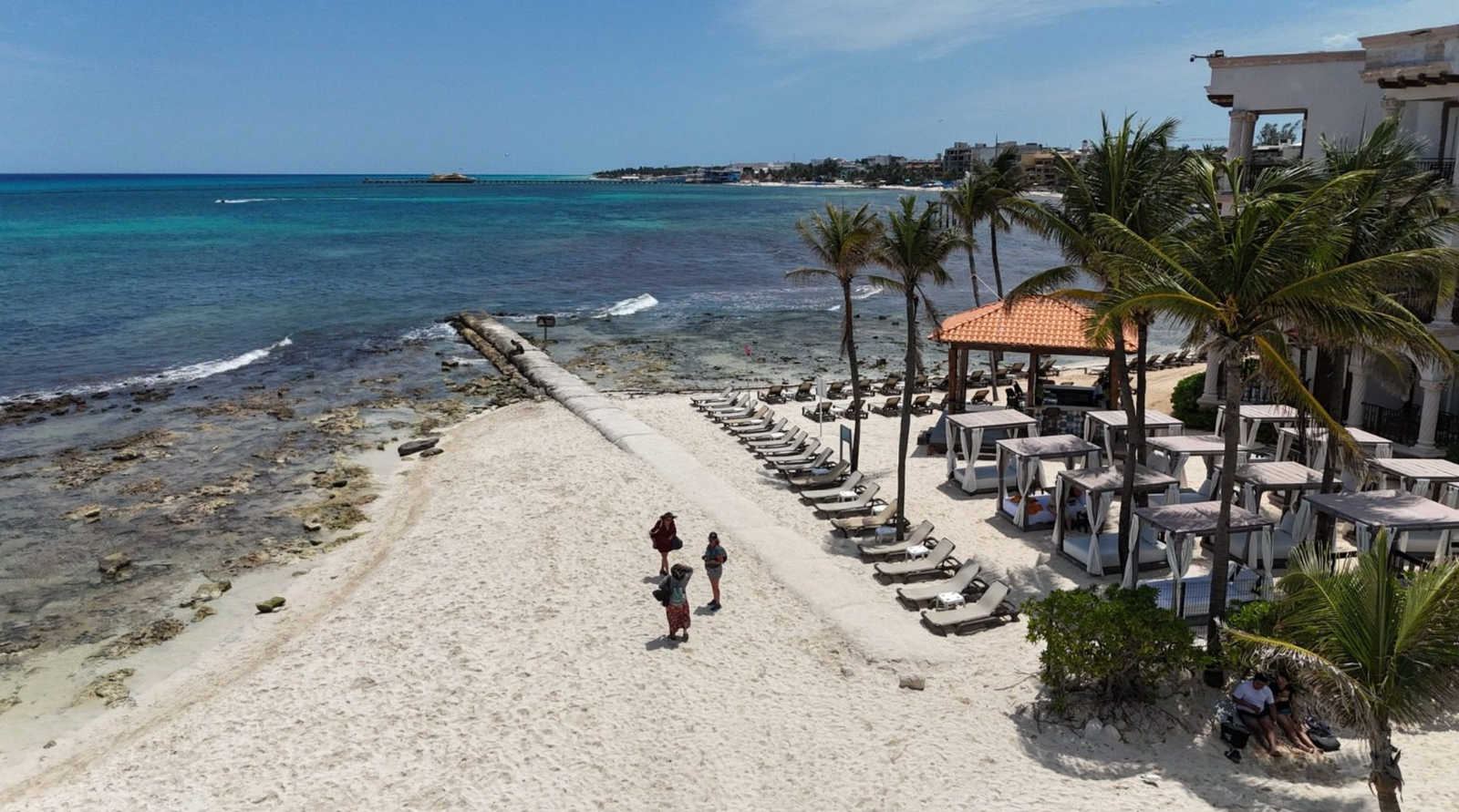
Given rising sea levels and beach erosion, Gudiño stressed the need to strengthen resilience measures and restore the coasts’ natural infrastructure. Priority actions include restoring coastal dunes, mangroves, reefs and seagrass beds — ecosystems that help reduce risks associated with natural phenomena.
The specialist also warned that some hotels located on the front line of the coast will need to consider, in the medium term, relocating inland, away from the beachfront.
Water stress and the recurring arrival of sargassum add to these challenges. In response, she called for diversifying the tourism offering and advancing energy-use schemes.
GIZ Promotes Solar Energy and Electromobility in Tourism
As part of its efforts to reduce emissions, GIZ is promoting the decarbonization of tourism-related value chains. In collaboration with the United Nations Small Grants Programme, it is developing a project to produce ice using solar energy in fishing cooperatives in Río Lagartos, Yucatán, and Campeche.
The model could be implemented in Quintana Roo, along with alternatives for maritime electromobility to reduce polluting emissions and noise in areas used for wildlife watching.
These initiatives seek to link tourism and fishing activities with lower-impact environmental practices, as climate adaptation becomes a growing challenge for destinations in the Mexican Caribbean.
More Environment
- 60 Cenotes in Yucatan Peninsula to Be Monitored for Contamination
- Manatee Sanctuary in Chetumal: Where to See Manatees in Quintana Roo
- Cozumel Sea Turtle Protection Season Ends With 643 Nests
- Quintana Roo Projects $450 Million in Clean Energy Investment
- Profepa Orders Transfer of Dolphins From Cancún’s Dolphin Connection
More Quintana Roo
- Mexico’s Treasury Ends Fuel Tax Break for Magna and Premium Gasoline, Keeps Partial Diesel Subsidy
- Quintana Roo Governor Says Prosecutor’s Office Must Explain Arrest of Former Playa del Carmen Mayor
- Caribbean Culture Festival 2026 Opens in Bacalar and Chetumal with Books, Dance and Bacilos
- Quintana Roo Youth Congress Proposes Protecting Cenotes and Improving Student Mobility
- Quintana Roo Jumps to Sixth Nationally in Property Registry Modernization