
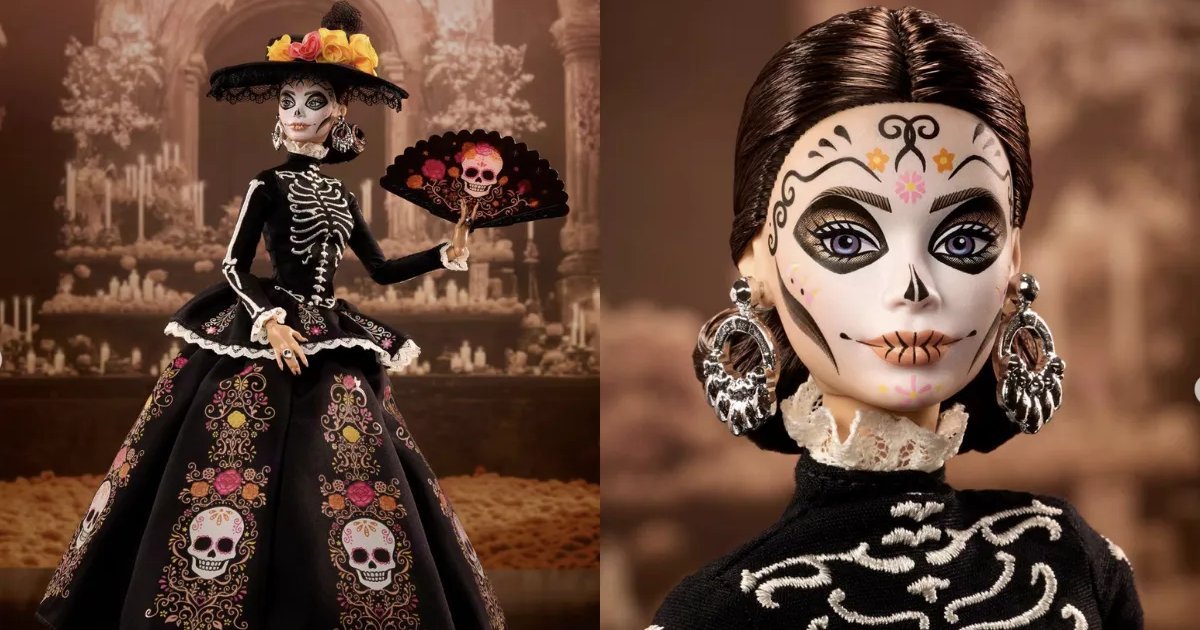
Mexico City — Mattel has unveiled the Barbie Día de Muertos 2026 Calavera Catrina, a premium collector doll modeled on one of Mexico’s most recognizable cultural figures, released in partnership with the department store El Palacio de Hierro.
The launch event drew collectors, special guests, journalists and content creators, who were shown the details of the piece. Mattel says the doll is part of its effort to pay tribute to Mexican customs and cultural expression.
The Barbie Style Instagram account announced the release with a post that drew about 38,000 likes and 328 comments: “Inspired by La Catrina, the 2026 Día de Muertos Premium Barbie doll pays homage to the folklore and festivities of the Mexican day of remembrance. Available at El Palacio de Hierro from October 9 through October 15 while supplies last.”
A black gown with skull motifs and papel picado details
The doll wears a voluminous black gown in a classic cut with a theatrical look, decorated with skull motifs, floral appliqués and details inspired by papel picado, the cut-paper banners used in Mexican festivities. The ensemble is completed with face makeup modeled on traditional calaveras and skeleton detailing on the arms and torso.
Barbie Día de Muertos 2026 Calavera Catrina is priced at 2,999 Mexican pesos. Mattel said the premium edition would be sold exclusively at El Palacio de Hierro from October 8 before reaching selected stores.
From Posada to Rivera to store shelves
The doll draws on the image popularized by muralist Diego Rivera, who depicted the full-body Catrina in his mural Sueño de una tarde dominical en la Alameda Central. The character’s graphic origin, however, lies with illustrator José Guadalupe Posada, creator of the celebrated skull that became one of the most identifiable symbols of Mexican culture.
Since its first edition in 2019, the Barbie Día de Muertos collection has incorporated elements tied to the stories, symbols and artistic traditions that distinguish Mexico.
A commercial debate over cultural symbols
Behind the tributes, the releases also open a debate about how major brands profit from Mexican cultural wealth. With launches of this kind, companies such as Mattel have found a lucrative market in Mexico’s symbols and traditions, turning them into collector’s items for consumers willing to pay high prices for special editions.
The collection illustrates how a celebration deeply rooted in the country can also become a business opportunity. While such initiatives give Mexican cultural elements international visibility, critics note that they also show how large brands have turned these traditions into commercial ventures.
Mattel’s release of a Catrina-inspired doll does not in itself amount to concrete action to protect cultural heritage, support Mexican artists or strengthen the communities that keep these traditions alive.
More Culture
- Playa del Carmen Opens Registration for Audiovisual Workshops
- National Geographic Names Maya Ka’an Among Top Destinations to Visit in 2027
- Grupo Xcaret Revives Mayan Sea Crossing Under New Name La Travexia
- Cancún to Host Climate Change Colloquium With Experts From Mexico, Guatemala and New York
- Free Theater Production ‘Catsup’ Brings Pandemic Childhood Story to Cancún
