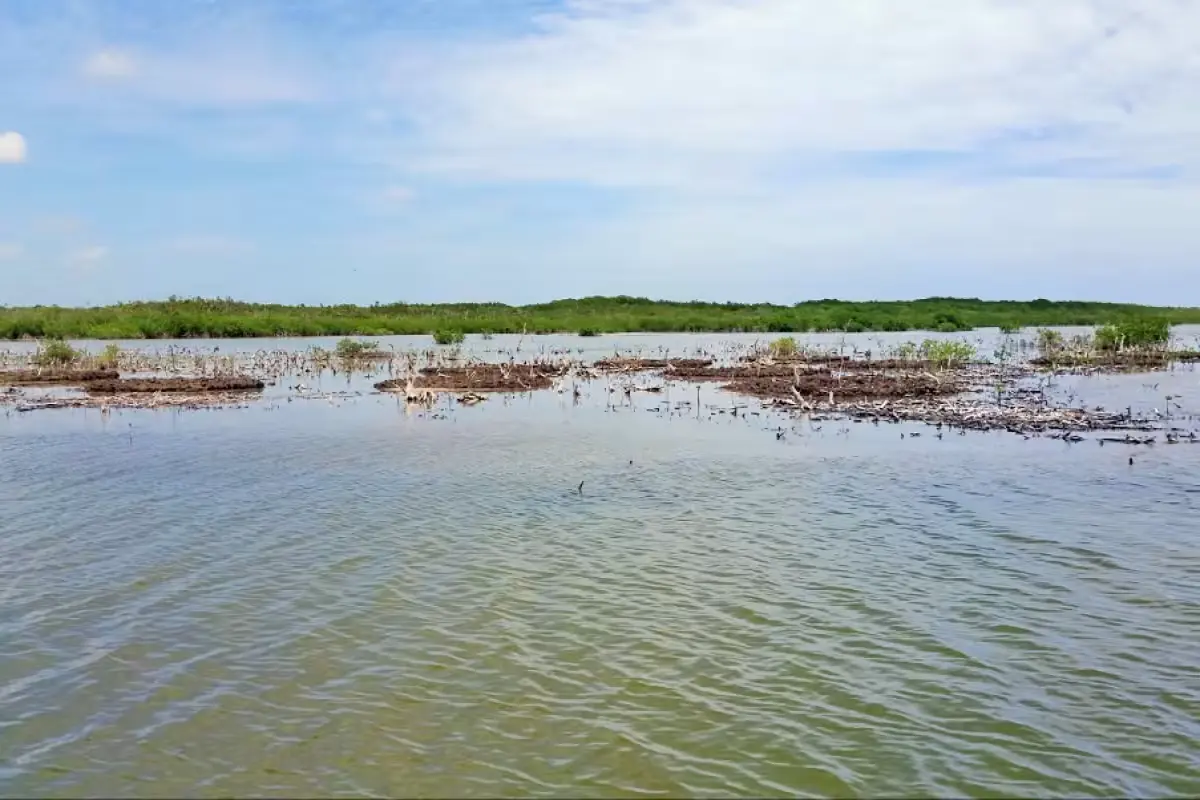
Cozumel, Quintana Roo — Up to a quarter of Cozumel’s mangroves have been damaged or severely degraded by urban expansion, pollution, and invasive species, according to local environmentalists.
Although more than 70% of the island falls under some form of protection, data from the National Commission for the Knowledge and Use of Biodiversity (CONABIO) indicates that between 15% and 25% of the original mangrove area already shows deterioration.
Lupita Martín, a representative of the environmental group Conservación, Investigación y Manejo Ambiental de Cozumel, said real estate and tourism development are among the main pressures on these ecosystems, particularly when construction alters vegetation, dunes, wetlands, or natural water flows.
“The mangrove needs to maintain its natural dynamics and connection with other ecosystems. When land is filled, terrain is altered, or contaminants arrive, the damage begins,” she said.
Martín also pointed to wastewater discharges and filtration into the subsoil as a growing concern. Given Cozumel’s porous limestone terrain, contaminants can reach the aquifer and eventually coastal ecosystems, she warned.
Environmentalist Jenni Chan noted that wetlands serve multiple ecological functions, including providing refuge and breeding grounds for various species, trapping sediment, and reducing wave and storm impacts along certain coastal areas.
“There is a connection between the aquifer, mangroves, seagrasses, and reefs. Changes in one of these environments can affect the others, so conservation must be approached comprehensively,” Chan said.
Restoration efforts are underway in zones such as Laguna Colombia, located within the Punta Sur park. These include rehabilitating hydrological flows and other interventions aimed at encouraging natural regeneration.
Manuel Sánchez, a volunteer in environmental activities, stressed that rehabilitation must be paired with prevention. “Restoring an area takes time; that is why it is also necessary to prevent new damage and keep wetlands under surveillance,” he said.
The activists added that preservation will depend on both restoration programs and enforcement of environmental regulations governing new developments and activities in coastal zones.
More Environment
- Playa del Carmen Activists Blast Urban Sprawl in the Jungle
- Mahahual Groups Build Reinforced Dog Shelters to Shield Pets From Jaguar Attacks
- Quintana Roo Signs Co-Management Deal to Protect Xcacel-Xcacelito Turtle Sanctuary
- Quintana Roo Business Leaders Demand Certainty After Sheinbaum Questions Cancún Financial District
- Playa del Carmen Says Punta Esmeralda Access Will Stay Open as Fencing Is Called Temporary
More Cozumel
- Cancún Airport Loses 15% of International Passengers in August
- Cozumel to Host Second Free Rabies Vaccination and Microchip Clinic for Pets
- Yucatan Peninsula Produces Only Half the Electricity It Consumes, CFE Says
- One of Two Men Missing After Jet Ski Trip Between Playa del Carmen and Cozumel Found Alive
- INM Workers in Quintana Roo Allege Corruption Network and Paid Appointment Scheme