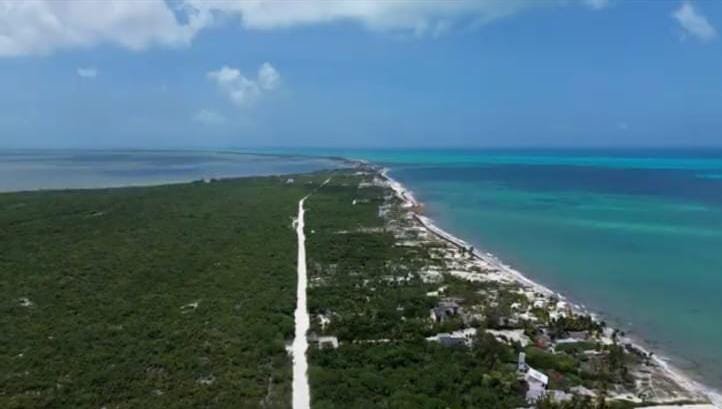
Cancun, Quintana Roo — Hundreds of landowners in the Cancun-Isla Blanca tourist corridor say they are facing administrative restrictions that prevent them from exercising their property rights, after the state’s urban development secretariat issued orders suggesting the land may be federally owned.
Since March, the Secretariat of Sustainable Territorial and Urban Development (SEDETUS) has notified the Public Property Registry, the municipal cadastre, and notaries in Quintana Roo to halt all transactions involving properties in the area, claiming the land could be “national land.”
Affected owners say the measure has paralyzed all property-related procedures and ownership acts, even though they hold publicly registered deeds, cadastral records, an established chain of ownership, and decades of property tax payments.
“No authority can disregard private property rights through administrative letters,” the landowners said in a statement. They have called on the federal Secretariat of Agrarian, Territorial and Urban Development (SEDATU) to intervene and clarify the situation.
The dispute centers on the Santa Fátima and Francisco Javier parcels, located between Costa Mujeres and Isla Blanca. The corridor currently has 11,667 hotel rooms, with projections of up to 30,000 in the coming years, driven by projects such as the expansion of the Cancun-Isla Blanca highway and new tourism developments.
Landowners say they do not oppose tourism growth or infrastructure construction in an area that still lacks basic services such as drinking water, electricity, drainage, and paving — even as cadastral values have risen year after year. However, they demand that development proceed with full respect for the rule of law and legal certainty for those who legally own property in the area.
They also noted that for years they have paid taxes and contributed their own funds to maintain the access road to Isla Blanca, used by both residents and tourists. Any dispute over the legal status of the land, they argue, should be resolved through legal procedures, not administrative orders, especially given the existing registry records, documentation, and court rulings that they say support private ownership.
More Development
- Tulum Pivots to Luxury as Airlines Cut Flights, Occupancy Drops
- Environmentalists Warn Tulum Jungle Road Could Open Door to Real Estate Expansion
- Cancún Delivers 460 Property Deeds to Families in 14 Neighborhoods
- Cruise Tourism Trust Fund Spends 1.27 Billion Pesos Across Quintana Roo
- CFE and Playa del Carmen to Review Plan for Submarine Power Line to Cozumel
More Cancun
- Cancún Looks to Promote Its Cultural Heritage to Tourists
- AI and New Travel Trends to Headline AFEET Trends 2026 Summit in Cancún
- Cancún Businesswomen Organize Charity Walk for Breast Cancer Survivors
- Isaías ‘N’ Sentenced to 140 Years for Murder of Teen William Hernández in Cancún
- Cancún Seaweed Firm Ensol Caribe Eyes Expansion Into Dominican Republic and Belize