PLAYA DEL CARMEN, Quintana Roo — A new Change.org campaign is challenging the public narrative around Chen Zubul, the disputed coastal property in Playa del Carmen’s Luis Donaldo Colosio neighborhood, arguing that the area’s future should be decided through legal clarity, environmental accountability and guaranteed public beach access rather than competing public-relations campaigns.
The public notice, titled “Chenzubul, Public Beach Access, Environmental Protection, and the Truth,” urges residents to question any petition portraying activist Rodrigo Garcidueñas Vega as the legitimate guardian of the property. It cites multiple alleged federal and administrative investigations, raises questions about wastewater management and public access, and calls on residents to preserve evidence related to possible environmental contamination, threats, obstruction of beach access or unauthorized activities.
The statement arrives at a moment of heightened tension around Chen Zubul. Earlier this week, residents tore down fencing that workers attempted to install near Playa 72, also known locally as Dog Beach, after neighbors said the work threatened one of the few practical public routes to the shoreline in Colosio. Municipal authorities later said they would maintain operations to ensure that public beach access points are not blocked.
The person or entity behind that fencing attempt has not been conclusively identified in public reporting. Some local residents cited in press reports alleged that the work was connected to individuals seeking control of the Chen Zubul property, while others described the land as being caught in a long-running dispute over ownership, possession and future use.
A Property With Competing Claims
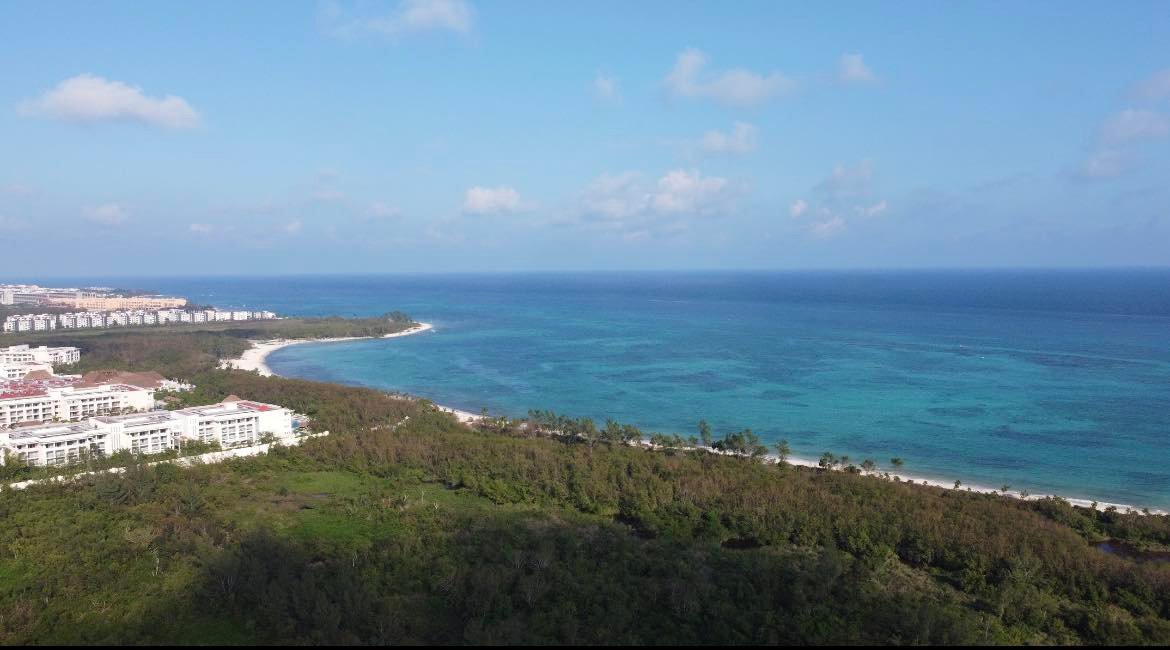
Chen Zubul, is a coastal green area in Playa del Carmen’s Colosio neighborhood. Described as Playa del Carmen’s “pulmon verde” or green lung, it is one of the last significant green spaces along the city’s urban coastline and environmentalists and residents alike have pushed for it to be preserved with zero-density status or converted into a protected public ecological area.
Other reporting has described the property as privately held or legally disputed. It was reported in 2024 that Chenzubul was no longer part of the assets of the former Desarrolladora de la Riviera Maya, known as Derimaya, and that registry information showed the land in private hands, creating concern among residents who wanted it preserved.
Local news outlets have reported that Cantex Enterprises appears as the registered owner in the Public Registry of Property and Commerce, and that the property has been linked to an unfinished development project following earlier environmental authorization for hotel development. Those claims have become part of the public dispute over whether Chen Zubul should be treated as private land, occupied land, a conservation area or a future public asset.
A 2009 environmental-impact document available through SEMARNAT’s SINAT system also refers to Cantex Enterprises and the Chen-Zubul property in Playa del Carmen, confirming that the name has appeared in federal environmental filings for years.
Garcidueñas’ Legal Fight
Rodrigo Garcidueñas Vega, associated in local reporting with Pulmón Verde and Ombligo Verde, has been one of the most visible public figures advocating for Chen Zubul’s conservation. Supportive coverage has portrayed him and allied groups as part of a citizen-led effort to protect mangroves and prevent real estate development in one of Playa del Carmen’s last coastal green areas.
But Garcidueñas has also faced scrutiny over his own legal efforts involving the property. Local reports published this month state that a civil court rejected his effort to obtain recognition of rights over Chen Zubul through a voluntary jurisdiction proceeding known as información ad perpetuam. He later filed an amparo, a federal constitutional challenge, after the unfavorable ruling.
That procedural history is important because it complicates the public framing of the case. Garcidueñas and supporters have presented Chen Zubul as an environmental-defense issue, while critics argue that his legal filings show he is also seeking formal recognition of rights connected to the same property.
Under Mexican civil practice, an información ad perpetuam proceeding can be used to document facts such as possession, but it does not function the same way as a fully litigated property-title judgment. Courts have emphasized that such proceedings do not necessarily cancel another party’s title or definitively resolve ownership against third parties.
Allegations Raised in the New Public Notice
The Change.org notice makes several serious allegations. It cites case numbers it says correspond to PROFEPA and FGR matters and says authorities have received photographs, videos, maps, witness statements and other evidence related to alleged environmental contamination, wastewater disposal, unauthorized construction, occupation of the property, commercial rentals, obstruction of public access, intimidation and violence.
Those allegations have not been proven in court based on the public information currently available. Federal agencies also do not routinely publish complete complaint files or investigative records while matters are open, so the existence, scope and procedural status of the cited case numbers have not been publicly detailed in full. Still, several of the issues raised in the notice are not new to the public debate.
There are reported allegations that unfinished structures on Chen Zubul were being used to house people in exchange for payment and that human waste from occupants in the area may have affected the coastal aquifer and mangrove ecosystem. The same outlet has characterized the dispute as involving alleged occupation, possible environmental impacts and questions over who has the right to administer or control the land.
In a separate report, a local business claims that said it had moved operations onto Chen Zubul after being led to believe Garcidueñas had legal authority over the area. The company alleged harassment and hostilities after later disputes over possession and use of the property.
Those accounts remain allegations, but they help explain why the latest petition focuses so heavily on transparency, legal authority and the handling of money, rentals and wastewater.
Playa 72 Brings Public Access to the Center of the Fight
The latest confrontation over Playa 72 has shifted the Chen Zubul dispute from an environmental and property question into a public-access issue.
In Mexico, beaches are national property and are for public use. The federal regulation governing beaches and the Federal Maritime-Terrestrial Zone, or ZOFEMAT, states that beaches, ZOFEMAT and land reclaimed from the sea are public-domain assets of the federation. It also provides that when no public route exists, owners of land adjoining the federal zone must allow access through places agreed with federal authorities.
PROFEPA describes ZOFEMAT as a federal maritime-terrestrial strip generally measuring 20 meters adjoining the coast, subject to federal oversight because of its environmental and public-domain significance.
That legal framework does not automatically settle the ownership or control of Chenzubul itself. It does, however, make the attempted obstruction of a practical route to Playa 72 a highly sensitive matter for residents.
Following the fencing incident, Playa del Carmen authorities said they would continue monitoring to ensure no public access to the beach is blocked. Local news reports indicated that municipal officials described the work as an attempted obstruction by private individuals without the corresponding authorization.
Conservation or Control?
The core conflict is no longer simply whether Chen Zubul should be protected. Many of the people involved in the debate say they support conservation, public beach access and protection of mangroves. The conflict is over who has the authority to speak for the land, administer it, occupy it, collect money from people there, build on it, fence it, preserve it or negotiate its future.
The new Change.org campaign argues that Chen Zubul should not be placed under the informal control of any individual simply because that person presents himself publicly as a protector of the area. It calls instead for legal documentation, environmental compliance, financial transparency and accountability to the community.
Supporters of Garcidueñas and Pulmón Verde, meanwhile, have long argued that Chen Zubul is vulnerable to real estate pressure and that citizen action has helped keep one of Playa del Carmen’s last coastal green spaces from being developed.
Both arguments reflect real concerns. Playa del Carmen’s coastline has been heavily developed, and access to the sea in Colosio has become increasingly limited. At the same time, environmental protection claims do not remove the need for clear legal authority, sanitation controls, permits and public accountability.
What Comes Next
The dispute now appears to be moving on several fronts at once: legal proceedings involving Garcidueñas’ attempt to obtain recognition of rights; public pressure to preserve Chen Zubul as a protected or zero-density area; allegations of environmental and administrative irregularities; and municipal concern over access to Playa 72.
The key unresolved questions are straightforward. Who has legal title or legally recognized possession of the land? What activities have been authorized there? Are any people living or paying to live on the property? If so, where does wastewater go? Were any structures, fences or rentals properly permitted? And how will public access to Playa 72 be guaranteed?
Until those questions are answered through official records and public action, Chen Zubul will remain both a conservation symbol and a legal flashpoint.
For Playa del Carmen residents, the issue is not simply whether to support or reject a petition. It is whether the future of one of the city’s last coastal green areas will be decided transparently, legally and with the public’s right to reach the beach protected.
More Environment
- Activists Protest Pig Mega-Farms in Yucatán, Demand Crackdown on Pollution
- Quintana Roo to Pitch Sustainability in Reworked International Tourism Push
- Cancún Seaweed Firm Ensol Caribe Eyes Expansion Into Dominican Republic and Belize
- Environmentalists Warn Tulum Jungle Road Could Open Door to Real Estate Expansion
- Only Four Sargassum Fishing Permits Processed in Mexico, Imipas Says
More Playa del Carmen
- Car With Two Children Overturns at Paamul Curve on Highway 307
- Playa del Carmen Opens Nominations for Elvia Carrillo Puerto Award Honoring Outstanding Women
- CFE and Playa del Carmen to Review Plan for Submarine Power Line to Cozumel
- American Says Stolen Truck Was Resold in Playa del Carmen With Forged Paperwork
- State Adult Education Institute to Open Branch in Villas del Sol