Cancun, Quintana Roo — Pressure on Cancun's aquifer is intensifying in the Alfredo V. Bonfil ejido, where residents are reporting progressive deterioration due to the lack of sanitary drainage, irregular growth, and the operation of activities without environmental control in one of the areas with the greatest urban expansion in the municipality.
The collapse of the water system in Cancun is concentrated in a karst aquifer severely degraded by saltwater intrusion and the discharge of sewage, directly affecting critical areas such as Villas del Mar 3 and the Alfredo V. Bonfil delegation.
In Bonfil, the uncontrolled growth of ejido lands has resulted in less than 30% of homes having formal drainage, forcing thousands of residents to dispose of waste in septic tanks that leach fecal coliforms and nitrates directly into the water table. This microbiological contamination, which systematically violates official health standards, makes water drawn from private wells an immediate health risk, linking the consumption of this resource to the regional increase in dermatological and gastrointestinal diseases.
On the other hand, the concessionaire's infrastructure in high-density developments like Villas del Mar 3 is operating at its technical capacity limit, with a physical efficiency that results in the loss of approximately 40% of the extracted water to leaks before it reaches the consumer. The excessive demand from these developments has exceeded the network's original design, causing constant pressure drops and shutdowns at the booster pumping stations that leave entire areas without water for periods of up to 48 hours.
Faced with the injection of insufficiently treated wastewater into the subsoil and the lack of investment in deep drainage in the peripheries, the Cancun aquifer faces a phase of "technical death," where the cost of purification increases while the availability of actual fresh water decreases drastically.
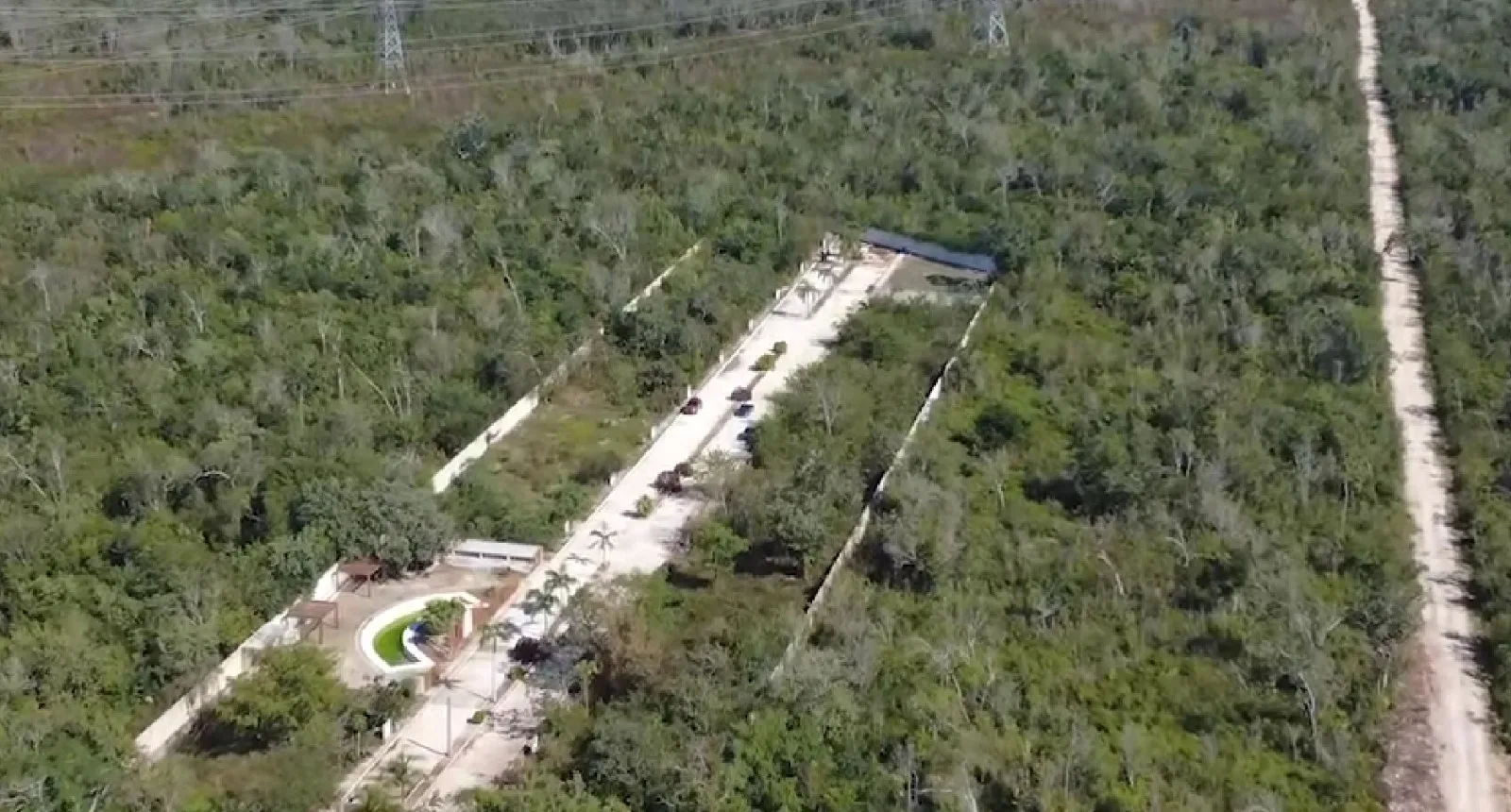
In addition to citizen complaints, a recent search was carried out by the State Attorney General's Office, in coordination with federal forces, on a property where a real estate project was being developed without permits. The site was found to contain land clearing, the use of heavy machinery, and paving without authorization, which could constitute environmental crimes in an already vulnerable area.
The problem in Bonfil has a clear dimension: nearly 20,000 inhabitants live without access to drainage, which causes thousands of liters of wastewater to infiltrate the subsoil daily. In the Yucatan Peninsula, where the soil is highly porous and there are no surface rivers, 100% of the drinking water comes from the water table, which makes any direct discharge an immediate risk of contamination.
Data from environmental agencies have warned that in urban areas without drainage, up to 90% of wastewater ends up in the subsoil without treatment, carrying bacteria, nitrates and chemical residues that can travel great distances in the karst system. This means that the pollution generated in Bonfil does not stay in the area, but can affect the water consumed in other parts of Cancun.
Groundwater hydrology experts warn that the Cancún aquifer is not static; it functions as a network of interconnected vessels where contamination generated in high-altitude, porous areas travels downstream toward the city center. Without a geological barrier, the infectious outbreak in Bonfil becomes a systemic risk to municipal water wells, accelerating saltwater intrusion. This phenomenon occurs when freshwater, weakened by excessive extraction and pollution, is displaced by seawater, raising the levels of salinity and hardness in the domestic water supply throughout the municipality.
The city's growth exacerbates the situation; Benito Juárez already has over a million inhabitants and maintains one of the fastest expansion rates in the country, with thousands of new settlements on the outskirts that lack basic services. The crisis is worsening in the Southern Polygon and the periphery of Huayacán Avenue, where real estate value has increased at a much faster rate than sanitation capacity, while dense apartment complexes are authorized, and local treatment plants operate under constant operational stress, exceeding their design limits.
The result is an injection into the subsoil of water that, although nominally "treated," maintains concentrations of nitrates and phosphates that feed the bloom of algae in urban cenotes and degrade the quality of drinking water in high-density housing developments such as La Guadalupana and Paraíso Maya.
Bonfil has become one of the main points of pressure due to its strategic location and the lack of control over land use. This is compounded by the construction of warehouses, businesses, and developments that demand large volumes of water but often lack adequate wastewater treatment systems. The combination of uncontrolled domestic and industrial discharges increases the risk of chemical and biological contamination.
The problem is not exclusive to Bonfil; in areas such as Villas del Mar, La Guadalupana, and Paraíso Maya, residents have been reporting the collapse of the drainage system for more than a decade, with sewage overflowing into the streets, confirming that the existing infrastructure is already operating at its limit or has been overwhelmed by urban growth.
In this context, specialists warn that the deterioration of the aquifer can translate into concrete effects, from the presence of contaminants in drinking water to public health problems such as gastrointestinal diseases or exposure to metals and toxic compounds.
Finally, the deterioration of the water table has ceased to be an environmental projection and has become a verifiable public health crisis. Local doctors in the outlying areas report an atypical increase in kidney disease and chronic dermatitis, clinical conditions directly linked to prolonged exposure to heavy metals and pathogens present in the water supply. Without an aggressive investment plan for deep drainage and the immediate regularization of settlements in Bonfil, Cancún is heading toward a scenario of the "technical death" of its lifeblood, where the human and economic cost of purifying a contaminated resource will be the biggest obstacle to the future of Mexico's tourism jewel.
The root of the problem lies in rapid urban growth without planning, lack of regularization of settlements, weak environmental monitoring, and an infrastructure that has not kept pace with the city.
Discover more from Riviera Maya News & Events
Subscribe to get the latest posts sent to your email.