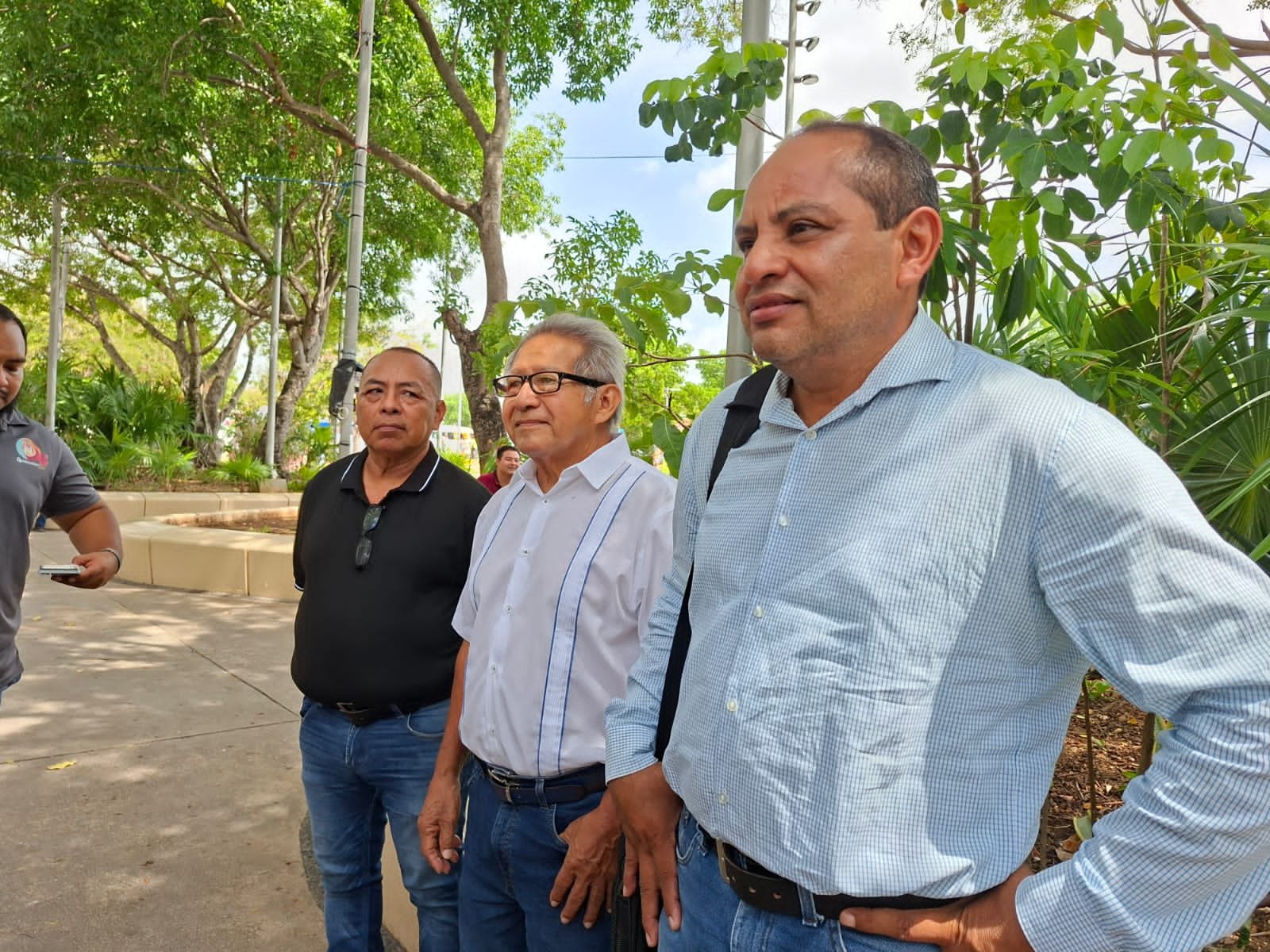
Cancun, Quintana Roo — Indigenous organizations have denounced a surge in land theft across Quintana Roo, accusing economically powerful groups of using forged property titles to displace families who have held the land for decades.
The National Organization of Popular Power (ONPP) and the National Indigenous Plural Assembly for Autonomy (Anipa) said the problem has worsened since construction began on the federal railway project known as the Tren Maya, which started under the previous administration.
“Since the Tren Maya came along, we have systematically suffered invasions by groups with economic power who have come to fight for land that our people have possessed for more than 25 years,” said Juan Carlos Cobos Álvarez, a leader of ONPP.
According to the complaint, the alleged land grabbers present property titles that appear to be counterfeit, lacking a proper chain of title — a legal requirement that ensures an unbroken sequence of ownership over a property. The documents, supposedly issued more than 20 years ago, show no record of a formal transfer process.
The groups accused the Quintana Roo Public Property Registry of accepting and validating these titles as legitimate, even though they were registered up to two decades after their purported issuance.
Hermelindo Be Cituk, an Anipa leader, emphasized that the vulnerability of indigenous communities increased because no prior, free, and informed consultation was carried out in accordance with international standards before the Tren Maya project began.
At least 70 families have been affected in the Maya zone of Felipe Carrillo Puerto, Bacalar, and Lazaro Cardenas, though the groups acknowledged the statewide figure is likely much higher.
To address the issue, the organizations have called for a “State Forum for Legal Certainty, Economic Diversification, Food Sovereignty, and the Defense of Indigenous Peoples.” The forum will take place on June 13 at 10:00 a.m. at the Los Tres Reyes ranch in Playa del Carmen.
The goal is to produce a list of demands for the National Institute of Sustainable Land to resolve land tenure problems, and for the Quintana Roo Congress to align local laws with Article 2 of the Mexican Constitution, which recognizes indigenous rights.
“In a way, it has been a dead letter in the local congress and also in the federal congress,” Be Cituk said. “We have prepared invitations for the three levels of government. What we want is to influence the legislation that affects community development.”
More Lifestyle
- Tulum’s Mureco Museum Adds 53 Mesoamerican Pieces for Second Anniversary
- Chetumal Entrepreneur Develops Automatic Hammock Rocker for Mexico
- Cancún Prepares Janal Pixán 2026 at Puerto Juárez, Aims to Double Attendance
- Mental Health and Addiction Top Concerns Among Playa del Carmen Youth, Survey Finds
- Cancún Opens Registration for Janal Pixan 2026 Catrina and Altar Contests
More Quintana Roo
- SCJN Orders Quintana Roo to Legislate Disability Representation
- Cancun Tourism Slumps 7% as Industry Leaders Urge Marketing Overhaul
- Quintana Roo Braces for Four Days of Heavy Rain and Flooding
- Former Gubernatorial Candidate Laura Fernández Piña Loses Appeal Against 20-Year Public Office Ban
- Quintana Roo Prison System Scores Drop Sharply Over Overcrowding and Neglect