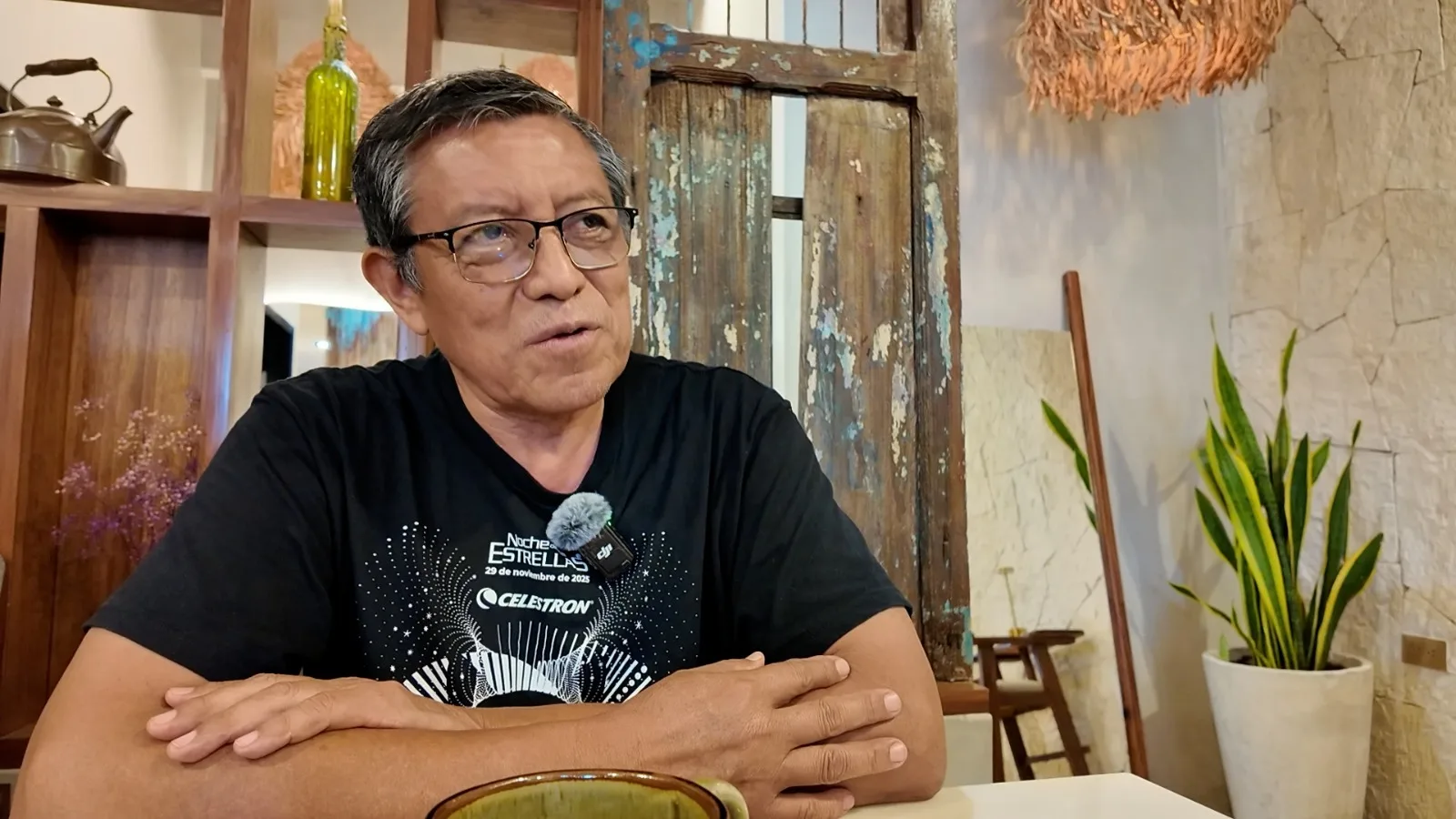
Carrillo Puerto, Quintana Roo — Maya communities in Quintana Roo need a deep awareness process about the value of their intangible cultural heritage to ensure legal protection and economic benefits that don’t depend on external exploitation, according to historian and cultural promoter Marcelo Jiménez Santos.
The specialist said the current legal debate about tourism companies using Maya culture, such as Grupo Xcaret, highlights the need to move from a Western, individualistic development model to an inclusive, respectful one that recognizes communities as rights holders.
Jiménez Santos emphasized that while material heritage—including monuments and archaeological sites—has long enjoyed legal protection, intangible heritage comprising knowledge, techniques, language, traditional medicine, and worldview only began receiving international recognition with UNESCO’s 2003 convention.
“What communities know has value; intangible heritage is what we carry in our minds, the knowledge passed down through generations that manifests in crafts, music, dance, and cuisine,” the promoter explained.
Despite recent national laws protecting indigenous and Afro-Mexican peoples’ rights, the historian warned that many communities still don’t understand these legal terms, making it difficult for them to make autonomous decisions about which cultural aspects to share with tourism and how much access to allow to their community intimacy.
The analysis criticizes the “folklorization” of culture, where manifestations are extracted from their original context and turned into mass-consumption spectacles.
Jiménez Santos stressed that companies often prioritize economic value over true cultural significance.
As an example, he cited handmade tortillas: from a business perspective, they’re an attractive, profitable food product for tourists wanting tortillas made by Maya women, while from a biocultural perspective, they result from a complex process involving land selection, earth permission ceremonies like Ch’a’ cháak, astronomical knowledge, and ancient techniques.
Jiménez Santos’s proposal focuses not on conflict but on intercultural education, aiming to harmonize local knowledge with scientific understanding and business interests with community values.
“We don’t have to fight; we need to understand each other so imposition stops. We must sensitize businesses to recognize the value of these manifestations, not just see them as commerce,” he noted.
Finally, the cultural promoter urged communities to re-educate themselves to overcome colonial stigmas that have historically invalidated their knowledge, creating a meeting point where differences are respected and both communities and companies complement each other without subordination.
Discover more from Riviera Maya News & Events
Subscribe to get the latest posts sent to your email.