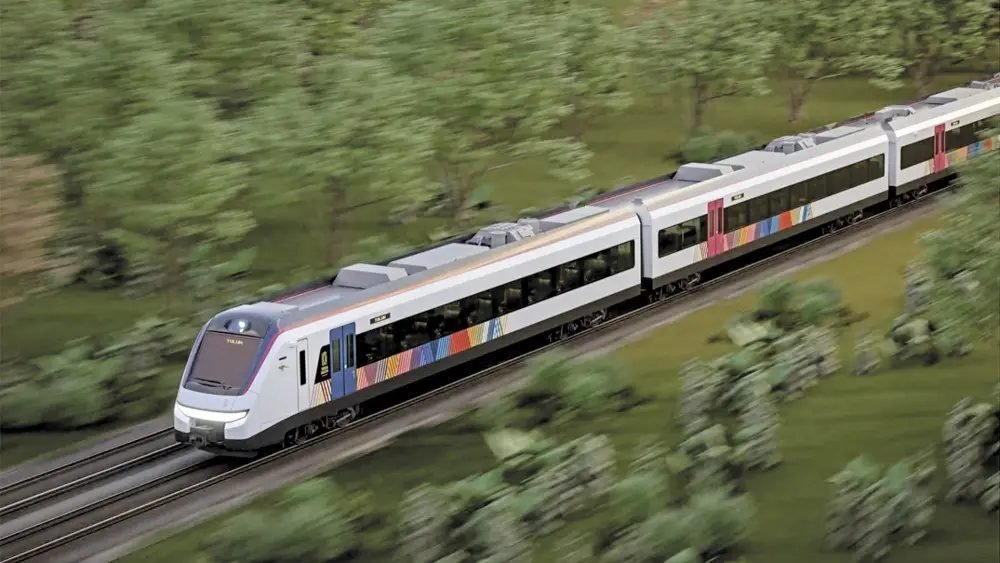
Mexico City — Mexico’s National Tourism Promotion Fund (Fonatur) has submitted three environmental impact assessments for the electrification of the Maya Train’s Mérida-Cancún section, known as Segment 4.
The assessments, which the Ministry of Environment and Natural Resources (Semarnat) typically takes three to six months to review, entered the evaluation process on November 23 following a presidential decree declaring the Maya Train a project of public utility and national security.
The projects involve constructing electrical infrastructure to power the Maya Train along the Mérida-Cancún route, divided into three sets: SET 1, SET 2, and SET 3. Each set will include a traction substation to supply all necessary energy for the railway system.
According to environmental impact statements published in Semarnat’s Ecological Gazette, each set “will feature a double 115-kilovolt connection and provide a 55-kilovolt output voltage. They will also include other traction substations, two Intermediate Autotransformation Centers, and one Final Autotransformation Center. Additionally, they will involve connection works to the National Transmission Network, a switching substation, and switching transmission lines.”
The documents state that construction for the Maya Train Electrification SET 1 project is scheduled to begin in early January 2022, with an estimated duration of approximately 24 months, including infrastructure and equipment testing. Twelve months are allocated for land use change procedures, with activities expected to conclude by the end of December 2024.
The Federal Electricity Commission (CFE) will coordinate with Fonatur on the project’s execution, conducting environmental studies and building the high-voltage electrical infrastructure required for the train’s proper operation.
SET 1, covering the municipalities of Izamal, Kantunil, and Yaxcabá, will cost 907,238,792 pesos. SET 2, extending through Tinum, Uayma, Valladolid, and Chemax, will cost 29,537,416 pesos. SET 3, spanning from Chemax to Lázaro Cárdenas and Puerto Morelos (the latter two in Quintana Roo state), will cost 598,784,515 pesos. The total cost for all three sets amounts to 1,535,569,723 pesos.
In the Environmental Impact Statement, Fonatur notes that to avoid habitat fragmentation, proposed sites for the electrical infrastructure are “preferably located near the federal highway (Mérida-Cancún), mainly due to their proximity to local communities and existing infrastructure with similar characteristics to the proposed project (federal highways, dirt roads, electrical infrastructure), which have already caused a primary and decisive impact in this regard.”
The statement adds that the project’s location also considers “compliance with current and applicable environmental and forestry legislation issued by Semarnat, as well as other federal, state, or municipal public agencies. This includes consideration of territorial planning studies, protected natural areas and their zoning, placing it in zones where this type of infrastructure installation is permitted according to their respective decrees and current management programs, as well as any other applicable regulations, whether due to the project type or its location.”
Discover more from Riviera Maya News & Events
Subscribe to get the latest posts sent to your email.