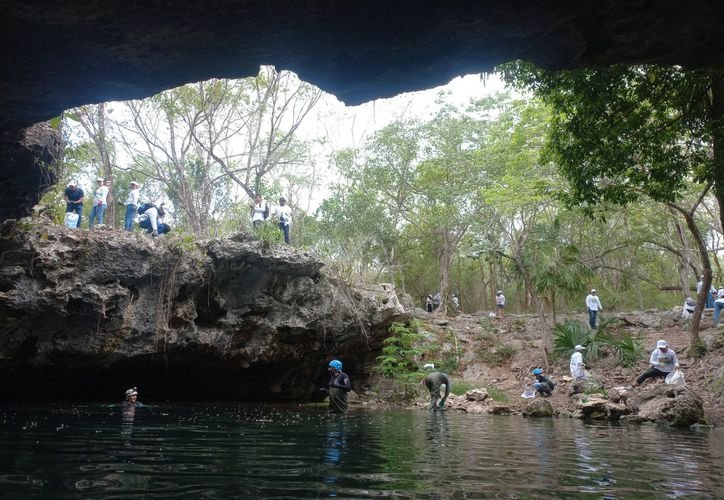
Cancún, Quintana Roo — Despite repeated calls from environmental groups, pollution in urban cenotes remains a persistent problem in Cancún, with at least five sinkholes requiring constant cleanup, according to the association Cenotes Urbanos.
The group said it holds regular cleaning brigades at various water bodies across the city, but trash accumulation continues at several sites. Volunteers commonly find plastic bottles, Styrofoam containers, and food waste, which contaminate the water.
Laura Mendoza, a volunteer with the organization, said both residents and nearby businesses keep dumping waste into the cenotes, undermining conservation efforts.
“Even though we have filed many complaints and formed alliances with the municipalities to report the issue, the food stalls keep leaving their trash. It’s very clear it’s them, because we’re talking about cups, plates, utensils, and food scraps,” Mendoza said. “It’s a fight we won’t give up on.”
Another major challenge is a shortage of active volunteers. While the association has about 500 registered volunteers, most only help spread the word, Mendoza explained.
“We have a registry of 500 volunteers, but obviously not all are active. Many help disseminate the information we gather, but each weekend we typically have several teams in action, with an average of 50 to 60 people working,” she said.
Mendoza called on the public to join the brigades and stop throwing trash into the cenotes, noting that these sinkholes are vital to the region’s ecological balance and are a key natural attraction of the Mexican Caribbean.
More Cancun
- Five Men Sentenced To Up To 50 Years For Killings In Cancún And Felipe Carrillo Puerto
- Two Women Rescued From Human Trafficking in Cancún Search Warrants
- Cancún Restaurant Sector Welcomes Extended Hours in Hotel Zone
- Man Who Posed as Inspector to Extort Cancún Merchant Ordered Held Two Years
- Cancún Shuts Down Two Gated Developments for Selling Lots Without Permits