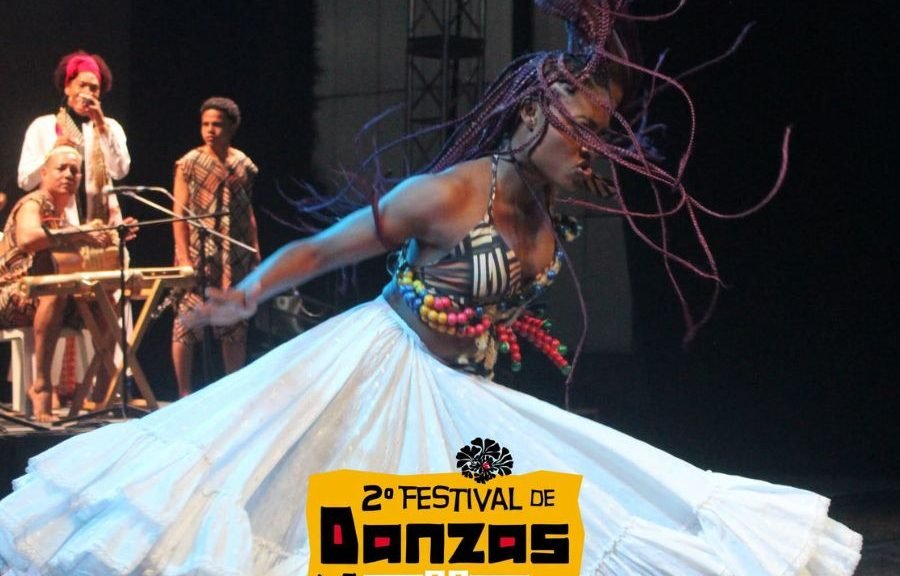
Cancún, Quintana Roo — The second edition of the Festival Danzas Negras: Reflexiones Afrocaribeñas will expand its artistic program with workshops, master classes, talks, conferences, documentary screenings and food experiences that explore Afro-descendant heritage through movement, history and community knowledge.
Running from August 6 to 12, the festival will feature specialists from Mexico, Cuba, Brazil and Venezuela leading activities at various cultural venues in Cancún. The program is aimed at both artists and anyone interested in Afro-Caribbean culture.
Workshops and Master Classes
From August 6 to 11, the Centro Coreográfico de Río de Janeiro will teach the workshop “Comparsas de Carnaval,” led by Brazilian instructor Diego Dantas, at Parque de las Palapas from 10 a.m. to 1 p.m. The activity wraps up August 12 from 5 to 7 p.m. and is open to the public with advance registration.
On August 9, Venezuelan artist Greissy Vecchionacce will give the master class “Movimiento en vida” from 10 a.m. to 1 p.m. at the dance studio of the Centro Cultural de las Artes inside the Teatro de la Ciudad. Prior registration is required.
Brazilian instructor Peter Levi will lead the “Movimiento ancestral” workshop on August 10 and 11, also from 10 a.m. to 1 p.m., at the same venue.
Talks and Conferences
The festival’s lecture series begins August 7 at the Teatro 8 de Octubre. At 4 p.m., Dr. Doris Careaga and Finnie Santiago Careaga Coleman will present “Culinaria afromexicana” with the talk “Tamales afromexicanos: saberes que se comparten,” free with advance registration. At 6 p.m., Marilyn Garbey and Jorge Brooks of the Union of Writers and Artists of Cuba (UNEAC) will lead a conversation on Mexico’s contributions to the construction of a Cuban dance identity.
On August 8 at noon, Serafín Aponte, director of Serafín Aponte Danza, will deliver the lecture “Recorrido y desafíos de un bailarín profesional afromexicano” at the Foro Hirán Sánchez in the Teatro de la Ciudad. The talk will be repeated at the same time and place on August 9. That same day, at 1 p.m., Careaga and Careaga Coleman will discuss Afro-Mexican cuisine as living knowledge, sharing experiences from the Festival Sabores de Tamiahua.
On August 9 at 5 p.m., the Teatro 8 de Octubre will screen “Ambulante Más Allá,” a selection of documentaries produced by young Afro-Mexicans from Oaxaca and Guerrero.
The academic program concludes August 11 at 6 p.m. with Diego Dantas’s lecture “Experiencias en el Centro Coreográfico de Río de Janeiro” at the Teatro 8 de Octubre.
Carnival and Closing Celebration
The festival will end August 12 with a carnival parade that departs from Parque de las Palapas and heads to the Teatro de la Ciudad. The parade groups, directed by Diego Dantas, will come out of the workshop held during the festival.
At 8 p.m., the Veracruz-based company Jóvenes Zapateadores will perform “Hombres Tierra,” directed by Ernesto Luna Ramírez, at the Teatro de la Ciudad. The closing event at 9:30 p.m. will be the social dance “El sabor de la matriz negra” in the theater lobby, bringing artists and the public together for a final night of music and dance.
More Events
- Cancún Travel Mart 2026 Sets Sights on More Mexican Caribbean Business
- Quintana Roo Marks 216th Anniversary of Mexico’s Independence With Statewide Celebrations
- Leonardo Aguilar to Headline Free Cozumel Concert for Grito de Independencia 2026
- Isaac Del Toro Wins Montreal Grand Prix in Canadian Classic Debut
- Profeco to Inspect Businesses Across Mexico During Independence Day Festivities
More Cancun
- Cancún’s Teatro de la Ciudad Nears 75% Capacity Ahead of Second Anniversary
- Cancún Hoteliers Plan Rate Hikes of Up to 35% for Winter Season
- Cancún Taxi Driver Shot, Drives Himself to IMSS Hospital
- Cancún Motorcycle Taxi Drivers Protest After Two Vehicles Torched
- Cancún Councilwoman Opposes Photo-Fine Plan Ahead of Cabildo Vote