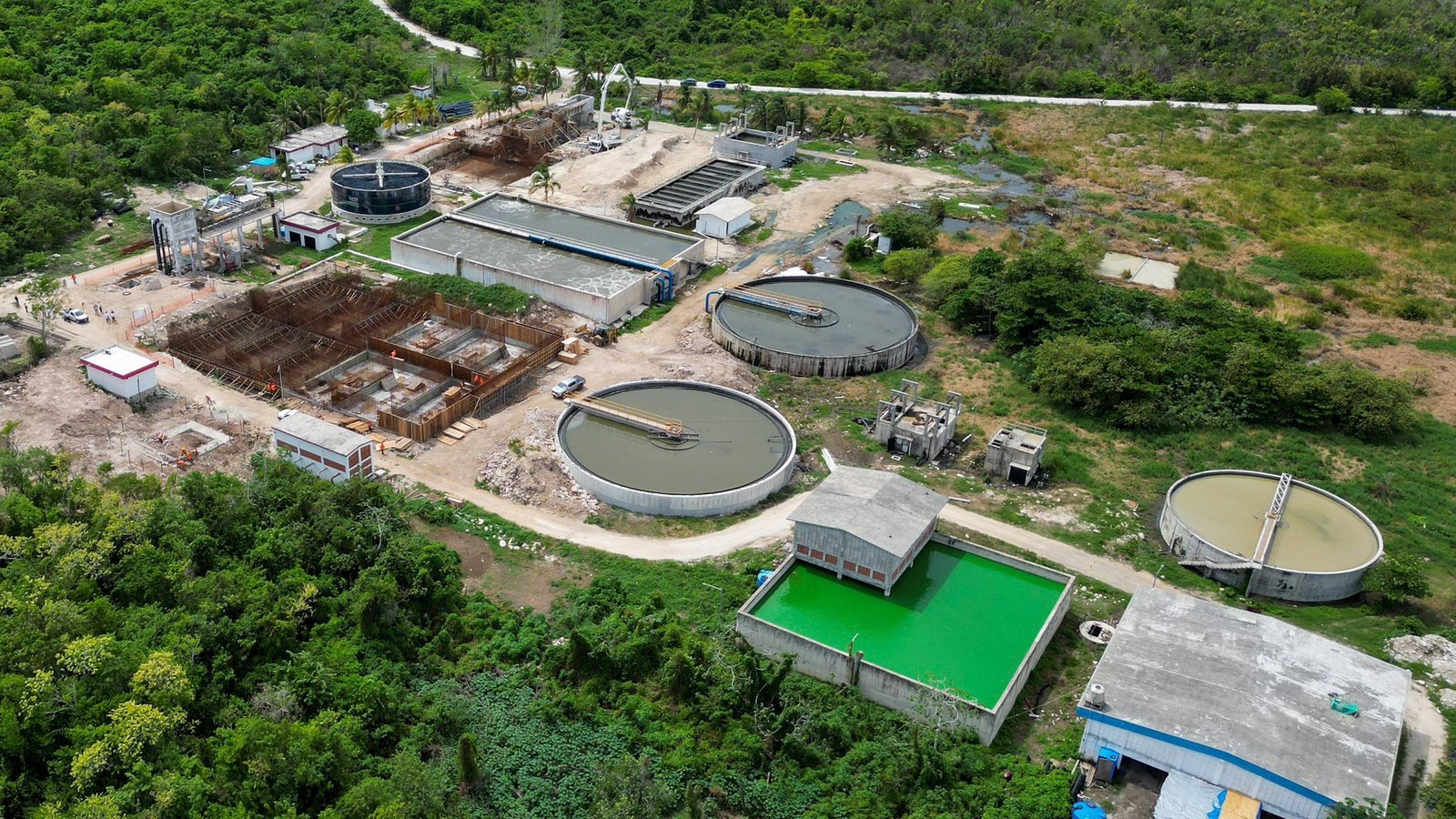
Cozumel, Quintana Roo — The environmental group Sélvame MX has accused the San Miguelito wastewater treatment plant of discharging raw sewage into the island’s mangroves, contaminating Laguna Ciega and the surrounding reef system.
In a statement posted on social media, the organization said that a walk along the pier connecting to Isla de la Pasión revealed a strong, foul odor of sewage, large pools of green water, and areas of dead mangrove. The group also reported a whitish layer floating on the water, possibly grease or oil.
“Our senses do not deceive us: a fetid, penetrating smell of sewage fills the air,” the group said in a video accompanying the statement. “The image at the pier is overwhelming — water with a strong sewage odor and wide areas with a whitish layer floating, possibly grease or oil.”
Sélvame MX called on citizens to speak out against the alleged pollution. “Let us not allow this to continue. For a living Cozumel, raise your voice!” the group urged.
The San Miguelito plant is the island’s main wastewater treatment facility, responsible for treating sewage to protect public health and the fragile reef ecosystem. It began operations on March 26, 2013. Last year, the state government announced an expansion to double its capacity from 110 to 230 liters per second.
More Business
More Cozumel
- FPMC Opens Txepo’s Art + Architecture Dreamscape in Cozumel
- Winjet Drops 9 p.m. Cozumel Ferry, Narrowing Options for Late Travelers
- Cozumel Bird Festival Records 70 Species Across Island Sites
- Monarch Butterfly’s Caribbean Migration Route Revealed in Quintana Roo
- Researchers Document First Recorded Spawning of Priority Coral Species in Cozumel Reef Park