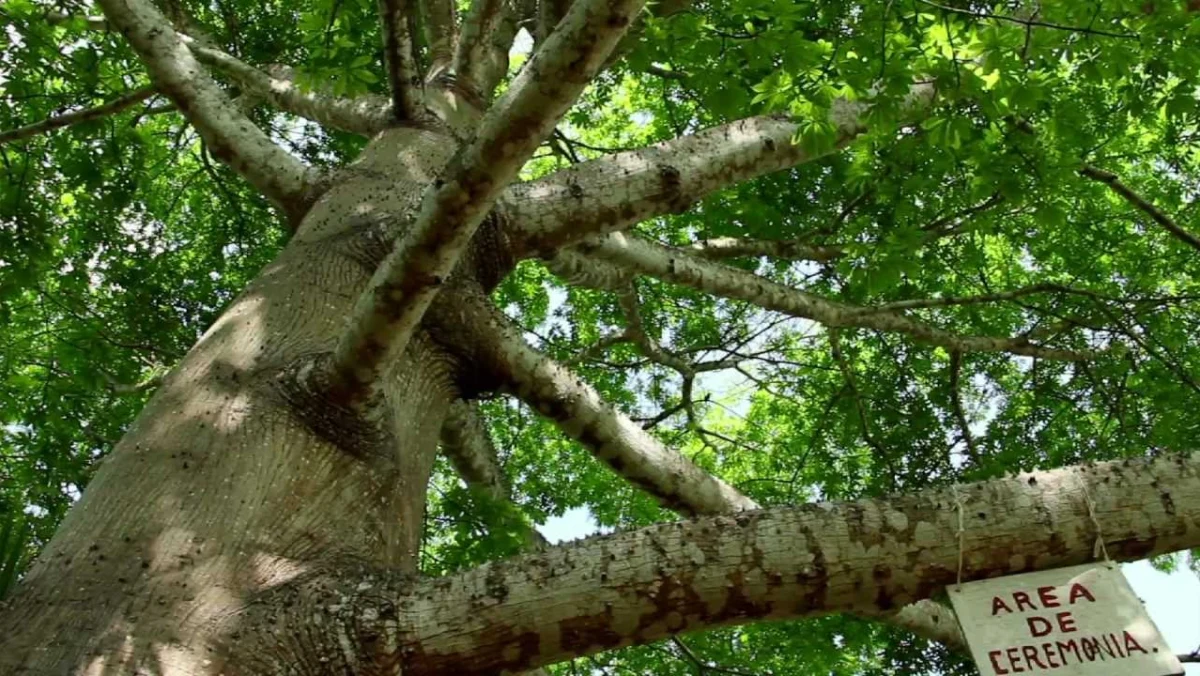
Playa del Carmen, Quintana Roo — The state’s environmental agency has received 48 proposals from all 11 municipalities for the first official catalog of historic and notable trees, an initiative designed to protect specimens with significant environmental, biological, and cultural value.
The Secretariat of Ecology and Environment (SEMA) opened the call just over a month ago, with Playa del Carmen and Benito Juárez recording the highest citizen participation.
Luis Alfonso Martín Díaz, director of Forest Management and Productivity at SEMA, said the project was launched by agency head Óscar Álvaro Aguilera. A State Committee for Historic and Notable Trees now evaluates each nomination.
On National Tree Day, SEMA placed the first official plaque on a tree classified as notable, marking the start of a program to create permanent conservation mechanisms for such specimens.
Martín Díaz explained that a tree can be considered notable for its size, physical characteristics, ecological importance, and environmental services. The first recognized tree stands over 10 meters tall with a canopy nearly 20 meters in diameter, providing habitat for various plant and animal species.
Historic trees must meet similar criteria, with additional weight given to their age and historical significance to local communities.
The call for nominations was open for about 40 days — initially one month, extended by 10 days due to public interest. Specialists are now analyzing the proposals to determine which meet the established criteria.
Martín Díaz said the call targeted the general public, academic institutions, and municipal governments, allowing anyone to nominate trees of special value in their community.
Playa del Carmen and Benito Juárez each submitted around 10 proposals, though the list is not final. SEMA plans to reopen the call periodically to add new specimens as they are identified.
The registry aims not only to recognize these trees but also to generate public policies ensuring their long-term preservation. The catalog will provide technical and legal grounds to prevent removal or damage to trees of high environmental value due to urban development projects.
“What we seek is to have a framework that allows us to say: this tree has the category of historic or notable and, therefore, must be protected,” Martín Díaz said.
Regarding real estate growth, he acknowledged the need to strengthen coordination with developers to avoid losing ecologically valuable trees. This goal must be backed by legislation, regulations, and environmental standards, though some companies have already shown willingness to incorporate conservation criteria into their projects.
Martín Díaz also mentioned the living tree museum in Playa del Carmen, a space dedicated to conserving emblematic specimens, but noted that SEMA has not yet established formal ties with that project.
The catalog represents the first institutional effort to identify and protect trees with environmental and historical relevance in Quintana Roo, as urban growth continues to pressure the state’s green areas and ecosystems.
More Environment
- Quintana Roo’s Beaches Are Disappearing Up to 14 Meters a Year
- Rabies Found in Fox That Scratched Baby in Cancún
- Cozumel’s Reefs Get a 3D Map Divers Can Explore Before Entering the Water
- Documentary Exposes 30 Years of Pollution in Cancún’s Chacmuchuch Lagoon
- Crocodile Surprises Tourists Swimming at Cozumel’s El Cielo Sandbar
More Playa del Carmen
- LIPU Bus Rear-Ends Van, Flipping It Off Highway 307 Near Playa del Carmen
- Woman Shot Dead on Motorcycle With Her Daughters in Playa del Carmen
- At Least Four Women Shot Dead Across Quintana Roo Over the Weekend
- Xcaret Says It Will Abide by Any Supreme Court Ruling on Use of Maya Culture
- Playa del Carmen Calls Volunteers to Clean More Than 7 Kilometers of Beach